 Bellingham
 Why Puget Roofs Need to Be Built Differently
Puget sits close enough to the water and the weather that comes with it that a roof here works harder than a roof twenty miles inland. Salt-laden air moves through on a regular basis, driving rain comes in sideways more often than straight down, and the wet season here doesn't really end so much as it takes a short break in July and August. On top of that, the shade from mature trees and the near-constant moisture means moss and algae have almost ideal growing conditions on any roof that isn't built or maintained to resist them.
Metal roofing holds up well against all three of those pressures when it's installed correctly, but "correctly" is doing a lot of work in that sentence. A metal roof installed the same way you'd install one in a dry inland climate will underperform here. The fastener choice, the underlayment, the flashing details, and the ventilation all need to account for what Whatcom County weather actually does to a roof over twenty or thirty years, not just what it looks like on day one.
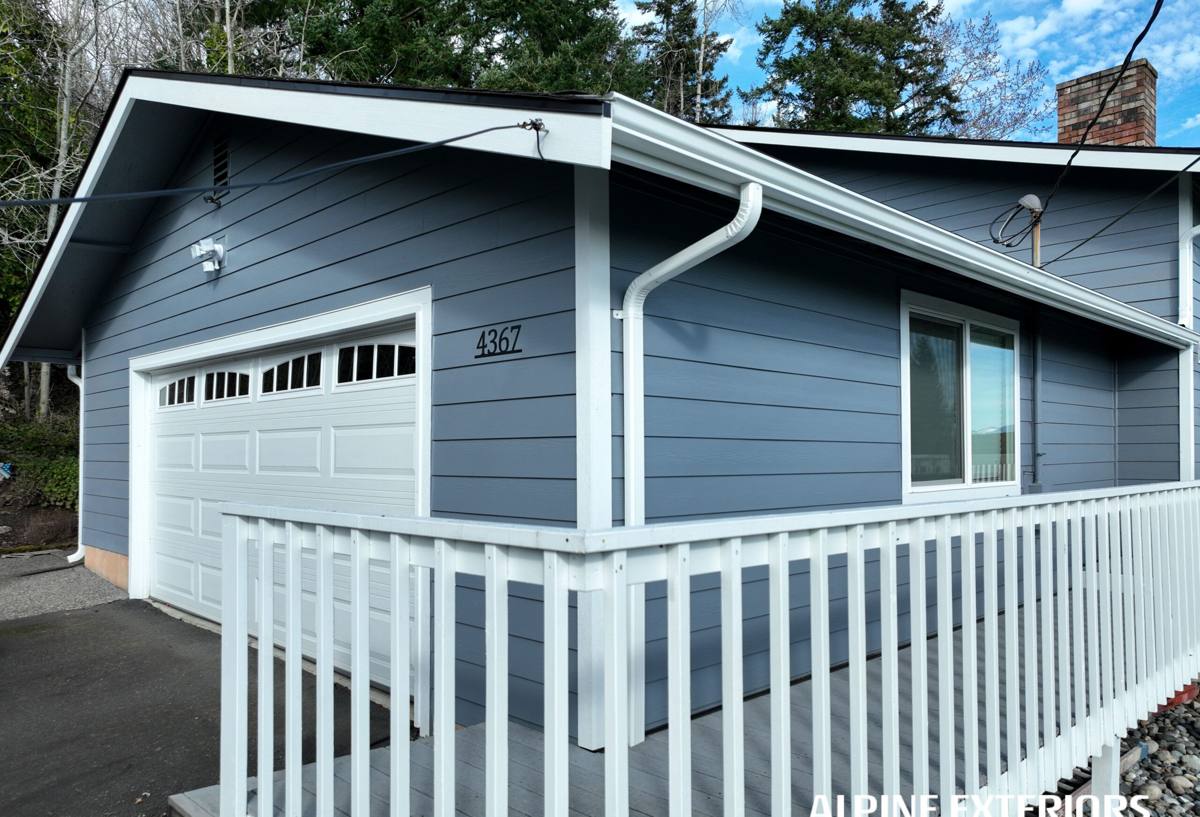
What Salt Air Actually Does to a Roof
Homes in Puget aren't right on saltwater, but they're close enough that airborne salt reaches the roof, especially during windier stretches off the water. Salt accelerates corrosion on anything metal that isn't rated for it — fasteners, flashing, and lower-grade panel coatings all degrade faster in a marine-influenced environment than they would twenty miles inland.
This is the main reason we're careful about fastener and coating specification on every Puget roof, not just the panels themselves. A roof can have a good panel system on top and still fail early because the screws holding it down weren't rated for coastal exposure.
What This Means for Material Choices
- Fasteners should be corrosion-resistant, not just standard galvanized — this matters more here than in a lot of other parts of the state.
- Panel coatings need a track record in marine-influenced climates, not just a general durability rating.
- Dissimilar metals in contact with each other (galvanic corrosion) need to be avoided at flashing and trim junctions.
- Cut edges on panels should be sealed or treated, since raw cut steel edges are where corrosion typically starts first.
Driving Rain and Water Management
Bellingham gets a lot of rain, but it's the wind-driven rain that causes the most roofing problems, because it doesn't just fall — it pushes sideways and upward under laps, around penetrations, and into any gap that a fair-weather installation would have gotten away with. A roof that would be fine in a calmer climate can leak here if the underlayment, flap laps, and flashing details weren't built with wind-driven moisture specifically in mind.
On a correctly installed metal roof, water management happens in layers. The panels shed the bulk of it, but the underlayment beneath is what protects the deck if wind pushes moisture past a seam or around a penetration. We treat that underlayment as a real second line of defense, not a formality, which matters more in Puget than it would in a drier climate.
Where Leaks Actually Start
In our experience, metal roof leaks almost never come from the flat field of the panels themselves. They come from the details:
- Valleys, where water volume concentrates and moves fastest
- Chimney and skylight flashing, especially on older homes where flashing was patched rather than properly integrated
- Panel end laps and ridge details on lower-slope sections
- Fastener penetrations that were over-driven or under-driven during installation
Moss, Algae, and a Long Wet Season
Puget's tree cover and consistent moisture give moss and algae a long growing window most of the year. On composition shingles, that moss takes hold in the granule surface and lifts shingle edges as it grows, which is part of why mossy roofs age faster. Metal roofing changes that equation because there's no granule texture for moss to root into, and the smooth, sloped surface sheds spores and organic debris far more effectively than shingles do.
That doesn't make a metal roof immune to moss and algae staining — north-facing slopes and shaded sections in heavy tree cover can still develop streaking over time — but it removes the structural risk that moss creates on a shingle roof, where growth actually degrades the roofing material itself.
Metal Roofing Systems: Choosing the Right One
Not all metal roofing is the same system, and the right choice for a Puget home depends on the roof's pitch, the home's style, and the budget. The two main categories are standing seam and exposed-fastener panels.
| Feature | Standing Seam | Exposed Fastener |
|---|---|---|
| Fasteners | Concealed under the seam | Visible, driven through the panel face |
| Typical lifespan | 40-70 years | 25-40 years, largely due to fastener wear |
| Best suited to | Low-slope sections, coastal exposure, long-term ownership | Steeper roofs, outbuildings, budget-conscious projects |
| Maintenance | Minimal; no exposed fasteners to re-seat | Fasteners may need re-torquing or replacement over time |
| Upfront cost | Higher | Lower |
In a marine-influenced climate like Puget's, we lean toward recommending standing seam wherever the budget allows, specifically because the concealed fastener system removes the most common failure point of exposed-fastener roofs — fastener corrosion and backing-out over time. That said, exposed-fastener panels installed with corrosion-rated fasteners and proper maintenance are still a legitimate option, especially on secondary structures or steeper roofs where the cost difference matters more.
Our Process for a Puget Metal Roof
1. Inspection and Measurement
We start by getting on the roof, not just looking at it from the ground. That means checking the deck condition, existing flashing, ventilation, and any signs of past moisture intrusion — all of which affect what the new roof needs to do differently.
2. Tear-Off and Deck Prep
Where a tear-off is needed, we remove the old roofing down to the deck and address any damaged sheathing before anything new goes down. Installing a new roof over a compromised deck just hides a problem that will resurface later.
3. Underlayment and Flashing
This is where wind-driven rain resistance actually gets built in — high-quality underlayment, properly lapped and sealed, with flashing details at every valley, penetration, and transition sized for the volume of water this area sees.
4. Panel Installation
Panels go down with fastener spacing and type matched to the panel manufacturer's specifications and to the coastal exposure of the site, not a generic inland standard.
5. Final Walkthrough
We walk the finished roof with the homeowner, cover what maintenance (if any) it needs going forward, and make sure everything from gutters to flashing is cleaned up and functioning.
What Metal Roofing Costs in Puget
Every roof is different, but the main factors that move the price on a metal roof project here are fairly consistent. We won't quote a number without seeing the roof, but this is what tends to drive cost up or down:
| Cost Factor | Why It Matters |
|---|---|
| Roof pitch and complexity | Steeper roofs and more valleys/hips take more labor and flashing detail |
| Tear-off vs. overlay | Removing old roofing and addressing deck issues adds labor but is usually the right call over composition shingles |
| Panel system | Standing seam costs more upfront than exposed-fastener panels |
| Number of penetrations | Chimneys, skylights, and vents each require custom flashing work |
| Access and site conditions | Tree cover, steep lots, and limited staging area affect labor time |
A metal roof generally costs more upfront than composition shingles, but the trade-off is a service life that's typically two to three times longer, along with better performance against the specific conditions Puget sees — wind-driven rain, salt exposure, and moss pressure.
Why a Local Crew Matters Here
A metal roofing crew that regularly works Whatcom County knows what a marine-influenced climate does to fasteners and coatings over time, because we've seen it firsthand on roofs we've inspected or replaced. That's different from working off a manufacturer's general installation guide written for a national market. We know which details tend to fail first in this specific climate, and we build around them from the start rather than learning it the hard way on your roof.
Before hiring anyone for a metal roof in Puget, it's worth asking a few direct questions:
- Do you specify corrosion-rated fasteners for coastal or marine-influenced sites, or is it standard galvanized across the board?
- What underlayment do you use, and is it rated for wind-driven rain exposure?
- How do you handle valleys and flashing around chimneys or skylights?
- Is the manufacturer's warranty valid based on your installation certification, and what does it actually cover?
- Can you walk me through how the panel system you're recommending compares to the alternative for my specific roof?
A contractor who can answer those clearly, without dodging into vague reassurances, is a good sign. One who can't isn't the right fit for a roof that has to hold up to this specific climate for decades.
If you're weighing metal roofing for a home in Puget, we're happy to take a look and walk you through what your roof specifically needs — no pressure, no generic sales pitch. Fill out the form below and we'll set up a time to come take a look.