 Bellingham
 Why Windows Take a Beating in Cordata
Cordata sits close enough to the water and the marine weather patterns that move through Whatcom County that its homes deal with a specific combination of stresses: salt-tinged air, long stretches of driving rain, and a moss season that can run most of the year on shaded north- and west-facing walls. None of that is dramatic on any single day, but it's relentless. Windows are one of the first places that relentlessness shows up, because a window isn't just glass — it's a seal, a frame, and a set of moving parts all trying to hold a tight line against weather that never really lets up.
Older or lower-grade windows in this climate tend to fail quietly. Seals soften and let in drafts before anyone notices a leak. Wood sashes hold moisture in shaded corners and start to swell or rot from the inside out. Aluminum frames conduct cold straight through, turning window edges into a natural spot for condensation and, eventually, mold. None of this is unique to Cordata, but the combination of steady rain, humidity, and salt exposure common to this part of Bellingham makes it happen faster than it would somewhere drier or further inland.
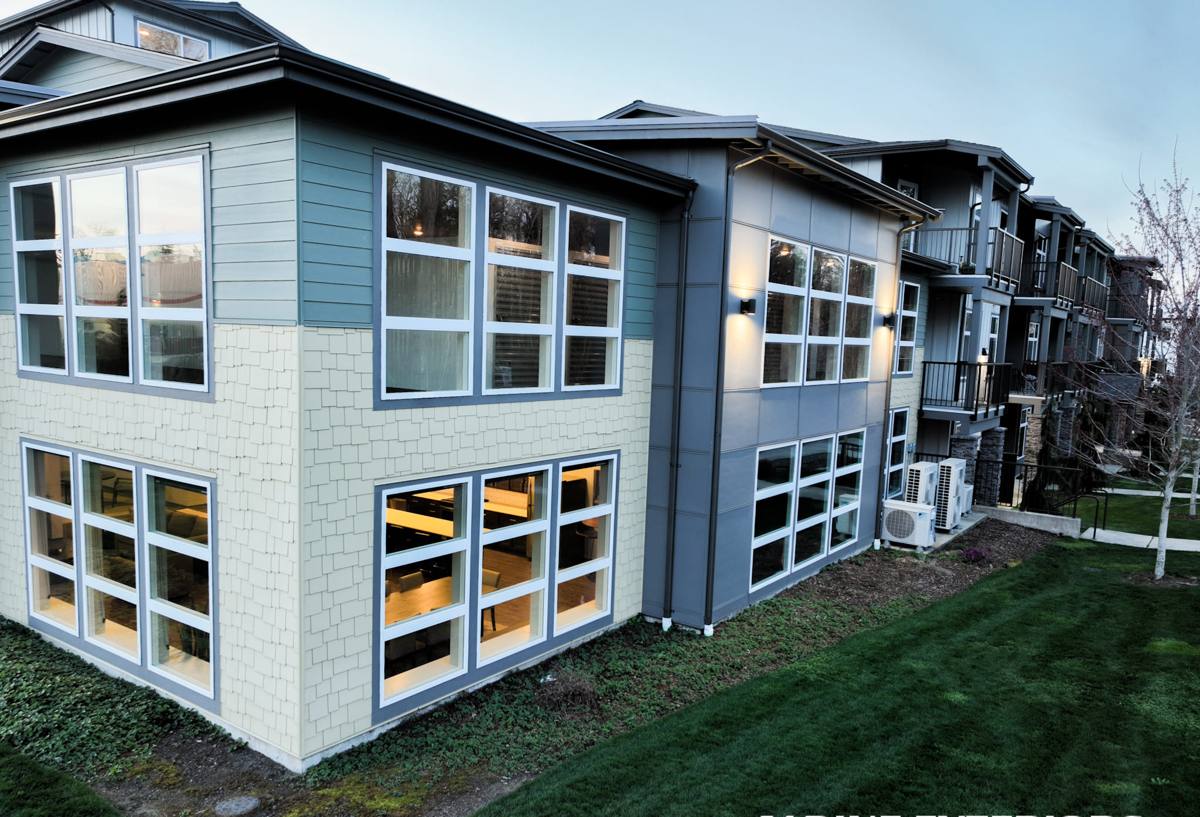
What "Energy-Efficient" Actually Means for This Climate
"Energy-efficient" gets used loosely in window marketing, so it's worth being specific about what actually matters for a Cordata home. Three numbers do most of the work:
- U-factor — how well the window resists heat loss. Lower is better. In our climate, where the bigger cost is heat escaping during long wet, cool stretches, U-factor is usually the number worth prioritizing.
- SHGC (Solar Heat Gain Coefficient) — how much solar heat passes through the glass. Bellingham doesn't get the intense summer sun that drives SHGC decisions in hotter regions, so this matters less here than U-factor, though south- and west-facing rooms still benefit from a moderate SHGC.
- Air leakage rating — how much air passes through the assembly itself, independent of the glass. This is often the number that determines whether a window actually stops the drafts a homeowner is trying to fix.
Look for the NFRC label on any window you're quoted — it's an independent rating, not a manufacturer's marketing claim, and it lets you compare products on equal footing. A window that's ENERGY STAR certified for the Northern climate zone is a reasonable baseline for this area; it's a floor, not necessarily the ceiling.
Double vs. Triple Pane
Double-pane, low-E, argon-filled windows are the standard upgrade for most Cordata homes and perform well against our climate. Triple-pane adds meaningful performance and sound dampening but costs more and adds weight — worth discussing for a specific room (a north-facing bedroom, a home office near a busy road) rather than assuming it's automatically the right call for the whole house.
Signs Your Windows Are Underperforming
Homeowners usually notice one or two of these before calling anyone:
- Visible condensation or fogging between the panes (a sign the seal has failed and the gas fill is gone)
- Cold drafts near the frame even when the window is fully latched
- Difficulty opening, closing, or latching — often a sign the frame has swollen or shifted
- Soft or discolored wood at the sill or lower corners
- Rooms that feel noticeably colder than the rest of the house in winter
- A jump in heating costs without a clear cause
Any one of these is worth a look. Several together usually means the windows are past the point where caulk and weatherstripping will fix the underlying problem.
What a Correct Installation Actually Involves
The window itself only accounts for part of how well the finished job performs. In a climate like ours, the installation details matter as much as the product:
Flashing and Moisture Management
Proper flashing directs water away from the rough opening and down the wall assembly instead of letting it collect behind the trim. This is the step that gets skipped most often on rushed jobs, and it's the one most likely to cause hidden rot years later — especially on walls that face our prevailing wind-driven rain.
Air Sealing
The gap between the window frame and the rough opening needs to be sealed with the right materials — not just caulked on the surface, but properly insulated and sealed so air can't move through the wall cavity around the window.
Level, Plumb, and Square
A window that's slightly out of square will bind, won't seal evenly, and will wear unevenly at the corners — exactly where moisture problems start. This is a fit-and-finish issue that shows up as a performance issue a few years down the road.
Sill Pan and Drainage
A sill pan under the window gives any water that does get past the exterior seal somewhere to go besides into the wall framing. It's a small, inexpensive detail that matters a lot in a wet climate.
Frame Material Comparison for Local Conditions
| Material | Energy Performance | Handling Rain & Moisture | Maintenance |
|---|---|---|---|
| Vinyl | Good; multi-chamber frames insulate well | Doesn't rot; seams are the main watch point | Low — occasional cleaning |
| Fiberglass | Very good; low expansion/contraction keeps seals tighter longer | Excellent; stable in wet and salt-exposed conditions | Low |
| Wood (unclad) | Good, but only as good as the finish is maintained | Needs consistent upkeep or it swells and rots in shaded, damp spots | High — refinishing on a schedule |
| Wood-clad | Good | Better than bare wood; cladding protects the exterior face | Moderate |
| Aluminum | Weaker — conducts heat/cold unless thermally broken | Handles rain fine; salt air can affect uncoated finishes over time | Low |
Fiberglass and quality vinyl tend to be the best all-around fit for a Cordata home dealing with sustained rain and shaded moss growth, since neither one gives moss or moisture a surface to work into. Wood-clad is a reasonable choice for homeowners who want a wood interior look, provided the cladding and finish are maintained. Bare wood requires the most discipline to keep performing well in this climate.
How We Approach a Cordata Window Project
- On-site assessment — we look at the existing windows, framing condition, and any signs of moisture intrusion before recommending anything.
- Honest scoping — if a window can be repaired instead of replaced, we'll say so. Replacement isn't always the right answer.
- Accurate measurement and product selection — matched to the specific wall's sun and rain exposure, not a one-size answer for the whole house.
- Removal and prep — checking the rough opening for hidden rot or damage before the new window goes in, since this is the point where problems are cheapest to fix.
- Installation — proper flashing, sill pan, air sealing, and squaring, in that order.
- Final inspection and cleanup — operation check on every window, sealant check, and a clean job site when we leave.
What to Ask Before Hiring Anyone
- Will you show me the NFRC label and ratings for the specific window model, not just a brand name?
- Who handles the flashing and sill pan detail — is that a standard part of your install, or an upsell?
- What happens if you find rot or damage in the rough opening once the old window is out?
- What's covered under warranty — the glass unit, the frame, and the labor — and for how long?
- Can I see examples of similar work you've done in this area?
- Are you licensed and insured to work in Washington, and can you provide proof?
A contractor who answers these plainly, without dodging the moisture and flashing questions, is usually one who understands what actually matters here.
Why Local Experience in Cordata Matters
A window that's rated correctly on paper can still underperform if it's installed without accounting for how a specific wall sits relative to wind, rain, and sun. Crews who work regularly in Bellingham and Whatcom County get a feel for which walls take the worst of the weather, where moss tends to establish first, and how salt-influenced air affects hardware and finishes over time. That's not something a rating label captures — it's pattern recognition built from doing this work, on this kind of housing stock, in this specific climate, over and over.
It also shows up in smaller ways: knowing which local inspectors want to see what, understanding how older Cordata-area homes were typically framed, and being available to come back if something needs adjusting after the first hard rain of the season.
After the Install: Keeping Windows Performing
Energy-efficient windows aren't a one-time fix and forget. A little seasonal attention keeps them performing the way they're rated to:
- Clear moss and debris from sills and tracks before it holds moisture against the frame
- Check weep holes (the small drainage openings at the bottom of the frame) to make sure they're clear
- Wipe down hardware periodically, especially on walls exposed to salt-influenced air
- Watch for condensation between panes — it's the clearest early sign a seal has failed
- Re-caulk exterior trim joints if you notice cracking or separation
If you're noticing drafts, fogged glass, or windows that are getting harder to operate, we're happy to take a look and give you a straight read on what's going on — no pressure, no upsell. Reach out for a free estimate using the form below.