 Bellingham
 Why Cordata Homes Take a Beating From the Weather
Cordata sits on the north side of Bellingham, close enough to Bellingham Bay and the Salish Sea that homes here deal with a version of Pacific Northwest weather that's a little harder on exterior materials than folks who haven't lived through it expect. It isn't dramatic weather — no hurricanes, no hail the size of golf balls — but it's relentless. Whatcom County gets a long, wet fall-through-spring stretch where siding rarely gets a real chance to dry out between rain events, and homes close enough to the water pick up a fine layer of salt air on top of that moisture. Add in the shade from mature trees common in newer Bellingham developments, and you've got the third ingredient: moss and algae that can hang around for months at a time on north-facing walls.
None of that is a crisis on its own. The problem is what happens over years when a siding product isn't built to handle all three at once — moisture, salt, and organic growth. Paint fails faster, seams open up, and wood-based products start to swell, cup, or soften at the edges long before a homeowner expects to be dealing with a siding project. We install James Hardie fiber cement specifically because it's engineered for exactly this combination of conditions, not because it's the only option on the market.
What Cordata's Housing Stock Actually Needs
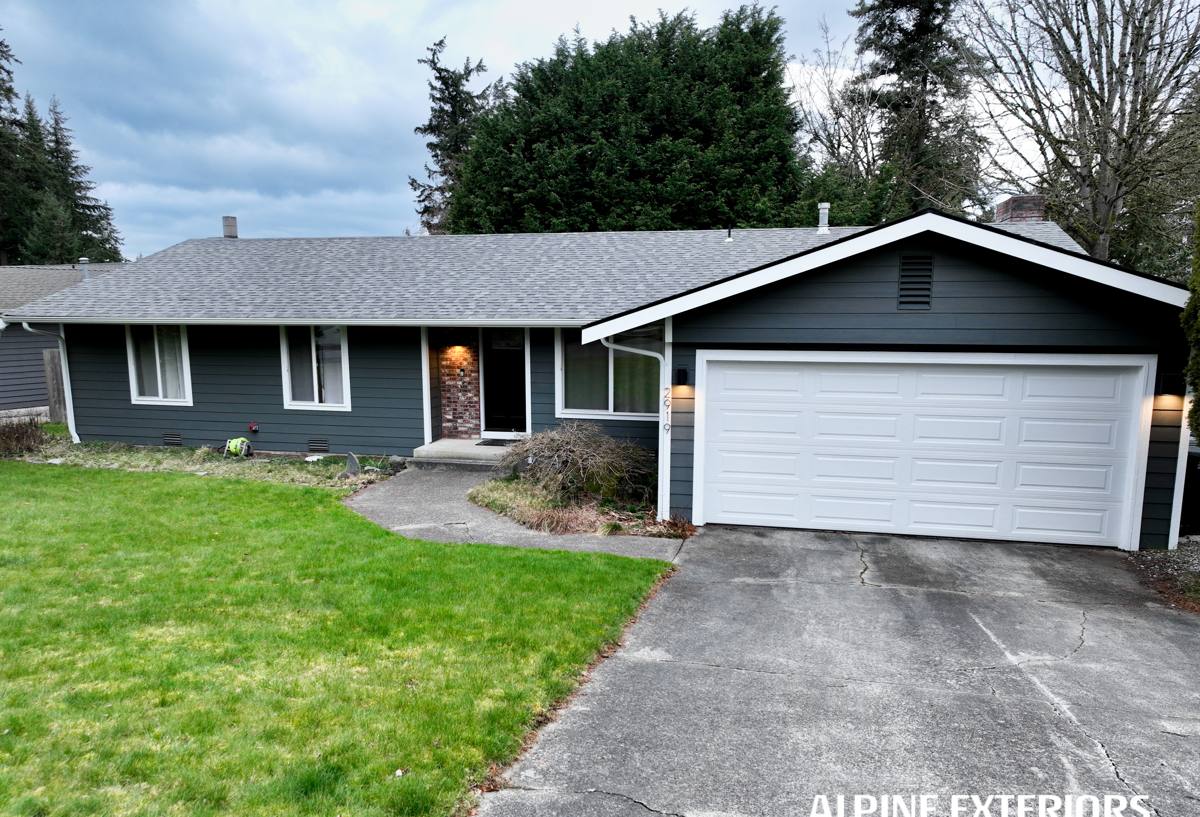
Cordata is a mix of newer construction from the past couple decades and some older infill, which means we see everything from original builder-grade siding nearing the end of its service life to homes that were re-sided once already with a product that didn't hold up. What most Cordata houses have in common is exposure: north and west-facing walls that stay damp longer, roof lines and gutters that funnel water toward specific wall sections, and landscaping that, while it looks great, keeps certain elevations shaded and slow to dry.
That combination is why a generic siding job — good materials installed without attention to local conditions — doesn't hold up as well here as it might somewhere drier. The right approach starts with reading the house: which walls take the worst weather, where water actually moves once it hits the exterior, and where moss and mildew are already showing up on the current siding. That assessment shapes the job before a single board goes up.
Common Trouble Spots We Look For
- North and west elevations with extended damp periods and visible algae or moss staining
- Areas below roof valleys or poor gutter runoff where water concentrates against the wall
- Ground-level siding courses that sit too close to soil, mulch beds, or hardscape
- Window and door trim where old caulking has failed and water has started tracking behind the siding
- Corners and butt joints on the existing siding where gaps have opened from years of expansion and contraction
Why James Hardie Fiber Cement Fits This Climate
We install James Hardie exclusively, and in a climate like Cordata's, the reasoning is straightforward. Fiber cement doesn't absorb and swell with moisture the way wood-based or wood-adjacent products can, so it doesn't cup, soften, or delaminate from repeated wet-dry cycles. It's also non-combustible, which matters more each year as wildfire smoke seasons stretch later into the Pacific Northwest calendar — Hardie won't contribute fuel the way some other cladding materials can.
Hardie's ColorPlus factory finish is baked on under controlled conditions rather than field-applied, which gives it better adhesion and color retention than site-painted siding, especially on the shaded, algae-prone walls that are common in Cordata. And Hardie manufactures its boards in different formulations for different climate zones — the HZ5 product line is built for regions that see freeze-thaw cycles and sustained damp weather, which describes Whatcom County well. That's the version we spec for jobs in this area.
None of that means fiber cement is maintenance-free. It still needs to be installed correctly, caulked correctly, and painted or touched up over time like any exterior material. What it means is that the material itself isn't working against you the way some alternatives can in a wet coastal climate.
What a Correct Fiber Cement Installation Actually Involves
A lot of siding problems we get called out to inspect in the Bellingham area trace back to installation shortcuts, not the material itself. Fiber cement is forgiving of weather but not forgiving of bad technique — gaps, wrong fasteners, or missed flashing details will cause problems no matter how good the board is. A correct install includes:
- Proper water-resistive barrier and flashing behind every siding course, especially around windows, doors, and any wall penetration
- Correct fastener spacing and type — Hardie specifies fastener patterns and materials, and skipping those specs voids warranty coverage and invites problems
- Manufacturer-specified clearances from grade, roof lines, decks, and other structures so the bottom edge of the siding isn't sitting in standing water or constant splash-back
- Correctly caulked and sealed joints at butt seams, corners, and trim intersections, using sealants rated for the material and the climate
- Field-cut edge sealing — any board cut on-site needs the cut edge treated so it doesn't wick moisture
Skipping any one of these doesn't usually cause an immediate problem. It shows up two, five, or ten years later as a soft spot, a stain, or a section that's failing while the rest of the wall looks fine. That's the gap between "siding that's installed" and "siding that's installed to hold up in this climate."
How We Approach a Cordata Job
- Walk the home and note which elevations show existing moisture or moss damage, and why
- Check gutter, downspout, and grading conditions that affect how water moves around the exterior
- Confirm the water-resistive barrier and flashing plan before the first board goes up
- Install to Hardie's fastening, clearance, and sealing specifications — not shortcuts
- Walk the finished job with the homeowner and flag anything to watch going forward
Fiber Cement vs. Other Siding Options in a Coastal Climate
Homeowners comparing quotes often see very different materials proposed at very different price points. Here's how the common options actually stack up for a damp, salt-air-influenced climate like Cordata's:
| Material | Moisture Behavior | Moss/Algae Resistance | Long-Term Cost Factor |
|---|---|---|---|
| James Hardie Fiber Cement (HZ5) | Does not swell or rot; factory finish resists moisture damage | ColorPlus finish holds up well; surface can still be cleaned as needed | Higher upfront, lower repaint/repair frequency |
| Vinyl Siding | Doesn't absorb water, but seams and panels can warp or gap over time | Can trap moisture behind panels where algae grows unseen | Lower upfront, but limited repair options once damaged |
| Wood/Cedar | Absorbs moisture readily; prone to swelling, cupping, rot at joints | Requires regular treatment to resist moss and mildew | Lower material cost, but ongoing maintenance cost is significant |
| LP SmartSide (engineered wood) | Better than raw wood, but still wood-based and moisture-sensitive at cut edges and seams | Needs consistent caulk and paint maintenance to hold up | Mid-range upfront, maintenance-dependent long-term cost |
We don't install vinyl, LP SmartSide, or untreated wood siding — not because they can't work anywhere, but because in a climate that stays wet as long as Whatcom County's does, we've made non-combustible, factory-finished fiber cement our standard. It's a smaller product lineup for us to stand behind, but it's the one we're confident holds up here.
Maintenance Once It's Installed
Correctly installed Hardie siding is low-maintenance, not no-maintenance. A simple annual routine keeps it performing the way it's designed to in this climate:
- Rinse siding annually with a garden hose (avoid high-pressure washing, which can force water behind boards or joints)
- Trim back landscaping that keeps any wall shaded and damp for extended periods
- Inspect caulking at trim, windows, and joints every year or two and re-caulk if it's cracked or pulling away
- Check gutters and downspouts each fall so water isn't overflowing onto siding below
- Address any moss or algae buildup promptly with a gentle cleaning approach rather than letting it establish
Why It Matters That We Already Work in Cordata
Siding installation isn't one-size-fits-all, even within the same city. A crew that's worked in Cordata knows which elevations tend to hold moisture, how the local moss season plays out on shaded walls, and what the salt air off Bellingham Bay does to fasteners and finishes over time. That's not something you get from a general installation manual — it comes from doing the work in this specific area, on homes with this specific exposure.
It also means a more accurate estimate. We're not guessing at what your walls are dealing with; we've likely seen the same conditions a few streets over. That translates into a spec — flashing details, fastener choices, clearance decisions — that's built for your house, not a generic template.
Get a Straight Answer for Your Home
If your current siding is showing moss staining, failing paint, soft spots, or open seams, it's worth having someone look at it before those small issues turn into a bigger repair. We'll walk your home, tell you honestly what we see, and explain what a correct fiber cement installation would involve for your specific walls and exposure — no pressure, no upsell. Use the form below to request a free estimate.