 Bellingham
 Building a Deck That Actually Holds Up in Cordata
Cordata sits in north Bellingham, close enough to Bellingham Bay and the Salish Sea that salt-laden air, driving rain off the water, and a moss season that can run from October clear through May all show up in the way a deck ages. A deck built to a generic national spec — the kind you'll find in big-box lumber packages or from crews who don't work this area regularly — tends to show its problems here faster than it would in a drier climate. Framing stays damp longer between storms, fasteners corrode sooner, and any flat or shaded surface becomes a moss magnet within a season or two.
None of that means you can't have a deck you're happy with for decades. It means the details that don't matter much in a dry climate matter a lot here: how the ledger is flashed, what the fasteners are made of, how the boards are spaced, and whether the substructure can actually dry out between rain events. This page walks through what a correctly built deck looks like for a Cordata home, and how we approach the job from first call to final walkthrough.
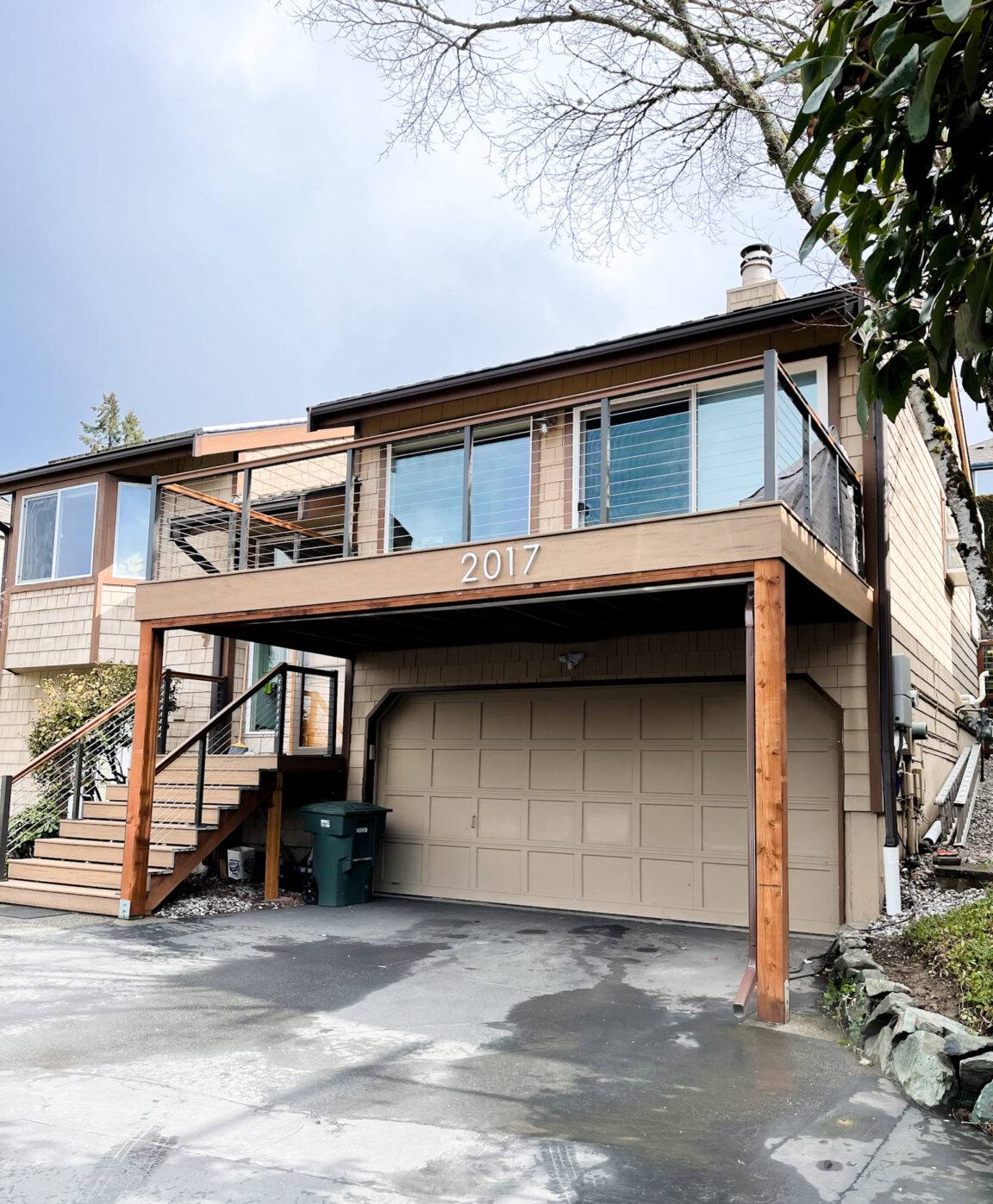
What Whatcom County's Climate Actually Does to a Deck
It helps to be specific about the failure modes we're designing against, rather than just saying "it rains a lot."
- Prolonged dampness — Whatcom County gets long stretches of drizzle rather than short hard downpours, which means wood surfaces and framing cavities stay wet for days at a time instead of drying quickly.
- Salt-influenced air — proximity to Bellingham Bay means airborne salt accelerates corrosion on unprotected metal hardware, fasteners, and railing components.
- Moss and algae growth — shaded, north-facing, or poorly ventilated deck surfaces develop moss and green algae film, which is slippery and holds moisture against the wood.
- Freeze-thaw cycling — Bellingham winters aren't brutal, but the repeated freeze-thaw swings we do get can stress water that's trapped in wood grain, fastener holes, or poorly sealed joints.
A deck that ignores these conditions doesn't fail overnight — it fails slowly, with soft spots near the ledger, rust streaks below screw heads, and a green film that never fully goes away no matter how often you sweep it.
Framing and Structural Details That Matter Here
Ledger Attachment and Flashing
The ledger board — where the deck attaches to the house — is the single most common point of long-term failure on any deck, and it's especially unforgiving in a wet climate. Proper flashing (metal Z-flashing with correctly lapped house wrap, not just caulk over the joint) keeps water from tracking behind the siding and into the rim joist. We treat this as non-negotiable, not an upgrade.
Footings and Post Bases
Concrete footings need to be set below frost depth and, just as important, post bases need to hold the post above the concrete rather than embedding wood directly in it. Standing water at the base of a post is one of the most common causes of hidden rot on decks we're asked to repair or rebuild.
Joist Spacing and Airflow Underneath
Tighter joist spacing (typically 12" or 16" on center depending on the decking material) reduces bounce and gives boards better support, but the substructure also needs airflow underneath. A deck built low to grade with poor ventilation traps humidity, which is exactly what accelerates rot and encourages moss to creep up from below.
Decking Material Choices for a Damp, Moss-Prone Yard
There's no single "correct" decking material — it's a trade-off between upfront cost, maintenance tolerance, and how the surface behaves when it's wet more often than it's dry. Here's how the common options actually compare for a Cordata property.
| Material | Upfront Cost | Moisture/Moss Resistance | Maintenance | Typical Lifespan |
|---|---|---|---|---|
| Pressure-treated pine | Lowest | Fair — needs sealing to perform well | Annual cleaning and re-sealing | 15–20 years with upkeep |
| Western red cedar | Moderate | Good natural rot resistance, but surface still grows moss if shaded | Periodic cleaning, occasional oil or sealer | 20–25 years with upkeep |
| Composite decking | Higher | Very good — doesn't absorb water like wood, but surface still needs cleaning | Low — occasional wash, no sealing/staining | 25–30+ years, backed by manufacturer warranty |
| Tropical hardwoods (e.g., ipe) | Highest | Excellent density and rot resistance | Periodic oiling to maintain color, otherwise low | 30+ years |
For shaded lots or yards with a lot of tree cover — common in parts of Cordata — we lean toward recommending composite or a well-ventilated hardwood over untreated softwood, simply because the maintenance burden of keeping softwood clean and sealed in constant dampness is more than most homeowners want to sign up for. That's a maintenance conversation, not a claim that any one product is bad — it's about matching the material to how much upkeep you actually want to do.
Fasteners, Hardware, and Railings: Where Corrosion Shows Up First
Salt-influenced air doesn't announce itself the way a coastal storm does, but it works on exposed metal steadily over years. Standard zinc-coated screws and brackets will eventually show rust streaking on light-colored decking, and in worse cases the fastener itself weakens before the wood around it does. We spec stainless steel or high-grade coated fasteners rated for coastal/marine-adjacent exposure, along with corrosion-resistant joist hangers and post connectors, as standard practice on Cordata builds — not as an upsell.
Railings get the same treatment. Aluminum and properly coated steel railing systems hold up well; raw or lightly finished steel components tend to show rust at welds and fastener points within a few seasons in this climate.
Design Considerations Specific to Cordata Properties
Cordata is a mix of newer construction and established homes with mature landscaping, and tree cover is a real factor in deck design here. A few things we weigh on-site before recommending a layout:
- Sun exposure — decks tucked under tree canopy or on the north side of the house dry out slower and need decking and finish choices that tolerate near-constant shade.
- Grading and drainage around the deck — if the yard slopes toward the house, we address drainage as part of the deck plan, not as an afterthought.
- Board orientation and gapping — proper gap width between boards lets water shed instead of pooling, which matters more here than in a dry climate.
- Multi-level layouts — larger lots sometimes call for stepped or multi-level decks to work with the natural grade, which changes footing and structural planning.
Our Process, From First Call to Final Walkthrough
1. On-Site Assessment
We look at your yard's grade, sun exposure, tree cover, and how the deck will tie into the house before recommending anything. This is also when we flag anything unusual about the site — soft soil, existing drainage issues, or an old deck with hidden rot that needs to come out first.
2. Design and Material Selection
We walk through material options honestly, including cost and maintenance trade-offs, so you're choosing based on what fits your budget and how much upkeep you want, not just what looks good in a photo.
3. Permitting
Most new decks and significant deck rebuilds in the City of Bellingham require a building permit, and setback rules can apply depending on your lot and whether an HOA covenant is in play. We handle the permit process as part of the job so you're not navigating City of Bellingham requirements on your own.
4. Construction
Framing, flashing, and footings go in first and get inspected before decking goes down — the parts you won't see later are the parts that determine whether the deck lasts.
5. Final Walkthrough
We go over the finished deck with you, including basic maintenance guidance specific to the material you chose.
A Simple Maintenance Checklist for Cordata Deck Owners
Whatever material you choose, a little seasonal attention goes a long way in this climate:
- Sweep leaves and debris off the deck regularly in fall — trapped organic matter feeds moss growth.
- Rinse or lightly scrub surfaces at the start of moss season (typically fall) before growth takes hold, rather than after it's established.
- Check fastener heads and hardware once a year for early rust staining.
- Inspect the ledger flashing and any caulked joints annually for gaps or cracking.
- Re-seal or oil wood decking on the manufacturer's or installer's recommended schedule — don't wait until it looks dry and gray.
- Keep gutters and downspouts near the deck clear so runoff isn't draining directly onto or under it.
Why It Matters to Hire a Crew That Already Works in Cordata
A lot of deck problems we get called to fix started as a good-looking deck built by a crew unfamiliar with how Whatcom County's climate actually treats wood and metal over time. Flashing details that would be fine in a drier region, fasteners rated for general use instead of damp/coastal exposure, or decking laid without enough airflow underneath — these are the kind of shortcuts that don't show up on day one but cost real money to fix five years in. Working with a crew that builds decks in this specific climate regularly means those details are just standard practice, not something you have to think to ask about.
If you're planning a new deck or replacing one that's showing its age, we're happy to come take a look and talk through honest options for your property. Reach out for a free, no-pressure estimate using the form below.