 Bellingham
 Roof Repair in Lynden: A Different Job Than a Full Roof Replacement
Lynden sits inland in the Nooksack River valley in northern Whatcom County, close enough to Bellingham Bay and the Salish Sea to sit inside the same marine weather pattern that soaks this whole corner of Washington. That means wind-driven rain, salt-tinged air moving up the valley, and a moss and algae season that runs long enough to feel almost year-round on shaded roof planes. A roof repair here isn't just patching a hole — it's addressing damage caused by a specific, repeating set of conditions, and doing the repair in a way that doesn't just fail again next wet season.
Bellingham Siding works on roofs, siding, windows, and decks across Whatcom County, and we treat a Lynden roof repair call the same way every time: figure out exactly what's actually failing before anyone talks about a fix. A lot of roof repairs done badly aren't badly built, they're badly diagnosed — the crew patched the symptom they could see instead of the cause a few feet away.
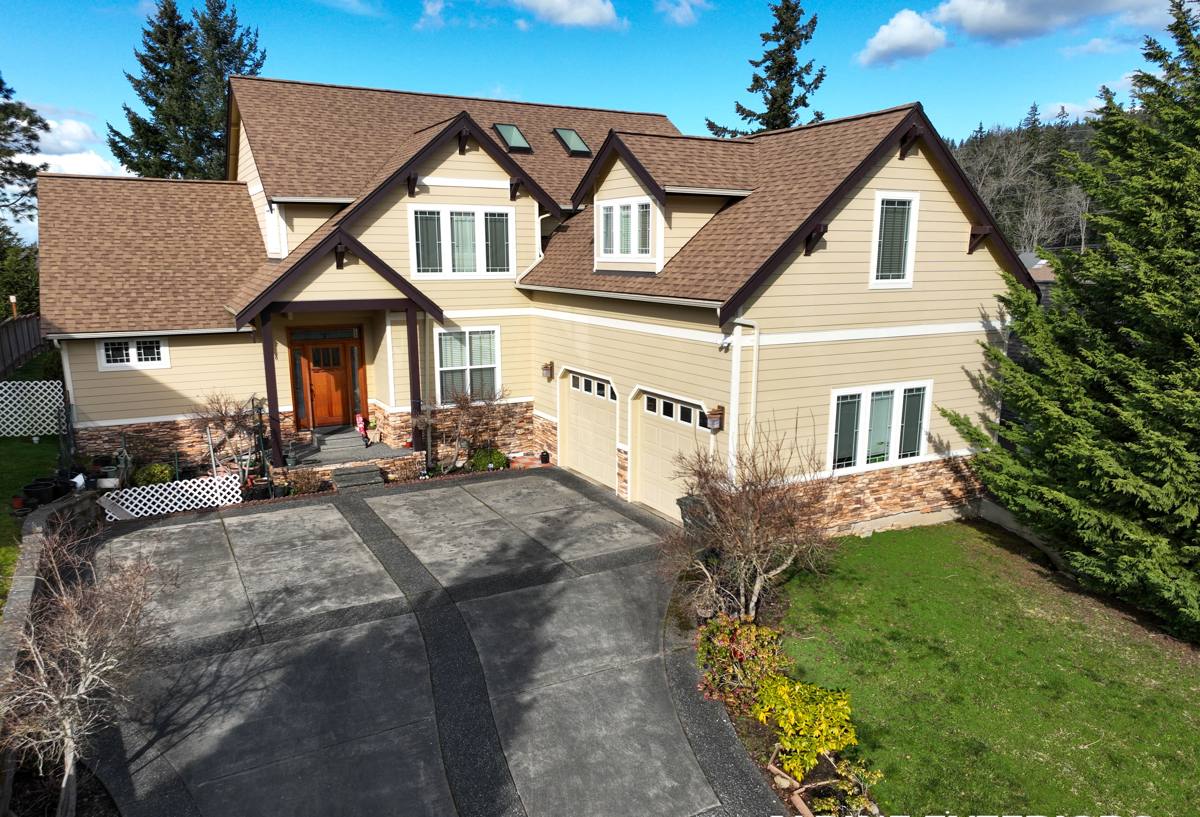
What Actually Causes Roof Repairs in Lynden
Wind-Driven Rain at Weak Points
Rain in this valley doesn't fall straight down as often as people assume. Wind pushes it sideways into valleys, around chimneys and vent pipes, and under flashing that's lapped correctly for vertical rain but not for a horizontal push. Most leak calls we get trace back to one of a handful of spots: valley flashing, step flashing along a wall intersection, or a pipe boot that's cracked and letting water track sideways under the shingle above it.
Moss and Sustained Moisture
Shaded slopes and roofs under mature trees stay damp longer than sun-exposed ones, and over a few seasons that turns into visible moss growth. Moss holds water against the roofing surface and can work its way under shingle tabs, lifting edges just enough to let wind-driven rain in behind them. It's a slow failure — the roof looks mostly fine until a wet winter finds the weak spot moss has been creating for years.
Storm and Wind Damage
Whatcom County gets its share of windstorms, and a roof that was fine before one can end up with lifted or missing shingles, bent flashing, or debris damage after. These repairs are usually more straightforward to diagnose since there's a clear before-and-after, but the fix still needs to account for the same moisture exposure that caused slower damage elsewhere on the roof.
Repair or Replace: How We Make That Call
Not every roof problem in Lynden needs a full roof replacement, and we don't default to recommending one. The honest answer depends on the roof's age, how localized the damage is, and what condition the roofing underneath the visible problem is actually in once we get eyes on it.
| Situation | Usually a Repair | Usually Points to Replacement |
|---|---|---|
| Roof age | Under roughly 15-18 years, especially asphalt shingle | Nearing or past the material's realistic service life |
| Damage pattern | Isolated to one area, flashing point, or storm-damaged section | Widespread granule loss, curling, or moss damage across multiple slopes |
| Decking condition | Solid, dry roof deck under the damaged area | Soft, delaminating, or water-stained decking found during the repair |
| Leak history | First occurrence or a known, fixable cause | Repeat leaks in different spots suggesting broad material failure |
We'll tell you plainly which category your roof falls into, including when a repair is the right call even though a replacement would obviously be more revenue for us. If a roof deck is soft or a repair would just be patching over a bigger problem, we'll say so before doing the work rather than after.
What a Correct Roof Repair Actually Involves
A repair that holds up in this climate goes further than swapping out a few visibly damaged shingles. On every repair, that means:
- Pulling back enough surrounding roofing to see the actual extent of the damage, not just the visible tip of it
- Checking the roof deck underneath for softness, staining, or delamination before closing the repair back up
- Replacing flashing — not just resealing it — at any valley, chimney, vent pipe, or wall transition tied to the failure
- Matching underlayment and fastener quality to what's already on the roof, or upgrading it where the original installation was thin
- Confirming attic or roof deck ventilation isn't trapping moisture near the repaired section
Skipping any of these is how a repair turns into a callback a year later. Resealing over a cracked pipe boot without checking the decking underneath, for example, can leave hidden rot that shows up as a ceiling stain the following winter.
Common Repair Scenarios on Lynden Homes
Flashing Leaks
Flashing failure is the single most common repair we see, and it's rarely the flashing material itself — it's a lapping or sealing detail that was done wrong originally or has worked loose over time. A proper flashing repair replaces the piece and re-integrates it correctly with the surrounding shingles, rather than just running a bead of sealant along the edge.
Moss-Related Shingle Lift
Where moss has been lifting shingle tabs for a while, the shingles underneath are often still structurally fine, but the moss needs to be properly removed — not pressure-washed, which can strip granules — and the affected shingles resealed or replaced individually. We'll also flag whether the shade or debris causing the moss buildup is something worth addressing separately.
Storm-Damaged Sections
Wind-lifted or missing shingles after a storm are usually a clean, contained repair as long as it's addressed promptly. The bigger risk with storm damage isn't the repair itself, it's the gap between the storm and the repair — an exposed section left through even one more heavy rain can turn a shingle repair into a decking repair.
Skylight and Vent Penetrations
Any place something punches through the roof plane is a place water can find its way in eventually. Repairs around skylights and roof vents need the flashing and seal redone as a unit, not just caulked at the visible seam, since that seam is rarely where the actual leak path is.
Our Roof Repair Process
Diagnosis First
We start by finding the actual source of the problem, which often isn't directly above where a homeowner sees a stain or drip inside. Water tracks along rafters and decking before it shows itself, so a visible leak spot and the real entry point can be several feet apart.
A Written, Specific Scope
Before any work starts, you get a clear description of what's being repaired and why, not just a price. If we find something worse once we open up the area — soft decking, for instance — we stop and talk with you before continuing rather than making that call unilaterally.
The Repair Itself
We match materials to what's already on your roof where that makes sense, and use products rated for sustained moisture exposure rather than minimum-code materials, since a repair done with thin materials in this climate tends to be a short-term fix.
Cleanup and a Clear Explanation
We clean up debris and old material from the job site and walk you through what was actually wrong, what we did about it, and anything worth keeping an eye on going forward — including whether the rest of the roof is aging in a way that's worth planning for.
Why a Crew That Already Works in Lynden Matters
Roof repair is one of those jobs where local familiarity actually changes the outcome, not just the convenience. A crew that regularly works roofs in this valley has already seen how moss builds up on the shaded slopes typical of Lynden's tree cover, how wind-driven rain behaves in this specific stretch of the county, and which flashing details tend to fail first on the housing stock common here. That's the difference between a repair that guesses at the cause and one that's seen the same failure pattern enough times to diagnose it quickly and correctly.
There's also a practical side to it: a leak doesn't wait for a convenient schedule, and a contractor who's already routinely in Lynden and the surrounding area can typically respond faster than one dispatching a crew from well outside the region for a single job.
Roof Repair Cost Factors in Lynden
Roof repair costs vary enough job to job that we won't quote a number without seeing the roof, but the main factors that move the price are consistent:
| Factor | Why It Affects Cost |
|---|---|
| Extent of hidden damage | Soft or rotted decking found under the visible damage adds material and labor beyond the original estimate |
| Roof pitch and accessibility | Steep or hard-to-access roof sections take longer and require more safety setup |
| Number of penetrations involved | Repairs touching multiple vents, skylights, or chimney flashing take more time than a single flat-shingle patch |
| Material matching | Older roofs with discontinued shingle colors or profiles may need a broader section replaced to blend properly |
| Urgency and season | An active leak during heavy rain may call for temporary protection before the permanent repair can be scheduled |
Most straightforward repairs — a section of flashing, a handful of damaged shingles — are a modest, bounded cost. Repairs that uncover deck damage or touch multiple areas of the roof cost more, and we'll always explain why before the price changes, not after.
Keeping a Repaired Roof From Needing Repeat Repairs
A good repair should hold, but Lynden's climate keeps working on a roof year-round, so a little upkeep goes a long way toward not being back in this position in two years. Worth keeping an eye on:
- Clear moss and debris from valleys and gutters before the wet season builds up, especially under trees
- Watch for granule buildup in gutters, which signals shingle wear worth checking before it becomes a leak
- Have the roof visually checked after any significant windstorm, not just on a routine annual schedule
- Address small issues — a lifted shingle corner, a hairline gap at flashing — while they're still small repairs
- Keep an eye on interior ceilings and attic spaces for early staining, which shows up well before a visible roof problem does
If you're dealing with a leak, storm damage, or a roof that's just showing its age in Lynden, we're happy to take a look and give you a straight answer about what it actually needs. Reach out for a free, no-pressure estimate using the form below.