 Bellingham
 What Lynden's Climate Actually Does to Exterior Siding
Lynden sits inland from Bellingham Bay in the Nooksack River valley, but it doesn't escape the marine weather pattern that defines Whatcom County. Moist air moves in off the Salish Sea and gets funneled up the valley, which means Lynden homes still see long stretches of driving rain, heavy fall and winter humidity, and the kind of low, lingering dampness that keeps siding wet for days at a time. Add in the agricultural landscape around town — open fields, irrigation, tree lines — and you get a lot of shaded, slow-drying wall sections on the north and east sides of houses, exactly where moss and algae take hold first.
Over a full year, siding here doesn't fail because of one dramatic storm. It fails from repeated wet-dry cycling: rain soaks into a seam or a cut edge, the wall doesn't fully dry before the next system rolls through, and that cycle repeats for months every fall through spring. Wood-based products swell and split under that pattern. Vinyl doesn't rot, but it can't stop moisture from tracking behind it at loose joints, and it does nothing to slow moss and mildew growth on the surface. Whatever goes on a Lynden home needs to handle sustained moisture exposure and a genuinely long moss season without babying.
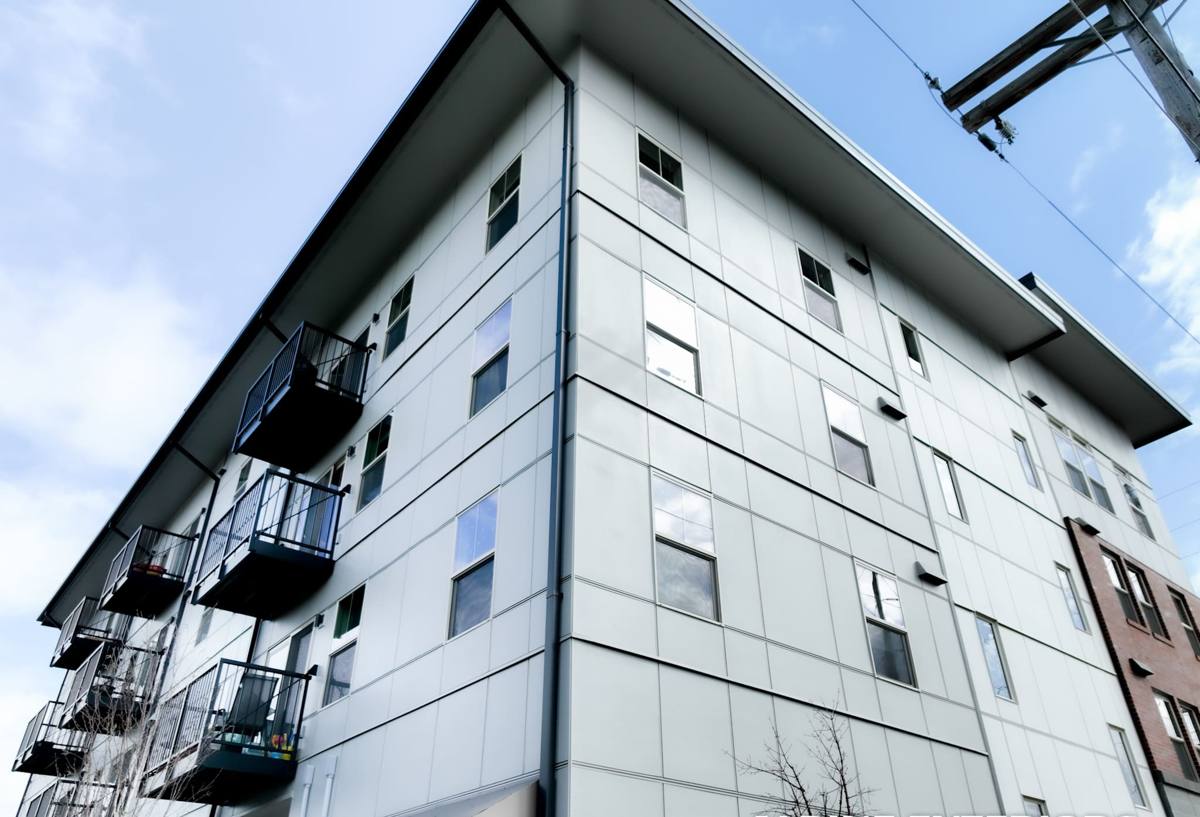
Why We Install Fiber Cement Instead of the Alternatives
We install James Hardie fiber cement exclusively — not vinyl, not engineered wood like LP SmartSide, not primed cedar or spruce, and not other fiber cement brands like Cemplank or Allura. That's a deliberate standard, not a sales preference, and it comes down to how each material actually performs under Whatcom County conditions over 20-30 years, not just how it looks on installation day.
Fiber cement is manufactured from cement, sand, and cellulose fiber, cured into a dense, stable board. It doesn't absorb water the way wood-based siding does, it won't support the kind of surface growth that thrives in shaded, damp corners, and it holds paint and factory finish far longer than wood substrates because the board itself isn't moving with every humidity swing. It's also non-combustible, which matters more each year as regional wildfire smoke and dry-season fire risk become a bigger part of Pacific Northwest summers.
We standardized on James Hardie specifically within that category because of consistency: HZ5 climate-engineered formulations built for wetter regions, factory-applied ColorPlus finish that's baked on and warrantied against fading and peeling, and a manufacturing and distribution track record that means the boards, trim, and touch-up materials we use today will still be sourceable if a homeowner needs a repair in fifteen years.
What a Correct Fiber Cement Installation Actually Involves
Fiber cement is only as good as the installation behind it. Most of the siding problems we get called out to look at — cupping trim, staining at butt joints, soft spots at the bottom course — trace back to installation shortcuts, not the material itself.
Drainage Plane and Flashing
Correct installation starts behind the siding, not at it. That means a continuous water-resistive barrier, properly lapped and taped seams, and a drainage gap or furring where the wall assembly calls for it so any moisture that does get past the siding has somewhere to go besides your sheathing. Every window, door, and penetration gets flashed so water sheds outward and down, never behind the barrier.
Fastening and Clearances
Hardie boards need to be fastened per the manufacturer's blind- or face-nailing spec for the specific product and exposure, with the right fastener spacing and depth — over-driven nails crack the board's edge and under-driven ones let it move and eventually crack the paint line. We also hold clearance at grade, roof lines, and decks so siding isn't sitting in standing water or snow load, which is a common failure point we see on older installs around the county.
Joints, Caulking, and Trim
Butt joints are one of the most common places fiber cement installations go wrong. Tight, properly backed joints with the right sealant — not gapped and caulked over as an afterthought — keep water from wicking into the cut end of the board, which is the one part of a Hardie board not factory-sealed. Corner trim, J-channel, and any field-cut edges get primed or sealed before they go up, not after.
Factory Finish Integrity
Because we install ColorPlus prefinished product wherever the project allows it, most of the board surface never needs field painting at all. Where field cuts or touch-up are unavoidable, we use Hardie's matched touch-up system rather than off-the-shelf paint, so the finish actually behaves the way the factory coating does under UV and moisture.
Comparing Siding Options for a Lynden Home
| Factor | James Hardie Fiber Cement | Vinyl | Engineered Wood / Cedar |
|---|---|---|---|
| Moisture behavior in sustained rain | Dense, doesn't swell or wick like wood | Sheds water on the face; joints can let moisture behind panels | Absorbs moisture at cuts and joints over time |
| Moss/algae resistance | Factory finish resists surface growth | Growth still occurs in shaded, damp areas | Prone to growth, especially unfinished or aging cedar |
| Fire rating | Non-combustible | Melts/deforms under heat | Combustible |
| Finish longevity | Factory ColorPlus, long fade/peel warranty | Color molded in; can chalk and fade | Needs repainting/re-staining on a recurring cycle |
| Long-term maintenance | Periodic wash, caulk check | Low, but joint failures are hard to spot | Regular repainting, sealing, and rot inspection |
How Our Process Works From Estimate to Finish
We start with a walk-around of the home, looking specifically at moisture history — staining, soft trim, past patch jobs, grade and drainage around the foundation — because that tells us more about what the wall assembly needs than the existing siding's age alone. From there we scope the tear-off, any sheathing repair, the water-resistive barrier and flashing detail, and the specific Hardie board profile, exposure, and color that fits the home.
During installation, flashing and barrier work gets inspected before a single course of siding goes up — that step is not visible once the job is done, so we don't skip it to save time. We sequence around Whatcom County's weather rather than fighting it, which in practice means watching the forecast for dry stretches for barrier and flashing work and not rushing exposed sheathing into a wet system.
Once siding is up, trim, caulking, and touch-up get a final pass, and we walk the home with the owner before calling it finished — pointing out anything that will need routine attention (like a low corner that collects splash-back) rather than letting it surface as a surprise later.
Living With Fiber Cement Siding in Lynden's Wet Climate
Fiber cement is genuinely low-maintenance compared to wood, but "low-maintenance" isn't "no-maintenance" in a climate that stays damp half the year. A simple annual routine keeps a Hardie installation performing the way it's designed to:
- Rinse the siding down once or twice a year, focusing on north- and east-facing walls and any spots shaded by trees or fences where moss gets a foothold first
- Check caulking at butt joints, trim, and around windows/doors for cracking or gaps, especially after the first hard freeze-thaw cycle each winter
- Keep gutters clear and downspouts directed away from the wall — most localized siding damage we see traces back to overflowing gutters, not the siding itself
- Trim back vegetation and maintain a few inches of clearance at grade so walls can dry between rain events
- Address any soft trim, staining, or paint lifting promptly rather than waiting for the next dry season
What Affects the Cost of a Lynden Siding Project
| Cost Factor | Why It Matters |
|---|---|
| Tear-off and sheathing condition | Hidden moisture damage found during tear-off adds repair scope before new siding goes on |
| Board profile and exposure | Lap width, texture (smooth vs. cedar-shake style), and panel vs. plank all price differently |
| Trim and detail work | Corner boards, window/door casing, and fascia detail add labor beyond flat wall footage |
| Home height and access | Multi-story sections and steep or tight lots require more staging and labor time |
| Color/finish selection | Factory ColorPlus vs. field-painted options affect both material cost and long-term upkeep |
We give a firm, itemized quote after the walk-around rather than a rough number over the phone, because tear-off condition and detail work are the two biggest swings on a real project.
Why Local Installation Experience Matters for This Job
Fiber cement installation guidance from the manufacturer is written for a national audience — it doesn't account for a Whatcom County wet season that can run from October into May, or for how much a shaded, valley-adjacent lot near Lynden slows wall-drying compared to an open, sun-exposed site. A crew that installs siding across this specific climate day in and day out makes different judgment calls on flashing detail, drying time between steps, and where extra attention to drainage is worth it — decisions that don't show up on a spec sheet but show up in how the siding performs ten winters from now.
If you're considering fiber cement siding for a home in or around Lynden, we're glad to walk the property, look at what your current siding and trim are telling us, and put together a straightforward, no-pressure estimate — just fill out the form below to get started.