 Bellingham
 Why Lynden Roofs Need to Handle More Than a Little Rain
Lynden sits inland from Bellingham Bay, but that doesn't mean the roof over your head gets an easy ride. Whatcom County winters bring long stretches of steady, driving rain, low winter sun that keeps north-facing slopes damp for days, and wind that comes off the Nooksack valley and the foothills with real force. Add in the marine, moisture-heavy air that defines this whole corner of Washington, and you get a climate that is hard on any roofing material that doesn't shed water fast and stay put in wind.
Asphalt shingles in this region fight a losing battle against moss, algae staining, and granule loss from years of saturation. Metal roofing doesn't solve every problem automatically, but installed correctly, it holds up to the specific combination of rain volume, wind exposure, and shade-driven moss growth that Lynden and the rest of Whatcom County deal with every year.
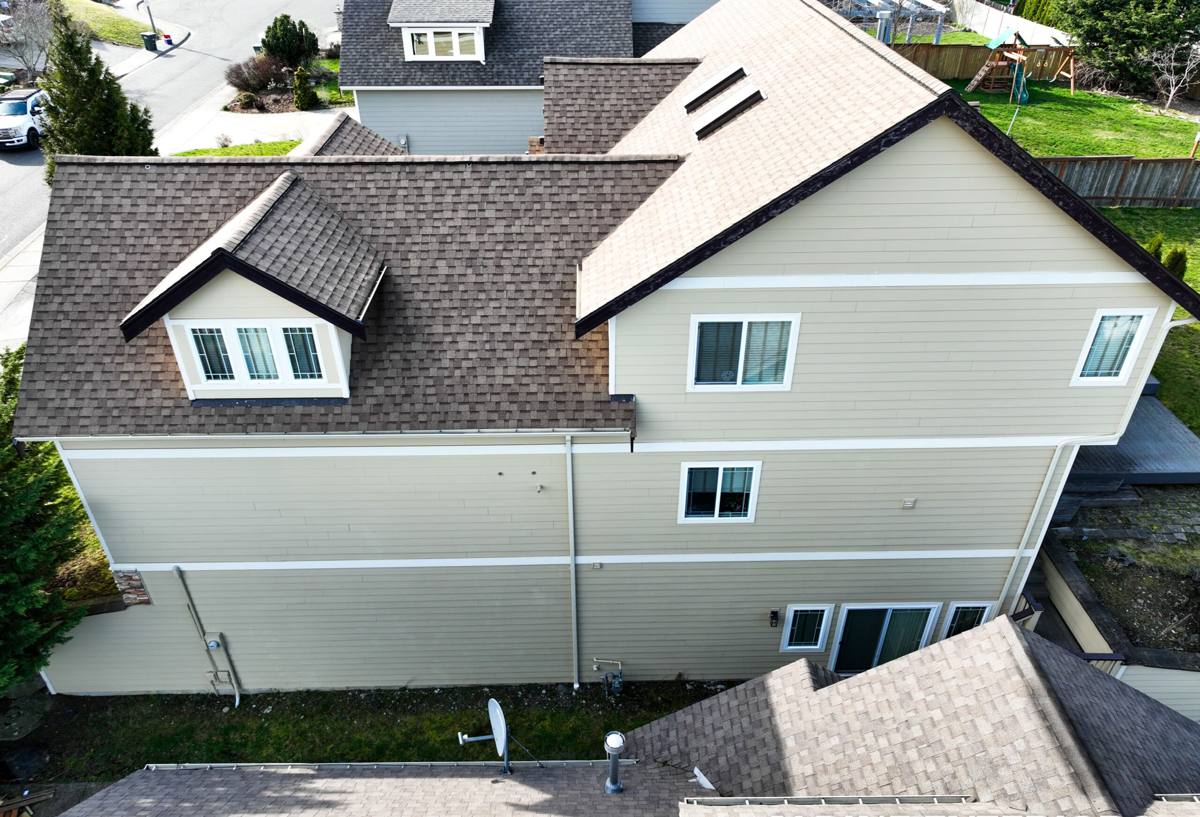
What a Correct Metal Roofing Installation Actually Involves
Metal roofing looks simple from the ground, but the difference between a roof that performs for decades and one that leaks in year three comes down to details most homeowners never see.
Underlayment and Moisture Barriers
Metal panels are not waterproof on their own — the underlayment beneath them is doing a lot of the real work. In a climate that sees as much sustained rain as ours, we use synthetic or high-temp ice-and-water underlayment at eaves, valleys, and any low-slope transitions, not just a thin felt layer. This matters more here than in drier climates because Whatcom County roofs stay wet for longer stretches, giving water more time to find any weak point.
Fastening and Panel Movement
Metal expands and contracts with temperature swings, and panels that are fastened wrong — too tight, wrong spacing, wrong fastener type — will eventually work themselves loose or oil-can (that wavy, rippled look) over time. Correct fastening allows for that natural movement while still holding the panel firmly against wind uplift, which is a real consideration on exposed Whatcom County properties.
Flashing and Penetrations
Chimneys, vents, skylights, and valleys are where almost every roof leak actually starts, metal or otherwise. Properly formed and sealed flashing at every penetration and roof-to-wall transition is not optional trim work — it's the difference between a roof that sheds our driving rain and one that slowly lets it in.
Ventilation
A metal roof installed over a poorly ventilated attic can trap moisture underneath the deck, which leads to rot and mold regardless of how good the metal itself is. We check and correct intake and exhaust ventilation as part of any metal roofing project, not as an afterthought.
Metal Panel Options for Lynden Homes
Not every metal roofing system is the same product with a different name. The three main categories homeowners choose between have real differences in cost, appearance, and long-term performance.
| Panel Type | Appearance | Best Fit | Trade-offs |
|---|---|---|---|
| Standing Seam | Clean vertical lines, hidden fasteners | Homes wanting a modern or high-end look, long-term low maintenance | Higher upfront cost than exposed-fastener panels |
| Exposed Fastener (Screw-Down) | Ribbed panel look, visible screws | Budget-conscious projects, outbuildings, shops | Fasteners and washers need periodic inspection and eventual replacement |
| Stone-Coated Steel | Mimics shingle, shake, or tile profiles | Homeowners who want a metal roof's durability with a traditional look | More installation steps, typically a higher material cost |
We'll walk through which option fits your roof's slope, your budget, and how the house looks from the street — there's no single "best" panel type, only the one that fits your specific project.
Moss, Debris, and Roof Design in a Wet Climate
Long moss season isn't just a shingle problem. Any roof with shaded sections, overhanging trees, or valleys that collect needles and leaves can develop moss growth on the surface grime that builds up over time, even on metal. The difference is that metal doesn't give moss the textured, porous surface it needs to root and hold moisture the way asphalt granules do, so buildup tends to sit on top rather than working into the material.
That said, design still matters. We pay close attention to:
- Valley design that moves water and debris off the roof instead of letting it pool
- Panel seam placement so water sheets straight down rather than pooling at laps
- Gutter and downspout capacity sized for actual rainfall volume, not the bare minimum
- Clearance from overhanging branches where practical, to cut down on debris accumulation
None of this eliminates the need for occasional roof cleaning, but it reduces how much moss and debris a Lynden roof accumulates in the first place.
Our Process, Start to Finish
- On-site assessment. We walk the roof (or inspect from the ground/ladder where access requires it), check the existing deck condition, ventilation, and flashing points, and note any problem areas.
- Honest options and estimate. You get a written estimate that spells out panel type, underlayment, flashing details, and timeline — no vague allowances that turn into surprise charges later.
- Material order and scheduling. Metal panels are often fabricated to your roof's exact measurements, so we confirm specs before ordering and give you a realistic install window.
- Tear-off and deck check. If we're removing an old roof, we inspect the decking underneath and flag any rot or damage before covering it back up — you approve any repairs before we proceed.
- Installation. Underlayment, panels, flashing, and trim go on in sequence, with attention to fastening and sealing at every penetration.
- Final walkthrough. We go over the finished roof with you, answer questions, and make sure you know what basic maintenance (if any) the system needs going forward.
Why a Bellingham-Based Crew Matters for a Lynden Project
Metal roofing isn't a product you install the same way in Phoenix as you do in Whatcom County. A crew that works this region regularly already knows how much underlayment coverage our rain volume actually calls for, how local wind exposure affects fastening patterns, and how shaded, moss-prone rooflines here behave differently than they would in a drier climate. That's not something you get from a national installer parachuting in for a single job.
We're based in Bellingham and work throughout Whatcom County, including Lynden. That means if a question comes up after installation — a sound during a windstorm, a spot you want checked before winter — you're calling a crew that's a short drive away and already knows your roof, not routing through a call center.
What Affects the Cost of a Metal Roof
Metal roofing costs more upfront than asphalt shingles, and the final number depends on several factors specific to your home. As a broad range, homeowners in this region typically see metal roofing installations run higher per square foot than a standard shingle replacement, with standing seam at the top end and exposed-fastener panels more affordable. Exact numbers depend entirely on your roof.
| Factor | Why It Matters |
|---|---|
| Panel type | Standing seam costs more than exposed-fastener or stone-coated steel |
| Roof complexity | Steep slopes, multiple valleys, and dormers add labor time and material cuts |
| Tear-off vs. overlay | Removing an old roof and checking the deck adds cost but avoids covering hidden problems |
| Underlayment upgrades | Full ice-and-water coverage costs more than minimum-code underlayment but performs better here |
| Ventilation corrections | Fixing inadequate attic ventilation adds a line item but protects the whole system |
We break every one of these out in your written estimate so you know exactly what you're paying for and why.
Maintaining a Metal Roof in Whatcom County
Metal roofing is genuinely low-maintenance compared to shingles, but "low-maintenance" isn't the same as "no-maintenance," especially with our moss season and rainfall totals. A simple annual routine covers most of what a metal roof needs:
- Clear debris (leaves, needles, moss buildup) from valleys and around penetrations once or twice a year
- Check gutters and downspouts for clogs before the heavy fall rains start
- Look for any loose or lifted trim, especially after a significant windstorm
- Inspect exposed fasteners on screw-down panels for backing out or worn washers
- Keep overhanging branches trimmed back where practical to reduce shade and debris
If you're not comfortable getting on the roof yourself, we're happy to do a periodic check as part of an ongoing relationship — most of this maintenance takes very little time when it's caught early.
If you're weighing metal roofing for a home in Lynden or anywhere else in Whatcom County, we're glad to come take a look and give you a straight, no-pressure estimate — just fill out the form below and we'll get in touch.