 Bellingham
 Windows Built for the Way York Homes Actually Live With the Weather
York is one of Bellingham's established residential neighborhoods, close enough to Bellingham Bay and the Whatcom County coastline that the weather isn't an abstract concern — it's something homeowners deal with every week of the year. Salt-laden air off the bay, driving rain that comes in sideways during fall and winter storms, and a moss season that seems to stretch longer every year all put real, ongoing stress on window frames, sills, and the seals around them. A window that was installed correctly for a drier inland climate often struggles here, and a window installed without real attention to flashing and drainage will show it within a few wet seasons.
Custom window work in York isn't about upselling homeowners on something fancier than they need. It's about matching the window unit, the frame material, and the installation method to what this specific climate does to a house over ten, twenty, and thirty years. That's the standard we hold every job to.
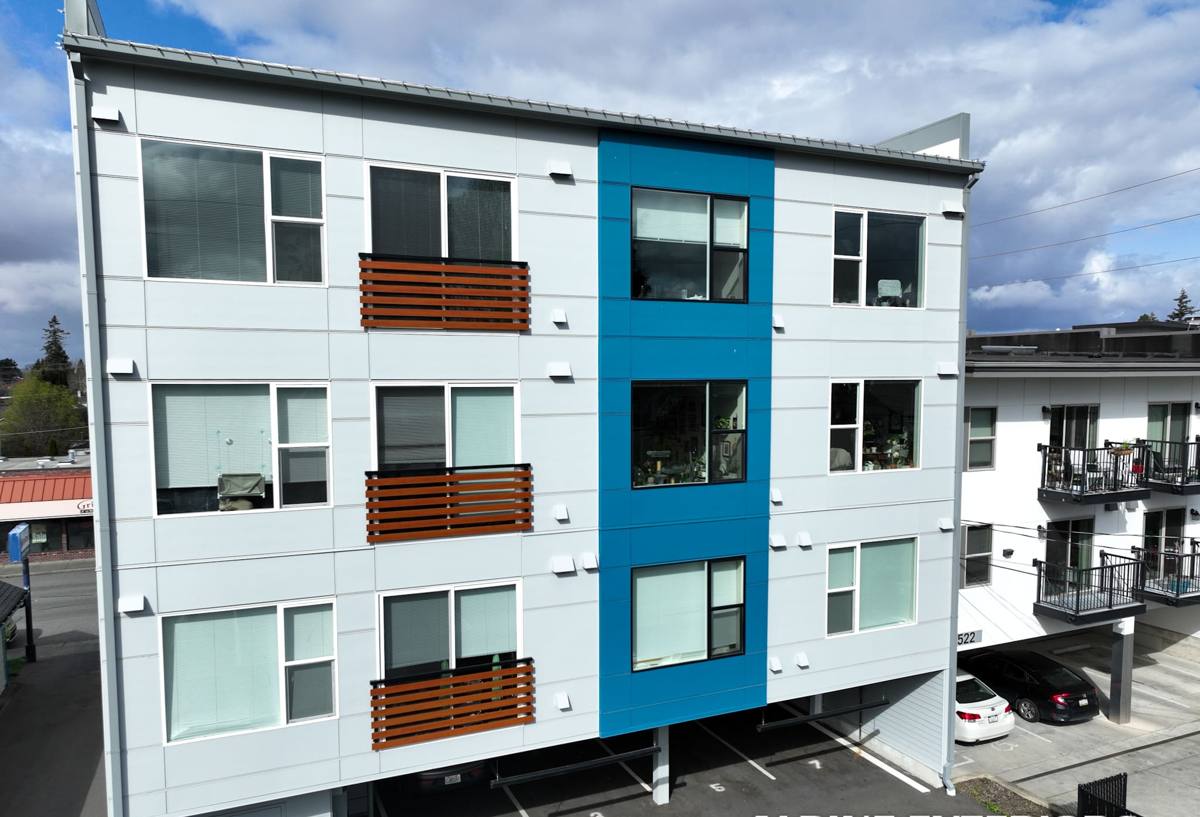
What "Custom" Actually Means Here
"Custom" gets used loosely in this industry, so it's worth being specific. For us, a custom window job means the window is built and installed to the actual dimensions and conditions of your opening — not squeezed into a stock size with extra trim to hide the gaps. Many York homes, especially older ones, have openings that were framed decades before modern window manufacturing standardized sizes. Settling, past renovations, and older framing techniques mean no two openings in an older house are guaranteed to match, even on the same wall.
Where Custom Sizing Matters Most
Custom sizing and detailing matter most in a few specific situations:
- Replacing a single window in an older home where the rest of the house wasn't touched
- Matching an unusual or non-standard opening shape or size
- Preserving original trim, siding lines, or architectural character when only the window itself needs replacing
- Homes where prior repairs or additions left openings slightly out of square
- Rooms where sightlines, sun exposure, or interior layout call for a specific configuration rather than a stock unit
Custom vs. Off-the-Shelf
Off-the-shelf windows aren't inherently bad products — they're built to a price point and a standard size. The problem is when an installer forces a stock unit into an opening it wasn't designed for and compensates with extra caulk or trim. That approach might look fine on install day, but it's usually the first thing to fail once the rain starts driving against the wall.
Common Window Problems We See on York Homes
Because York has a mix of older housing stock alongside newer construction, we see a fairly consistent set of issues when we're called out to look at failing windows in the neighborhood:
- Fogged or failed double-pane seals — the seal between panes breaks down, moisture gets trapped, and the glass fogs permanently. This is a sign of age and thermal cycling, not something that can be fixed without replacing the sash or unit.
- Soft or rotted wood sills and frames — persistent moisture from driving rain, especially on west- and south-facing walls, breaks down wood over time if the finish and flashing weren't maintained.
- Moss and organic growth in sill tracks and corners — Whatcom County's long damp season gives moss and algae plenty of time to establish in low-drainage spots, which holds moisture against the frame longer than it should sit.
- Drafts and water intrusion around the frame — usually a sign that flashing or sealant at the window-to-wall transition has failed, not that the window itself is defective.
- Corrosion on hardware and frames near the bay — salt air accelerates corrosion on metal components, particularly on older aluminum-frame windows.
Choosing the Right Window Material for This Climate
Material choice matters more here than in a lot of other parts of the country, because the combination of salt air, near-constant moisture, and temperature swings between summer and winter is genuinely demanding on building materials. There's no single "best" window material for every home — it depends on your budget, your home's style, and how much upkeep you want to take on.
| Material | How It Handles This Climate | Maintenance | Typical Fit |
|---|---|---|---|
| Vinyl | Resists moisture and salt corrosion well; won't rot | Low — occasional cleaning | Cost-conscious replacements, rental properties, most home styles |
| Fiberglass | Very stable in temperature swings and damp conditions; strong moisture resistance | Low | Homeowners wanting long-term performance and a straighter, more solid frame profile |
| Wood-clad | Interior wood warmth with an exterior shell protecting against weather; still requires attention at joints and sills | Moderate — exterior clad reduces but doesn't eliminate upkeep | Historic-style or architecturally detailed homes where wood interiors matter |
| Aluminum | Prone to corrosion near salt air and conducts cold, leading to condensation | Higher — we generally steer homeowners away from it in this location | Rarely our recommendation for York's coastal exposure |
We don't push one brand or one material on every homeowner. What we do is walk through your specific wall exposure, your budget, and how the house is used, and give you an honest read on which option holds up best in that spot — a north-facing window in a sheltered corner has very different needs than a west-facing window that takes the brunt of winter storms.
Our Custom Window Installation Process
The window unit itself is only part of the job. How it's installed determines whether it performs for five years or twenty-five. Our process on York homes generally follows these steps:
- On-site assessment — we measure the actual opening, check the condition of the surrounding framing and sheathing, and look for any existing moisture damage before quoting the work.
- Material and unit selection — based on that assessment, we talk through material options and configurations that fit the opening, the home's style, and your budget.
- Removal and inspection — when the old window comes out, we check the framing underneath. Hidden rot or old damage gets addressed before a new window ever goes in — installing a new window over compromised framing just hides the problem.
- Flashing and weatherproofing — proper flashing tape, sill pans, and integration with the existing siding or house wrap are installed to direct water away from the frame, not toward it.
- Installation and insulation — the window is set square and level, shimmed correctly, and insulated around the frame without over-packing, which can bow the frame and affect operation.
- Exterior and interior finish — trim, caulking, and sealant are finished to match the home and fully seal the transition points where water and air infiltration typically start.
- Final walkthrough — we check operation, seal integrity, and finish quality with you before considering the job done.
Flashing and Weatherproofing: The Part That Actually Prevents Leaks
Most window failures we're called out to repair in Bellingham aren't failures of the window itself — they're failures of the flashing and weatherproofing around it. With the kind of driving, wind-blown rain Whatcom County gets in fall and winter, water is going to hit the window and the wall around it directly, not just fall straight down. If the flashing isn't layered correctly — sill pan first, side flashing lapped over that, then house wrap or building paper lapped over the top — water finds its way behind the window trim and into the wall cavity.
This is also where the window has to integrate correctly with your siding. A window installation that ignores how the siding sheds water at that junction is setting up a leak point that may not show itself for a year or two, by which point there can be hidden rot in the wall framing. Because we work on siding and windows together, we install windows with the whole wall assembly in mind, not as an isolated component.
Energy Efficiency and Comfort in a Damp, Mild Climate
Whatcom County doesn't see the extreme cold of the Midwest or the heat of the Southwest, but the damp, mild winters bring their own challenge: condensation. A window with a poor thermal break or a low-quality seal will fog or sweat on cold mornings, and that moisture sitting on the interior sill and frame over months is its own maintenance problem. When we spec windows for York homes, we look at:
- U-factor — how well the window resists heat transfer; lower is better for keeping interior surfaces warmer and reducing condensation risk
- Condensation resistance rating — a more direct measure of how a window handles our specific damp, mild-cold conditions
- Air infiltration rating — how much air leaks through the frame and sash, which affects both comfort and heating costs
Getting these right doesn't require the most expensive window on the market — it requires matching the window's ratings to the specific exposure of that opening in your home.
What Custom Windows Typically Cost, and What Drives the Price
We don't post fixed prices because every opening and every home is different, but the main cost factors are consistent across most York projects:
| Factor | Why It Affects Cost |
|---|---|
| Window size and configuration | Larger units, multi-pane configurations, and non-standard shapes cost more to build and install |
| Material | Vinyl is typically the most budget-friendly; fiberglass and wood-clad run higher |
| Condition of existing framing | Hidden rot or damage found during removal adds repair work before the new window goes in |
| Number of windows | Whole-house replacements have better per-unit pricing than single-window jobs |
| Trim and exterior finish work | Matching existing trim profiles or siding takes more labor than a straightforward swap |
| Access and height | Second-story or hard-to-access windows add labor and equipment time |
We'll walk through your specific situation and give you a clear, itemized estimate before any work starts — no surprise add-ons once the job is underway.
Why It Matters to Hire a Crew That Already Works in York
A contractor who works regularly in this neighborhood already understands the age range of the housing stock, how the local exposure to bay-driven weather tends to hit different sides of a house, and what moss and moisture do to sills and trim over a Bellingham winter. That familiarity shows up in small but important decisions — knowing to check for hidden rot around older single-pane frames before quoting a straightforward "swap," or recognizing when a sill needs to be rebuilt rather than just resealed.
It also means we're not guessing at how to integrate new windows with the existing siding and trim on a home built to an older style. Getting that transition right the first time is what keeps water out for the long haul, and it's the difference between a window replacement that lasts and one that needs attention again in a few years.
Signs It's Time to Have Your Windows Looked At
- Visible fog or moisture trapped between panes
- Soft, spongy, or discolored wood at the sill or frame
- Persistent drafts even when the window is fully closed and latched
- Moss or dark staining building up in the sill track or corners
- Difficulty opening, closing, or latching the window
- Condensation on the interior glass or frame during cold mornings
- Peeling or bubbling paint on the interior or exterior trim around the window
If any of that sounds familiar, or if you're planning ahead for a window project on a York home, we're happy to take a look and give you a straightforward, no-pressure estimate. Use the form below to get started — we'll assess your windows, talk through honest options for your home and budget, and give you a clear picture of what the work involves before anything is scheduled.