 Bellingham
 Building New in York? The Windows Are Not a Detail to Get Right Later
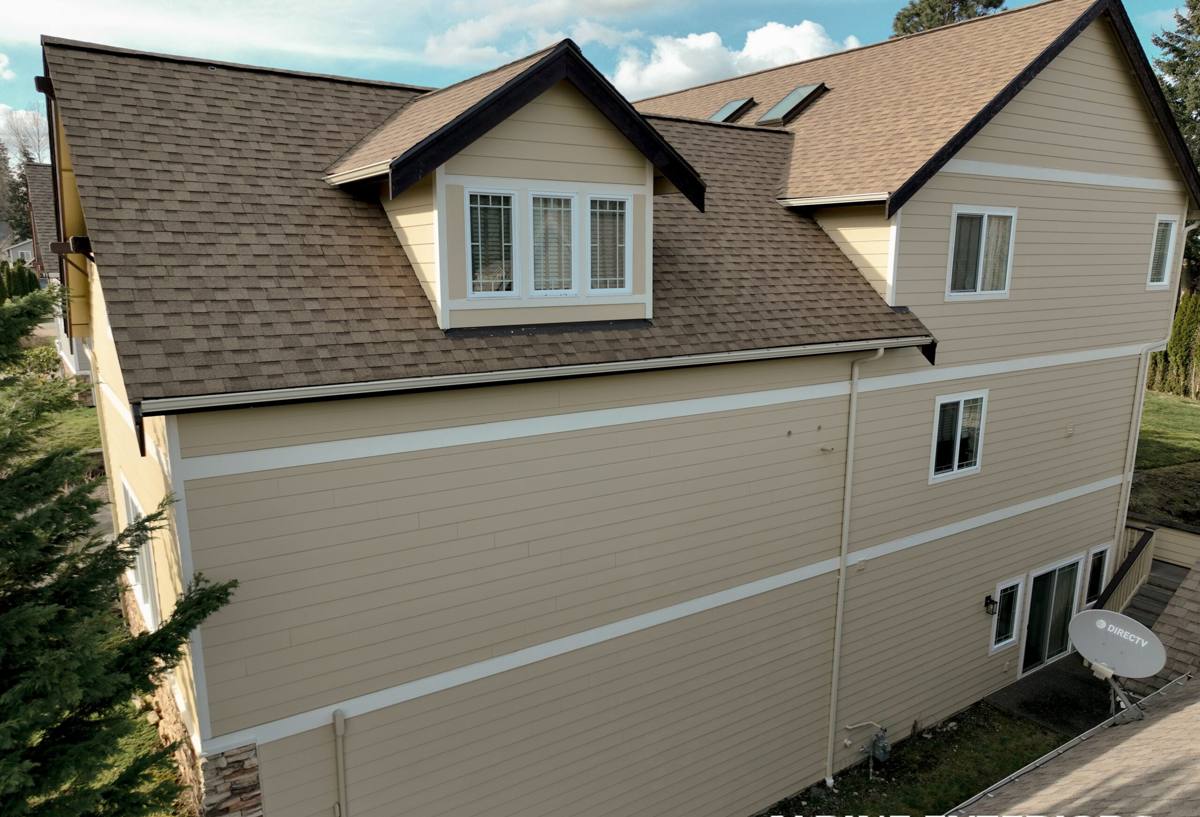
York is one of Bellingham's older, established neighborhoods, and like most of Whatcom County it's seeing its share of new builds, additions, and full teardown-rebuilds tucked in among the existing housing stock. When you're framing a new home or a major addition, the window install happens once, at rough-in, and then it gets buried behind trim, siding, and drywall for the next several decades. Get the flashing, sealing, and fastening wrong at that stage and you won't find out until there's a stain on a ceiling or rot in a sill years later. We install new-construction windows for builders and homeowners in York and around Bellingham, and we treat that rough-opening work as the part of the job that actually determines whether the window performs.
What Bellingham's Climate Asks of New-Construction Windows
Whatcom County doesn't get the harshest weather in the country, but it gets a steady, patient kind of exposure that punishes shortcuts. New-construction windows here need to be installed with that in mind from the first stage, not corrected for later.
Salt Air Off the Bay
Homes in and around Bellingham sit close enough to the water that salt-laden air is a real factor, even a few miles inland. Salt air accelerates corrosion on exposed fasteners, hinges, and hardware, and it degrades some sealants faster than manufacturers' general-climate warranties assume. We factor that in when choosing fasteners and sealant products, not just window brand.
Driving, Wind-Driven Rain
Rain in this region rarely falls straight down. Wind off the water pushes it sideways and up under trim, sills, and laps that would shed water fine in a calmer climate. A new-construction window's performance against wind-driven rain depends almost entirely on how the flashing and drainage plane are integrated at install, not on the window unit itself.
A Long Moss and Mildew Season
Bellingham's wet season runs long, and anything that stays damp for extended stretches — a sill that doesn't drain, a gap that traps moisture behind trim — becomes a place for moss, mildew, and eventually wood decay to take hold. New-construction detailing has to assume the assembly will be wet for months at a time and give that moisture a way out.
New-Construction Windows vs. Replacement Windows
These are two different products installed two different ways, and mixing them up on a new build causes real problems. New-construction (nail-fin) windows are designed to be installed into an open rough opening before siding and house wrap go on, with a flange that gets integrated into the drainage plane. Replacement windows are designed to go into an existing, finished opening without disturbing the surrounding siding or trim.
| Factor | New-Construction Window | Replacement Window |
|---|---|---|
| Typical use | New builds, additions, full teardown-rebuilds | Swapping a window into an existing, undisturbed opening |
| Installed relative to siding | Before house wrap and siding are applied | After siding is already in place, from the inside out |
| Flashing integration | Nailing fin ties directly into the drainage plane and flashing | Relies on the existing wall's flashing, which is not re-opened |
| Access to rough opening | Full access to sheathing, sill, and framing | Limited or no access to the framing behind the old frame |
| Best fit for York projects | New homes, ADUs, additions, second-story build-outs | Window-only upgrades on homes that aren't otherwise under construction |
If you're building new in York, the job should always be spec'd as a new-construction install. Using a replacement-style unit or installing a new-construction window the way you'd handle a retrofit skips the flashing integration that's the whole point of doing it during framing.
What a Correct Installation Actually Involves
The window unit itself is a fairly small part of long-term performance. The sequence it goes in with matters more.
Rough Opening and Sill Pan
Before a window ever goes in, the rough opening needs to be square, correctly sized, and fitted with a sloped sill pan so any water that does get past the window has somewhere to go besides the framing. Skipping the sill pan is one of the more common shortcuts we see on jobs we're brought in to fix, and it's invisible until there's a problem.
Flashing Sequence
Flashing has to be layered like shingles on a roof — each layer overlapping the one below it — so water is always directed outward and down, never into a seam. The window's nailing fin, the sill pan, the jamb flashing, the head flashing, and the house wrap all need to integrate in the right order. Get the order wrong and you've built a path for water to travel behind the siding instead of off of it.
Nailing Fin, Fasteners, and Sealant
Fasteners need to be corrosion-resistant given the salt-air exposure common around Bellingham, spaced and driven per the manufacturer's instructions so the fin isn't distorting the frame. Sealant goes at specific points — never as a blanket bead around the whole perimeter, which can trap water instead of shedding it. Backer rod sets the joint depth so sealant can flex with the building instead of tearing.
Interior Air Sealing
On the interior side, the gap between the rough framing and the window jamb gets sealed with a low-expansion foam or backer rod and sealant, not just packed with fiberglass. That gap is both a moisture path and an air leak if it's not treated properly, and it's easy to seal correctly before drywall goes up and nearly impossible after.
Choosing Materials and Glazing for a York New Build
Material choice matters less than installation quality, but it's still worth getting right for a new build you're planning to live with for decades.
| Material | Strengths | Trade-offs |
|---|---|---|
| Vinyl | Lower cost, good energy performance, low maintenance | Frame color options are limited; can expand/contract more with temperature swings |
| Fiberglass | Very stable dimensionally, strong, paintable | Higher upfront cost than vinyl |
| Wood, clad exterior | Traditional interior look, good insulating frame | Exterior cladding and any exposed wood need attention in a wet climate; more long-term upkeep |
For glazing, a double-pane unit with a low-E coating and an appropriate U-factor and SHGC (solar heat gain coefficient) for our climate zone is standard for new construction here — this region doesn't need aggressive solar control the way a hot, sunny climate would, but a good low-E package still helps with comfort and heating costs through Bellingham's long, gray winters. We'll walk through what's appropriate for the orientation and exposure of your specific build rather than defaulting to one spec for every window.
How We Work on New-Construction Jobs in York
- Plan review and window schedule. We work from the builder's or architect's plans to confirm sizes, egress requirements, and rough opening dimensions before anything is ordered.
- Ordering and lead time. New-construction windows are typically special-order items with real lead times. We build that into the framing schedule so the job isn't waiting on windows, or worse, windows aren't waiting in the weather.
- Coordination with the framer or GC. Rough openings get checked for square and size before install day, and we coordinate directly with whoever is running the build so there's no gap between framing and windows going in.
- Install: sill pan, flashing, unit, fastening, sealant. Each step follows manufacturer instructions and the flashing sequence appropriate to the wall assembly and house wrap being used.
- Inspection before siding closes it up. We check the flashing and seal work while it's still visible, because once siding goes on, it's not.
Mistakes We Watch For on New-Construction Sites
Most window failures we get called out to inspect trace back to a handful of repeatable errors made at install, not defective units. On new-construction jobs, we specifically check for:
- Missing or flat (non-sloped) sill pans that let water pool instead of drain
- Flashing installed out of shingle-lap order, directing water into the wall instead of away from it
- Fasteners that aren't corrosion-resistant, especially on homes closer to the water
- A continuous bead of sealant around the full perimeter instead of the correct weep points
- Rough openings that were out of square before the window ever went in
- Interior gaps packed with fiberglass instead of properly sealed and insulated
- No coordination between the window install and the house wrap or drainage plane installer
Any one of these can look fine on install day and cause a problem five or ten years later — which is exactly why they matter more on new construction than on a simple window swap.
Why a Local Crew Matters for New Construction in York
A crew that's used to working around Bellingham knows what the wet season actually does to an assembly over time, not just in theory. We're used to coordinating with local framers and GCs, we know what Whatcom County's inspectors are looking for at flashing and window rough-in, and we're not guessing at how much exposure a York property gets based on a generic climate zone. That local familiarity shows up in fewer surprises during the build and fewer callbacks after it.
If you're building new or planning an addition in York, we're happy to walk through your plans and give you a straightforward, no-pressure estimate on the window package and installation. Use the form below to get in touch and we'll go from there.