 Bellingham
 Roof Repair Built for York's Weather
York sits close enough to the water and to Whatcom County's wet weather patterns that roofs here take a different kind of beating than roofs further inland. Salt-laden air moves through the area and slowly works on exposed metal fasteners, flashing, and vent caps. Driving rain off Bellingham Bay finds its way into any gap in flashing or underlayment that a drier climate would never expose. And the long stretch of gray, damp months every year gives moss and algae months at a time to take hold on north-facing slopes and shaded valleys. A roof repair here isn't just patching a leak — it's addressing the specific way this climate attacks a roof, and doing it in a way that holds up through the next wet season, not just until the next dry spell.
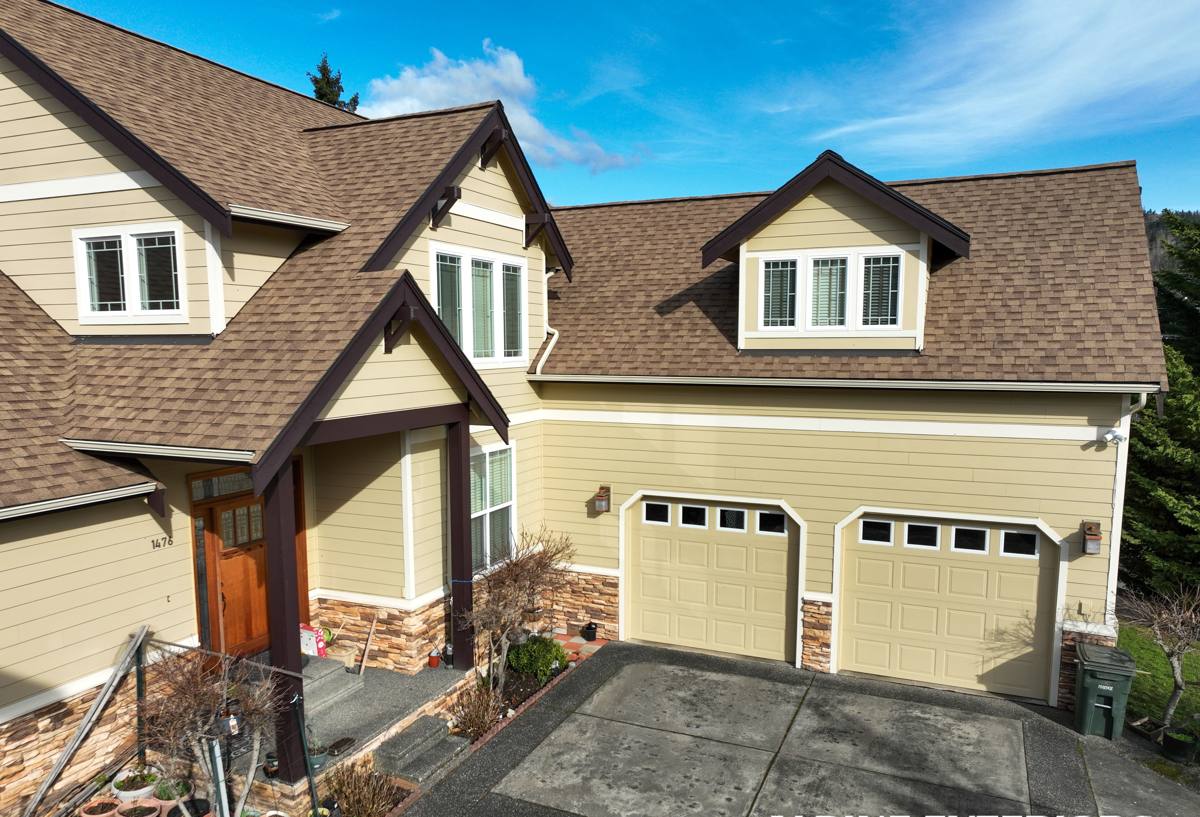
Signs a York Roof Needs Repair, Not Just a Look
Most roof problems in this area don't announce themselves with a dramatic leak. They show up as small, easy-to-miss signs that get worse every winter they're ignored. Homeowners who catch these early save money, because a small flashing fix is a fraction of the cost of repairing water damage to decking, insulation, or interior finishes.
- Dark streaking or thick moss growth on north- or shade-facing roof planes
- Granules collecting in gutters or at downspout outlets (a sign of asphalt shingle wear)
- Curling, cracked, or lifted shingle edges, especially on slopes that catch the most wind-driven rain
- Rust staining or soft spots around metal flashing at chimneys, skylights, and roof-to-wall transitions
- Water stains on interior ceilings or in the attic, even faint ones that come and go with weather
- Sagging or spongy-feeling sections when walked (a sign of underlying decking damage)
- Daylight visible through the roof deck from inside the attic
Any one of these is worth a look before the next round of storms. Several at once usually means water has already found a way in and the repair needs to include some decking or underlayment work, not just a surface patch.
What a Correct Roof Repair Actually Involves
A repair that's done right starts with figuring out where water is actually getting in — which is often not where the interior stain shows up, since water travels along rafters and decking before it drips through. We look at flashing, valleys, penetrations, and shingle condition together, because in this climate a leak is rarely caused by just one failed component.
Diagnosis First
Before any material comes off the roof, we trace the water path. That means checking flashing seals at chimneys, vents, and skylights; inspecting valley metal for corrosion or granule loss; and checking the condition of the underlayment where shingles have lifted. Salt air accelerates corrosion on lower-grade fasteners and flashing, so we look specifically for early rust that a homeowner would never spot from the ground.
Matching Repair to Cause
A shingle repair fixes wind or age damage. A flashing repair fixes a sealing failure at a transition point. A decking repair fixes rot from prolonged moisture exposure. These are different jobs with different scopes, and a repair that treats a flashing failure like a simple shingle problem will leak again the next time it rains hard.
Sealing for the Long Haul
Given how much driving rain this area sees, we use fasteners and flashing materials rated for coastal exposure rather than the cheapest available option, and we make sure ice-and-water shield or equivalent underlayment is in place at valleys and eaves — the spots where water pools and wind can drive rain uphill under standard shingle laps.
Common Roofing Materials on York Homes
York has a mix of roof ages and materials, and each comes with its own repair considerations in a wet, salty, moss-prone climate.
| Roof Type | Typical Repair Needs | Climate Consideration |
|---|---|---|
| Asphalt composition shingle | Wind-lifted or cracked shingles, granule loss, flashing resealing | Moss growth on shaded slopes shortens lifespan if left unchecked |
| Wood shake or shingle | Rot repair, moss and moisture retention issues, individual shake replacement | Highest moisture exposure risk; needs regular moss removal |
| Metal roofing | Fastener re-seating, seam resealing, panel replacement after impact damage | Salt air accelerates corrosion on lower-grade fasteners and cut edges |
| Flat or low-slope membrane | Seam repair, patching, drain and scupper clearing | Standing water from heavy rain events is the main failure driver |
Whatever material is on the roof, the underlying issue in York is the same: this climate doesn't forgive shortcuts in flashing, fastening, or drainage the way a drier region might.
Our Repair Process
We keep the process straightforward because homeowners deserve to know exactly what's happening on their roof and why.
1. On-Site Assessment
We inspect the roof from the surface and, where accessible, the attic side, to find the actual source of any leak or damage rather than just the visible symptom.
2. Honest Scope and Estimate
We explain what we found, what needs to be repaired, and give a written estimate before any work starts. If a repair isn't the right call — because the roof is past the point where patching makes sense — we'll say so plainly rather than sell a repair that won't hold.
3. The Repair Itself
We remove and replace only the damaged materials, matching shingle type, color, and flashing profile as closely as possible so the repair blends in rather than standing out as a patch. Fasteners and flashing are chosen for coastal, wet-climate durability.
4. Cleanup and Walkthrough
We clear debris, check gutters and downspouts near the repair area for obstructions, and walk the homeowner through what was done and what to watch for going forward.
Moss, Algae, and Long-Term Roof Health
Whatcom County's extended damp season means moss isn't a cosmetic issue here — it's a structural one over time. Moss holds moisture against the roof surface long after rain stops, which accelerates shingle wear, promotes rot on wood roofing, and can lift shingle edges enough to let wind-driven rain underneath. Part of a proper repair visit includes assessing moss coverage and recommending removal where it's contributing to the damage, rather than just fixing the leak and leaving the underlying moisture problem in place. Zinc or copper strips at the ridge, gentle low-pressure cleaning, and keeping overhanging branches trimmed back all help slow regrowth between service visits.
Repair vs. Replacement: Making the Right Call
Not every roof problem calls for full replacement, and not every leak can be solved with a patch. The right decision depends on a handful of factors we walk through with every homeowner.
| Factor | Favors Repair | Favors Replacement |
|---|---|---|
| Roof age | Well within expected service life | At or past expected lifespan for the material |
| Extent of damage | Isolated to one area or component | Widespread across multiple slopes |
| Decking condition | Solid, dry decking under damaged area | Soft, rotted, or repeatedly wet decking |
| Leak history | First occurrence or single known cause | Recurring leaks in different spots over time |
| Moss/algae extent | Manageable with cleaning and spot repair | Heavy, long-term growth affecting shingle integrity broadly |
We'd rather do an honest, well-built repair on a roof that has years left in it than push a replacement it doesn't need — and we'll tell you just as directly when a repair is only delaying an inevitable, more expensive fix.
Rough Cost Considerations
Repair costs vary widely based on scope — a single flashing reseal is a modest expense, while decking replacement under a larger damaged area costs more due to added labor and materials. Rather than quote a number that doesn't reflect your actual roof, we provide a specific written estimate after inspection, broken down by what's actually being repaired.
Why a Crew That Already Works in York Matters
A roof repair crew that regularly works this area already knows what York's roofs are up against — the moss patterns on shaded slopes, the flashing corrosion that shows up around salt-air exposure, and which roof details tend to fail first under Bellingham's driving rain. That familiarity means less guesswork during the assessment and a repair plan that accounts for conditions specific to this neighborhood rather than a generic climate. It also means a crew that's easy to reach for a follow-up check after a hard storm, without the delay of scheduling someone unfamiliar with local roofing conditions.
If you're noticing moss buildup, a stain on a ceiling, or just want a second opinion on a roof issue before it turns into a bigger repair, we're happy to take a look. Reach out for a free, no-pressure estimate using the form below — we'll assess the roof honestly and explain exactly what we find.