 Bellingham
 New Roof Installation in York: Built for This Climate, Not a Generic One
York is one of Bellingham's older, tree-shaded neighborhoods, and that character comes with a roofing trade-off. The same mature canopy that makes the streets pleasant also means constant leaf and needle drop, deep shade that never fully dries out, and a moss season that runs longer here than it does on more exposed lots. Add in Whatcom County's marine air and the driving, wind-pushed rain that comes through the Salish Sea corridor, and you have a roofing environment that punishes shortcuts. A new roof installation in this neighborhood isn't just about swapping old shingles for new ones — it's about building a roof system that can shed relentless moisture, resist moss colonization, and hold up to salt-laden air year after year.
We install new roofs across Bellingham and Whatcom County, and York jobs specifically call for decisions that a one-size-fits-all crew often gets wrong: ventilation sized for shaded, slow-drying roof decks, fastener and flashing choices that account for coastal air corrosion, and a install sequence that doesn't leave a deck exposed during our wetter stretches.
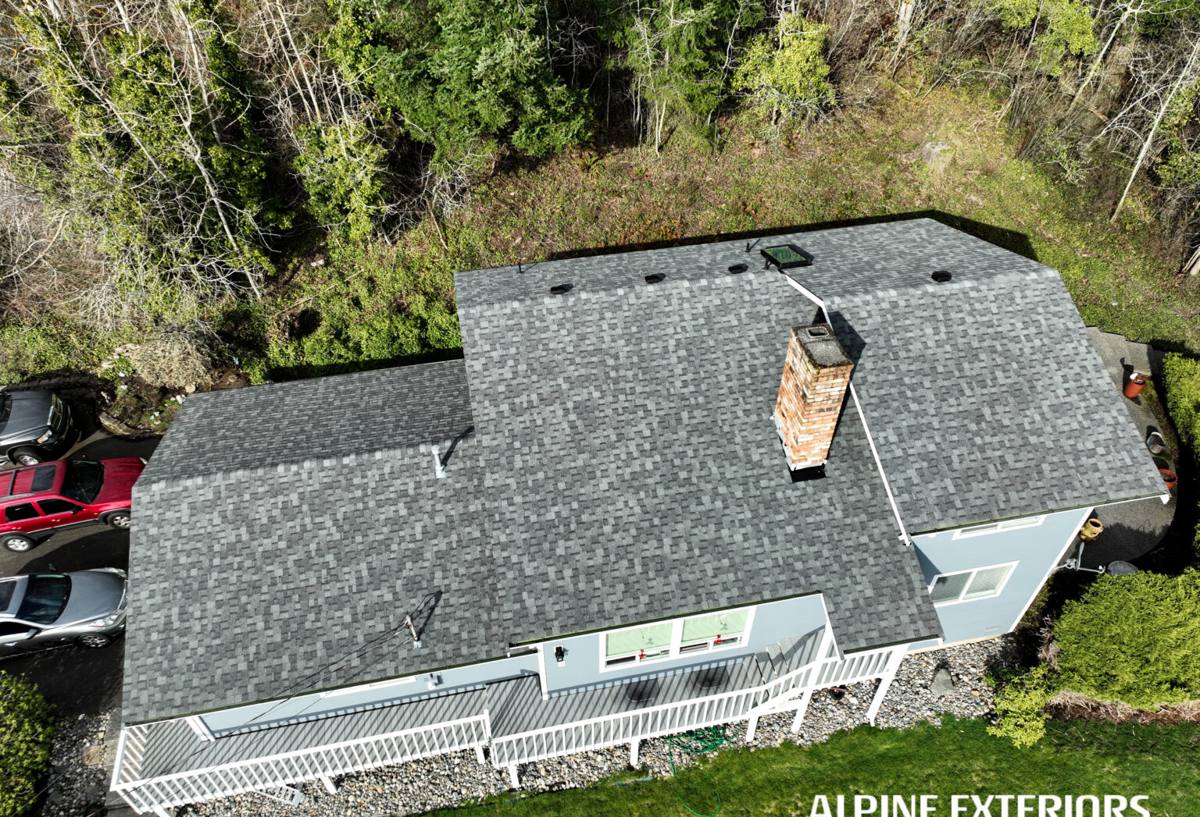
What Actually Shortens a Roof's Life in This Neighborhood
Moss and Organic Growth
Shade plus moisture equals moss, and moss is more than a cosmetic problem. Its root structure lifts shingle tabs, holds water against the roofing surface long after the rain stops, and accelerates granule loss. On heavily shaded lots, moss can re-establish within a year or two if the new roof isn't installed with growth resistance in mind.
Driving, Wind-Driven Rain
Rain in this part of Washington rarely falls straight down. Wind pushes it sideways and under standard laps, which means flashing details, underlayment coverage, and starter courses matter more here than they would in a drier, calmer climate. A roof that would perform fine in an arid region can leak here simply because the water is arriving from a different angle.
Salt Air and Coastal Corrosion
Bellingham's proximity to the water means airborne salt reaches fasteners, flashing, and metal roofing components even a few miles inland. Untreated or mismatched metal corrodes faster than manufacturers' generic warranty language assumes, which is why fastener and flashing selection deserves more attention here than in a landlocked market.
Temperature Swings and Moss-Season Freeze
Whatcom County doesn't get brutal winters, but the freeze-thaw cycles that do occur happen while roofs are already saturated from moss and shade. That combination stresses shingle edges and flashing seals more than dry-climate freeze-thaw does.
What a Correct New Roof Installation Actually Involves
A proper tear-off and replacement is a system, not a single product. Skipping any one layer undermines the rest, no matter how good the shingles or panels look on day one.
- Full tear-off to the deck — inspecting the decking itself for rot, soft spots, or delamination before anything new goes down
- Deck repair or replacement where moisture has already compromised the sheathing
- Ice-and-water shield at eaves, valleys, and any low-slope transitions, since these are the areas most likely to hold standing water during heavy rain
- Synthetic underlayment across the full field for a secondary water barrier that outperforms old felt paper in wet-climate durability
- Proper flashing at every wall, chimney, skylight, and roof-to-roof transition — most leaks trace back to flashing, not the field material
- Balanced ventilation (intake at the eaves, exhaust at the ridge) sized for the amount of shade and moisture the roof deck sees
- Corrosion-resistant fasteners and flashing metal appropriate for coastal air exposure
- Starter strips and drip edge installed to shed wind-driven rain rather than just gravity-fed runoff
Any one of these steps done poorly can shave years off an otherwise good roof. This is where the difference between a fast bid and a correct bid usually shows up.
Choosing a Roofing System for a York Home
Most homes in this neighborhood are well served by architectural asphalt shingles or standing-seam metal, with the right choice depending on the roof's slope, sun exposure, and how long the owner plans to stay in the home. We install what fits the house and the climate honestly, rather than pushing one product for every roof.
| Roofing Type | Moss/Shade Performance | Coastal Air Durability | Typical Lifespan | Best Fit |
|---|---|---|---|---|
| Architectural asphalt shingle | Good with proper ventilation and algae-resistant granules | Solid when paired with corrosion-resistant flashing | 25-30 years | Most standard re-roofs; budget-conscious replacement |
| Standing-seam metal | Excellent — sheds moss and debris more readily than shingles | Very good with marine-grade coatings and fasteners | 40-50+ years | Steeper roofs, long-term owners, low-maintenance priority |
| Synthetic/composite shingle | Good, resists organic growth well | Good | 30-40 years | Homes wanting a wood or slate look without the upkeep |
| 3-tab asphalt shingle | Fair — thinner profile holds less resistance to moss intrusion | Fair | 15-20 years | Short-term or budget-limited situations only |
We don't install roofing systems that we know will struggle against this specific combination of shade, moss, and salt air, even if a homeowner asks for the cheapest option available. Our standard is to explain the trade-offs honestly upfront rather than let a homeowner discover the maintenance burden two winters later.
How Our Installation Process Works
1. On-Site Assessment
We walk the roof, the attic, and the ventilation path together. Shade patterns, tree overhang, existing moss coverage, and current flashing condition all factor into the recommendation — not just the square footage.
2. A Written, Itemized Proposal
You get a clear scope: tear-off, deck repair allowances, underlayment type, flashing plan, ventilation changes, and material choice, so there's no ambiguity about what's included.
3. Permitting and Scheduling
We handle the permit process and schedule the work around the weather window, since a rushed install during an active rain system is exactly how moisture gets trapped under a new roof.
4. Tear-Off and Deck Inspection
The old roofing comes off down to the deck, with any rot or soft sheathing addressed before anything new is installed — never covered over.
5. Full System Installation
Underlayment, ice-and-water shield, flashing, ventilation, and the finished roofing material go in, in that order, with each layer inspected before the next begins.
6. Final Walkthrough
We review the finished roof with you, confirm ventilation is functioning as designed, and make sure the job site and gutters are cleared of debris.
Why a Crew That Already Works in York Matters
Roofing crews that split time across drier regions or unfamiliar climates tend to under-ventilate, under-flash, or under-spec fasteners because those shortcuts don't show consequences right away in a different environment. A crew that regularly works this specific part of Bellingham has already seen which valleys collect moss first, which roof orientations stay damp longest under tree cover, and which flashing details actually hold up against wind-driven rain here rather than in a manufacturer's generalized spec sheet. That familiarity shows up in fewer callbacks and a roof that performs the way it's supposed to through its first several wet seasons, not just on a sunny install day.
Local presence also matters for permitting and inspection timing with the City of Bellingham and Whatcom County, and for knowing which suppliers stock the corrosion-resistant hardware this climate actually requires, rather than substituting standard-grade parts because that's what's on the truck.
What Drives Cost on a York Re-Roof
We don't publish flat prices because every roof is different, but the honest cost factors are consistent across jobs in this neighborhood:
| Factor | Why It Matters Here |
|---|---|
| Roof size and number of planes | More valleys and hips mean more flashing work, which is where leaks originate |
| Deck condition | Moss and trapped moisture often mean some sheathing replacement is needed, found only after tear-off |
| Material choice | Asphalt, synthetic, and metal carry different material and labor costs, and different long-term maintenance costs |
| Ventilation upgrades | Shaded, damp roofs often need added intake or exhaust venting beyond what's currently installed |
| Access and tree overhang | Mature trees common in this neighborhood can require extra care, tarping, or limbing coordination |
| Layers of existing roofing | Multiple old layers add tear-off time and disposal cost |
Protecting Your New Roof After Installation
A correctly installed roof still benefits from basic upkeep in a moss-prone, tree-covered setting. This is the same checklist we walk through with every homeowner after a new install:
- Have gutters cleared at least twice a year, more often under heavy tree cover
- Keep overhanging branches trimmed back to reduce shade and debris buildup on the roof surface
- Have moss growth treated at the first sign rather than waiting for a visible mat to form
- Schedule a walk-on inspection every couple of years, especially after major windstorms
- Check attic ventilation isn't blocked by insulation or storage, since blocked vents undo the benefit of a properly vented roof
- Address any small leak or stain immediately — in this climate, small issues don't stay small for long
Ready to Talk About Your Roof?
If your York-area roof is nearing the end of its life, showing heavy moss, or you're just tired of patching the same spots every winter, we're happy to take a look and give you a straight answer about what it actually needs. Reach out for a free, no-pressure estimate — we'll walk the roof, explain what we see, and lay out your options honestly.