 Bellingham
 Composite Decking in York: What the Climate Actually Demands
York is one of Bellingham's older in-town neighborhoods, and like most of Whatcom County it sits under a marine layer that keeps things damp for most of the year. That combination — persistent moisture, salt-tinged air drifting up from Bellingham Bay, driving rain that comes in sideways during winter storms, and a moss season that can stretch from October through May — is hard on any outdoor structure. A deck built without that reality in mind will show it within a few seasons: soft spots, algae film, fastener corrosion, and boards that cup or crown.
Composite decking exists partly to solve the rot and splinter problems of wood, but composite is not maintenance-free just because the marketing says so. How it's installed — ventilation under the boards, fastener choice, drainage at the ledger, gap spacing for wet-climate expansion — matters as much as the product itself. A deck that looks identical to another on paper can perform very differently in York's climate depending on who built it and how.
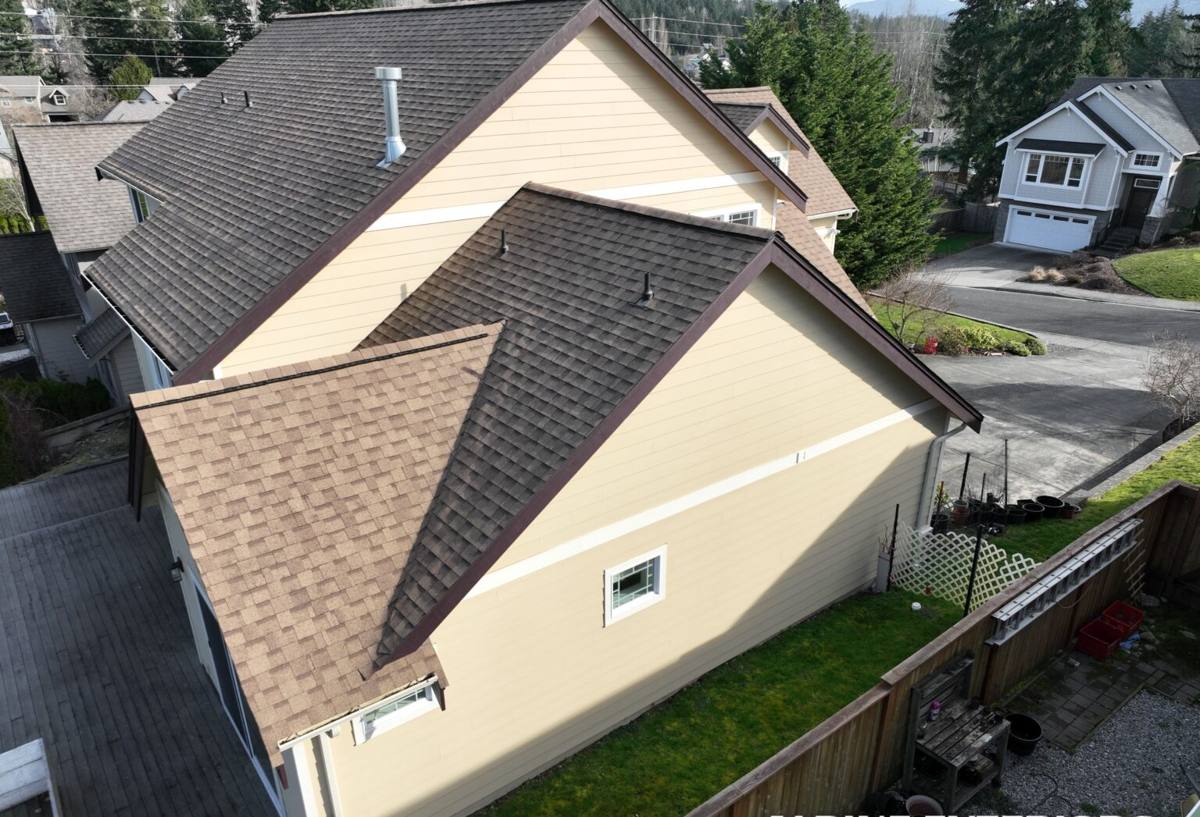
Why Local Experience in This Neighborhood Matters
We already work in and around York, so we're not guessing at how a deck here behaves through a Whatcom County winter — we've seen it. That means knowing which yards sit low and hold water longer after a storm, how much shade a given lot gets from mature trees (which slows drying and speeds moss growth), and how close a property sits to salt air exposure from the bay, which changes what fasteners and hardware we'll use.
It also means we're not learning permit requirements or inspection expectations for the first time on your job. A crew that's pulled permits for decks in Bellingham before moves faster and avoids the delays that come from guessing at setback rules or footing depth requirements.
What "knowing the neighborhood" changes in practice
- Footing depth and frost considerations appropriate to our local soil and climate
- Ledger flashing and waterproofing sized for actual rainfall load, not a dry-climate minimum
- Fastener and hardware grade selected with salt-air corrosion in mind
- Board spacing set for real-world wet/dry cycling, not just factory defaults
- Realistic scheduling around our wet season instead of promising dates we can't hit
What a Correctly Built Composite Deck Looks Like Here
The substructure is where decks actually fail
Almost every composite deck problem we get called out to inspect isn't a problem with the decking boards — it's a problem underneath them. Composite boards themselves resist rot, but the joists, beams, and ledger board underneath are usually still wood, and if that structure can't shed water and dry out between rain events, it will fail regardless of what's sitting on top of it. In a climate as wet as ours, that framing needs pressure-treated lumber rated for ground contact where applicable, proper joist tape or flashing tape on top of every joist, and enough airflow underneath the deck for the structure to actually dry out between storms.
Fasteners and hardware
Salt-influenced air corrodes cheap fasteners faster than most homeowners expect, especially on decks with any exposure toward the water. We use stainless or coated hardware rated for the exposure the deck will actually see, not whatever is cheapest at the box store. The same goes for hidden fastener clip systems — some perform better than others in freeze-thaw and wet-dry cycling, and we'll tell you plainly which ones we trust and why.
Drainage and ledger detailing
Where the deck attaches to the house is the single most important waterproofing detail on the entire project. A poorly flashed ledger board is the most common source of hidden water damage we find on older decks in this area, wood or composite. We flash it correctly the first time, because fixing it later means tearing the deck partly apart.
Composite vs. the Alternatives — An Honest Comparison
Composite isn't automatically the right call for every home or budget, and we'd rather walk you through the real trade-offs than oversell one product.
| Decking Type | Moisture Performance Here | Maintenance | Typical Lifespan |
|---|---|---|---|
| Pressure-treated wood | Fair — needs sealing to resist our rain and moss | Annual cleaning, periodic sealing/staining | 10–15 years before major repair or replacement |
| Cedar | Good natural resistance, but still absorbs moisture over time | Regular sealing to hold color and resist checking | 15–20 years with upkeep |
| Composite (capped) | Strong — capped boards shed water and resist moss staining well | Periodic washing, no sealing or staining | 25–30+ years, backed by manufacturer warranty |
| PVC | Excellent moisture resistance | Low maintenance, occasional cleaning | 25–30+ years |
For a York property dealing with shade, moss, and salt-tinged rain most of the year, a fully capped composite board is usually the best balance of upfront cost and long-term maintenance. Uncapped or older-generation composite products absorb more moisture at cut edges and fastener holes and are more prone to staining and mold in a climate like ours — we steer clients away from those for this reason, not because the composite category itself is a bad choice.
Moss, Algae, and Staining: Managing the Long Wet Season
Even the best composite board will pick up surface algae or moss film in a climate where things stay damp for months at a time, especially in shaded yards common around York's older tree canopy. This isn't a defect — it's biology meeting a wet climate. What matters is that the board is capped well enough to be cleaned without damage, and that the deck is built with enough airflow and drainage that moisture doesn't sit trapped against the surface longer than it has to.
What actually helps keep a composite deck clean here
- Board orientation and gap spacing that lets water run off instead of pooling
- Keeping nearby shrubs and tree limbs trimmed back so the deck surface gets some sun and airflow
- A simple seasonal wash with a soft brush and mild cleaner — no pressure washer set too aggressively, which can damage the cap layer
- Keeping gutters and downspouts clear so runoff isn't draining directly onto the deck
Our Process, Start to Finish
- On-site assessment — we look at drainage, existing structure (if replacing an old deck), sun/shade exposure, and any moisture damage already present.
- Honest product recommendation — we'll tell you which composite lines make sense for your budget and exposure, and why, without pushing whatever has the best margin.
- Permitting — we handle the paperwork with the City of Bellingham or Whatcom County as applicable, so you're not chasing that down yourself.
- Substructure build — correct footings, treated framing, joist protection, and ledger flashing before a single composite board goes down.
- Decking installation — proper spacing, fastening, and edge detailing for our climate's wet-dry cycling.
- Final walkthrough — we go over care basics and warranty paperwork with you directly.
Cost Factors Homeowners in York Should Know About
Every deck is different, but the biggest cost drivers we see locally are consistent:
- Deck size and height above grade (taller decks need more structural work and railing)
- Whether an old deck needs to be torn out and hauled away first
- Ground slope and soil conditions affecting footing work
- Composite product tier chosen (capped composite costs more upfront than PT wood but less over its lifespan)
- Railing material — composite or cable railing adds cost versus basic wood rail
- Access to the site for equipment and material delivery
We give straightforward, itemized estimates so you can see exactly what you're paying for and where the money goes, rather than a single lump number.
Warranty and What It Actually Covers
Composite manufacturers typically offer fairly long product warranties against defects like fading or staining, but those warranties usually only hold up if the deck was installed to the manufacturer's specifications — correct spacing, approved fasteners, adequate ventilation. Part of why installation quality matters so much is that a poorly built deck can void coverage you're otherwise paying for through a higher-priced product. We install to manufacturer spec specifically so that warranty stays intact if you ever need it.
Ready for an Estimate?
If you're considering a new composite deck or replacing an aging one in York, we're happy to come take a look, walk the site with you, and put together a clear, no-pressure estimate. There's no obligation — just an honest read on what your property needs and what it would take to do the job right. The form below gets you on our schedule.