 Bellingham
 Storm Damage Roof Repair Built for Edgemoor's Waterfront Exposure
Edgemoor sits close to the water, and that proximity cuts both ways. The views are part of why people live there, but the same exposure that gives you a water outlook also means your roof takes a harder beating than a home tucked a few miles inland. Salt-laden air off Bellingham Bay accelerates corrosion on fasteners and flashing. Wind off the water drives rain sideways under shingles and shakes that would otherwise shed it fine. And the deep shade from mature evergreens on many Edgemoor lots keeps roof surfaces damp long after a storm has passed, which is exactly what moss wants. When a windstorm or a heavy rain event does damage to a roof in this neighborhood, it's rarely a simple, isolated problem — it's usually storm stress landing on a roof that was already dealing with chronic moisture exposure.
This page covers what storm damage roof repair actually involves for a home in this specific setting, so you know what a correct repair looks like before you hire anyone.
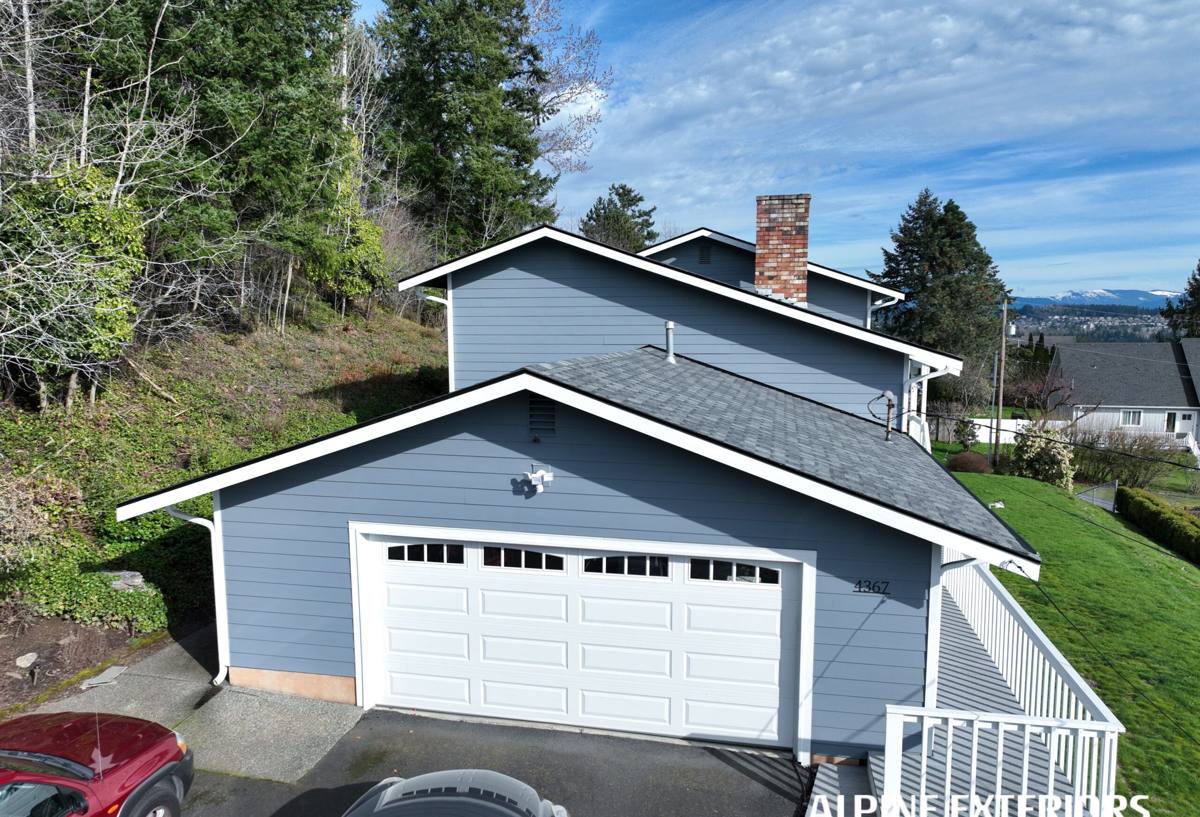
What Whatcom County Storms Actually Do to a Roof
Storm damage isn't always a dramatic hole or a stripped section of shingles. In our climate, it's often subtler and easier to miss:
- Wind-lifted shingle or shake tabs — the seal breaks, the tab lifts slightly, and it doesn't lie flat again. It looks minor from the ground but leaves an open path for wind-driven rain.
- Flashing displacement — around chimneys, skylights, and roof-to-wall transitions, flashing can shift or separate just enough to let water track behind it without any obvious sign on the roof surface itself.
- Fastener backout — salt air and repeated wet-dry cycles cause nails and screws to work loose over time; a storm's wind load is often what finally pushes a marginal fastener out.
- Debris strikes — branches and cones from mature trees common on Edgemoor lots can bruise or crack individual shingles, shakes, or tiles without punching all the way through.
- Moss-related lifting — moss that's been growing under the edges of shingles for a season or two holds moisture against the roof deck, and it doesn't take much wind to peel back material that's already been weakened from underneath.
The common thread: most of this damage doesn't show up as a leak the day of the storm. It shows up weeks or months later, after repeated rain events have had time to work through a small opening.
Why "Just Patch It" Isn't the Right Standard Here
A quick patch job — a smear of roofing cement over a lifted shingle, a bead of caulk around loose flashing — will often stop a visible drip. It won't address why the damage happened or whether it's already spread underneath the roof surface. On a home this close to the water, that distinction matters more than it would somewhere drier and more sheltered.
A correct storm damage repair does three things a quick patch doesn't:
- Traces the water path. Water rarely drips straight down from where it enters. It follows the roof deck, framing, and underlayment until it finds a low point or a gap — which might be several feet from the visible stain or the obviously damaged shingle.
- Checks what's underneath. Once damaged material is pulled back, we look at the decking and underlayment for soft spots, staining, or rot before anything gets replaced. Fastening new shingles to a compromised deck just resets the clock on the same failure.
- Restores the original water-shedding design. Every roof system — flashing laps, shingle courses, ridge details — is built so water sheds downhill over every seam. A repair has to be tied back into that layering correctly, not just sealed with caulk or cement, which degrades faster than the roofing material around it.
Our Repair Process
1. Assessment
We inspect the full roof, not just the area you're worried about. Storms rarely damage only one spot, and on a shaded, moss-prone roof it's common to find a second problem area the homeowner hadn't noticed yet. We check the roof surface, flashing points, fascia, and — where accessible — the attic or roof deck from underneath for moisture staining.
2. Documentation
We note the extent and likely cause of the damage in plain terms. If you're planning to file an insurance claim for wind or storm damage, having a clear, specific record of what was found and why it happened makes that process go smoother.
3. Repair or replace — a real recommendation, not an upsell
If a repair will genuinely hold, we tell you that. If the damage is extensive enough, or the surrounding roofing is old enough, that a repair would just be a short-term fix on a roof nearing the end of its service life, we tell you that too, along with why. Our standard is what actually protects the house long-term, not what's easiest to sell.
4. The work itself
Damaged material comes off, the deck underneath gets checked and dried or repaired if needed, and new material is woven back into the existing courses and flashing correctly — matched to your roof type so the repair blends in and functions as one continuous system rather than a visible patch.
5. Cleanup and walkthrough
We clear debris and fasteners from the yard and gutters, and walk you through exactly what was found and what was done.
Moss: A Whatcom County Problem That Compounds Storm Damage
Bellingham's long, wet, mild winters are close to ideal growing conditions for moss, and shaded Edgemoor lots often have less sun exposure to dry the roof out between rain events. Moss itself doesn't tear a roof apart, but it does two things that make storm damage worse:
- It holds water against the roof surface and under shingle edges far longer than bare roofing would, softening the material and weakening the seal.
- Its root-like rhizoids can work into shingle granules and shake grain, physically lifting material — which gives wind something to grab onto that a clean roof wouldn't offer.
If your roof has visible moss, a storm damage repair that ignores it is incomplete. We remove moss from the repair area and surrounding roof as part of the job, and we'll tell you honestly whether the rest of the roof needs moss treatment or better ventilation and airflow to stop it from coming back.
Repair vs. Replacement: What Actually Drives the Decision
| Factor | Leans toward repair | Leans toward replacement |
|---|---|---|
| Extent of damage | Isolated to one section or a few spots | Spread across multiple slopes or large areas |
| Age of existing roof | Roof is mid-life, rest of the material is sound | Roof is near or past its expected service life |
| Deck condition underneath | Deck is dry, solid, undamaged | Deck shows rot, soft spots, or long-term water staining |
| Moss/moisture history | Minimal moss, roof dries out well between rains | Heavy moss buildup, chronic damp shading |
| Matching materials | Original material or close match still available | Material discontinued or badly weathered/faded elsewhere |
No single factor decides it alone — we weigh all of these together and explain our reasoning rather than just naming a number.
Insurance Claims: What Homeowners Should Know
Storm and wind damage is often covered under homeowners insurance, but coverage details, deductibles, and documentation requirements vary by policy and by insurer. We're happy to provide a written assessment, photos, and a description of probable cause (wind event, tree debris, etc.) that you can submit with a claim. We don't process claims on your behalf or promise a specific outcome — that's between you and your insurance company — but we make sure the documentation you bring to them is accurate and thorough.
What to Check After a Storm — And What to Leave to a Professional
You can safely spot a lot of early warning signs from the ground or from inside the house without getting on a ladder or the roof itself:
- Shingle or shake pieces in the yard or gutters after a windy night
- Visible gaps, curling, or dark patches on roof slopes you can see from the ground or a nearby window
- New water stains on ceilings or in the attic, especially near chimneys, skylights, or where two roof planes meet
- Granules collecting in gutters or at downspout outlets (a sign of shingle wear, storm-accelerated)
- Sagging or uneven spots along the roofline
- Damaged or disconnected gutters and downspouts, which can cause water to back up under roof edges
What we'd caution against is climbing onto the roof yourself to inspect closely, especially right after a storm when surfaces are wet and footing is unreliable. That's where a professional inspection earns its keep — we can safely get close to flashing details and damaged sections that aren't visible or safe to check from a ladder.
Why Local Storm Damage Experience Matters
A crew that regularly works waterfront and near-waterfront neighborhoods in Bellingham knows what to look for that a roofer unfamiliar with this specific exposure might miss — the way salt air accelerates fastener corrosion, how shade patterns on a given lot affect moss growth and drying time, and which flashing details tend to fail first under sustained wind-driven rain versus a straight-down downpour. That local pattern recognition shortens the assessment, catches secondary damage before it becomes a bigger repair, and means the fix accounts for conditions specific to this part of Whatcom County rather than a generic roofing playbook.
If a recent storm has left you with a suspected leak, missing shingles, or damaged flashing, we'll come take an honest look and give you a straight answer on what's needed. Reach out for a free, no-pressure estimate using the form below.