 Bellingham
 Why Edgemoor Homes Need a Different Approach to Siding
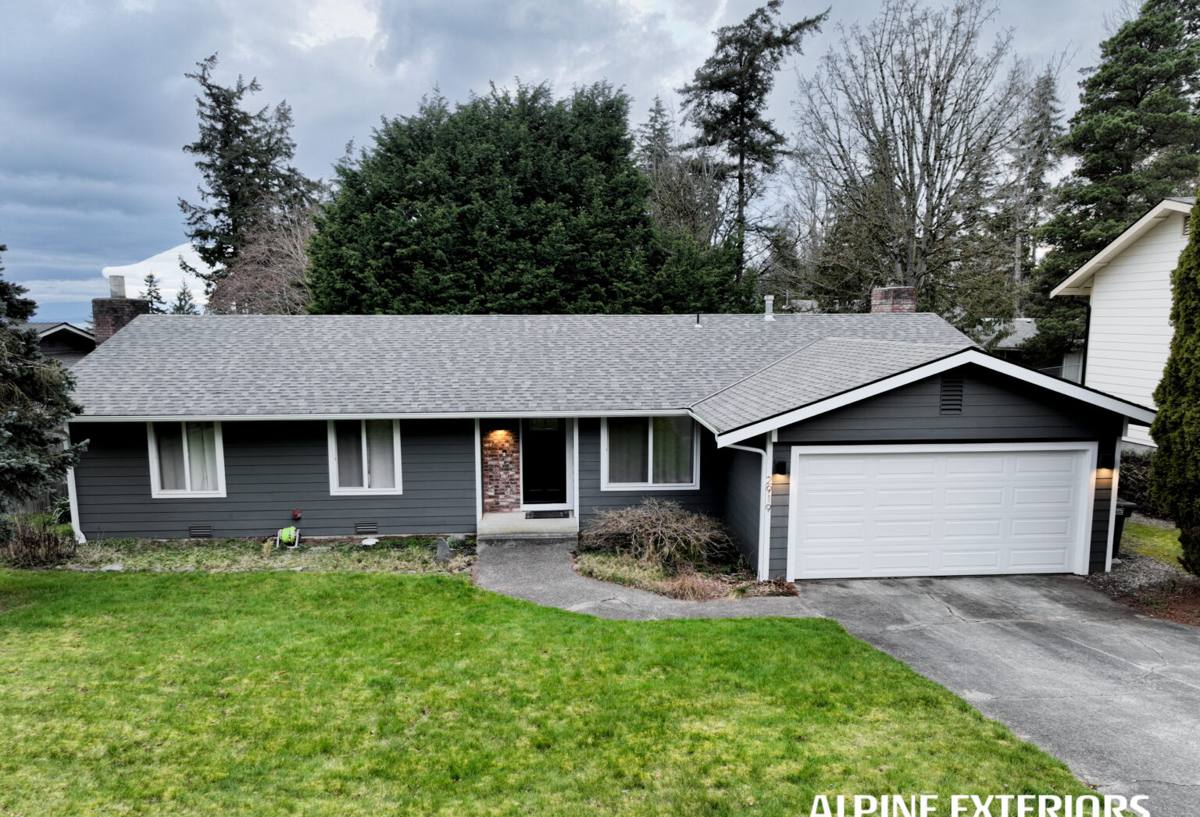
Edgemoor sits close to Bellingham Bay, tucked into a wooded bluff with mature evergreen canopy shading much of the neighborhood. That combination — salt-laden air off the water, driving rain that comes in sideways during winter storms, and deep shade that never fully dries out — is a harder environment for exterior siding than most inland Whatcom County neighborhoods deal with. A siding product and installation method that works fine in a sunny, open lot in Ferndale or Lynden won't necessarily hold up the same way here.
Salt air accelerates corrosion on fasteners, flashing, and any exposed metal trim. Driving rain, especially wind-driven rain off the Strait of Georgia and Bellingham Bay, pushes moisture into joints and seams that would stay dry in a calmer climate. And tree cover — one of the things that makes Edgemoor desirable to live in — also means siding surfaces stay damp longer after every rain, which is exactly the condition moss, algae, and mildew need to take hold. We've seen all three of these factors show up on the same house, and they compound each other.
What "Correct" Siding Installation Actually Means Here
A lot of siding problems people bring to us aren't about the siding material at all — they're about how it was installed. Bellingham's climate is unforgiving of shortcuts, and a bluff neighborhood with heavy tree shade like Edgemoor punishes them faster than most. Correct installation isn't optional detail work; it's the difference between siding that lasts decades and siding that fails in eight or ten years.
The Water Management System Behind the Siding
Siding is the visible layer, but the real waterproofing happens behind it. A properly installed weather-resistant barrier (house wrap or building paper), correctly lapped and taped, combined with proper flashing at every window, door, and penetration, is what actually keeps water out of the wall assembly. In a driving-rain climate, any gap in that system becomes an entry point, and once water gets behind siding it can sit there for months before anyone notices — especially on a shaded, tree-covered lot where things don't dry out.
Fastening and Gapping
Fiber cement siding needs to be fastened per the manufacturer's specifications — correct nail type, correct spacing, correct depth. Overdriven or underdriven fasteners are one of the most common causes of early siding failure we find on inspections. Panels also need proper gapping at butt joints and around trim to allow for expansion and contraction; tight, caulked-shut joints look clean on installation day but trap moisture and crack within a few seasons.
Caulking and Sealant Placement
Caulk has a job, but it's not a substitute for flashing. Sealant belongs at specific transition points — not smeared across every seam as a catch-all. Overuse of caulk is a red flag we watch for on other contractors' work, because it usually means flashing details were skipped and caulk was used to cover the gap.
Why We Install Only James Hardie Fiber Cement
We made a decision as a company to install James Hardie fiber cement siding exclusively — not vinyl, not LP SmartSide, not cedar, not primed spruce, not other fiber cement brands. That's a deliberate standard, not a sales pitch, and it matters more in an environment like Edgemoor than almost anywhere else in Whatcom County.
Fiber cement is non-combustible, which matters given how many Edgemoor properties sit close to mature trees and dense landscaping. It doesn't absorb moisture the way wood-based products can, which matters in a neighborhood where shade keeps walls damp longer. And Hardie's ColorPlus factory-applied finish is baked on and backed by its own finish warranty, which holds up better against salt air and UV exposure than field-applied paint on wood siding.
James Hardie also engineers specific product lines for different climate zones — HZ5 and HZ10 formulations account for regional moisture and temperature patterns rather than using a single generic formula everywhere. That climate-specific engineering, paired with a factory finish and a strong transferable warranty, is why we standardized on it. We're not going to install a product on your Edgemoor home that we know is a worse fit for the conditions it has to survive, even if it's cheaper or faster to put up.
Our Installation Process for Edgemoor Properties
Every home is different, but our process on Edgemoor jobs generally follows the same sequence, adjusted for the specific lot's tree cover, drainage, and exposure to wind and rain direction.
- On-site assessment of existing siding, sheathing condition, and any moisture damage already present, paying particular attention to north- and shade-facing walls where drying is slowest.
- Removal of old siding and inspection of the wall sheathing underneath — this is where hidden rot or prior water intrusion gets caught before it's covered up again.
- Installation or repair of the weather-resistant barrier, with careful attention to lapping and sealing given how much wind-driven rain the site sees.
- Flashing installation at all windows, doors, and penetrations, sized and placed to shed water outward and downward.
- James Hardie panel or plank installation to manufacturer fastening and gapping specifications.
- Trim, caulking at appropriate transition points only, and final inspection.
The Moss and Algae Problem Specific to Shaded Lots
Edgemoor's tree canopy is a defining feature of the neighborhood, but it creates a longer moss season than most of Bellingham experiences. Shaded siding surfaces that stay damp for extended periods after rain are ideal growing conditions for moss, algae, and mildew. This isn't just cosmetic — sustained moisture against a siding surface, especially at seams and butt joints, is what eventually leads to water intrusion if the underlying installation isn't done correctly.
A few things reduce the impact without requiring homeowners to fight nature constantly:
- Proper panel gapping so moisture doesn't get trapped and held against joints
- Correctly sloped flashing and trim that actively shed water rather than pool it
- Keeping vegetation trimmed back a reasonable distance from siding surfaces to improve airflow
- Periodic gentle washing of shaded, north-facing walls to remove moss and algae before it establishes deeply
- Factory-finished siding (like Hardie's ColorPlus) that doesn't need repainting on a short cycle, since repeated painting on damp, mossy surfaces rarely holds up well
Cost Factors for Edgemoor Siding Installation
Every project is priced based on the specific home, but a few factors consistently move the number up or down on Edgemoor jobs specifically.
| Factor | How It Affects the Project |
|---|---|
| Home access and lot slope | Bluff and wooded lots can limit staging area and require more hand-carrying of material |
| Existing wall condition | Hidden moisture damage from shade and salt exposure sometimes means sheathing repair before siding goes up |
| Tree cover and trimming needs | Clearance work near the house may be needed before installation can start safely |
| Trim and detail complexity | Architectural detail common in Edgemoor's older and custom homes adds labor time |
| Siding profile chosen | Lap siding, shingle-style panels, and board-and-batten all install differently and price differently |
Why Local Experience with Edgemoor Specifically Matters
A crew that's worked in Edgemoor before knows what to expect before they even pull up to the house: the shade pattern, the way rain drives off the bay, the moss growth on north walls, the narrower access on some bluff lots, and the tree-root and drainage issues that come with mature landscaping. That's not something you can fully account for from a generic estimate — it comes from having done the work here before.
It also matters for permitting and any neighborhood architectural guidelines that may apply to exterior changes in established Bellingham neighborhoods. A contractor familiar with the area knows what documentation the city typically wants and won't be guessing on your project.
Signs Your Edgemoor Home's Siding Needs Attention
- Persistent moss or algae growth that returns quickly after cleaning
- Soft spots, bubbling, or visible warping, especially on shaded or north-facing walls
- Caulk that's cracked, missing, or was clearly overused to patch gaps
- Peeling or chalking paint on wood siding that keeps needing repainting
- Visible gaps or separation at butt joints and corners
- Water stains on interior walls near exterior corners or window openings
Any one of these on its own isn't necessarily an emergency, but on a shaded, salt-air lot like the ones in Edgemoor, they tend to get worse faster than they would elsewhere in Whatcom County, so it's worth having them looked at sooner rather than later.
Get an Estimate for Your Edgemoor Home
If you're weighing a siding replacement or repair on an Edgemoor property, we're happy to take a look and give you a straight assessment of what your home actually needs — no pressure, no inflated scope. Use the form below to request a free estimate, and we'll walk the exterior with you and talk through what correct installation looks like for your specific lot and exposure.