 Bellingham
 Why Siding Wears Differently in Edgemoor
Edgemoor sits up on the bluff above Bellingham Bay, and that position cuts both ways. The views are part of why people live there, but that same exposure means homes take a steady diet of salt-laden air, wind-driven rain off the water, and heavy tree cover that keeps large sections of siding shaded and damp for long stretches of the year. In Whatcom County, that combination — marine moisture plus shade — is exactly the recipe that shortens the life of the wrong siding material and, eventually, the sheathing and framing behind it.
Homes closer to the water tend to show wear first on the sides that face prevailing weather: fading, chalking paint, soft spots at trim joints, and moss or algae staining in areas that don't get much direct sun. None of that is unusual for the area. It's just what happens to siding that wasn't built or installed to handle it, and it's the starting point for almost every replacement job we look at in this neighborhood.
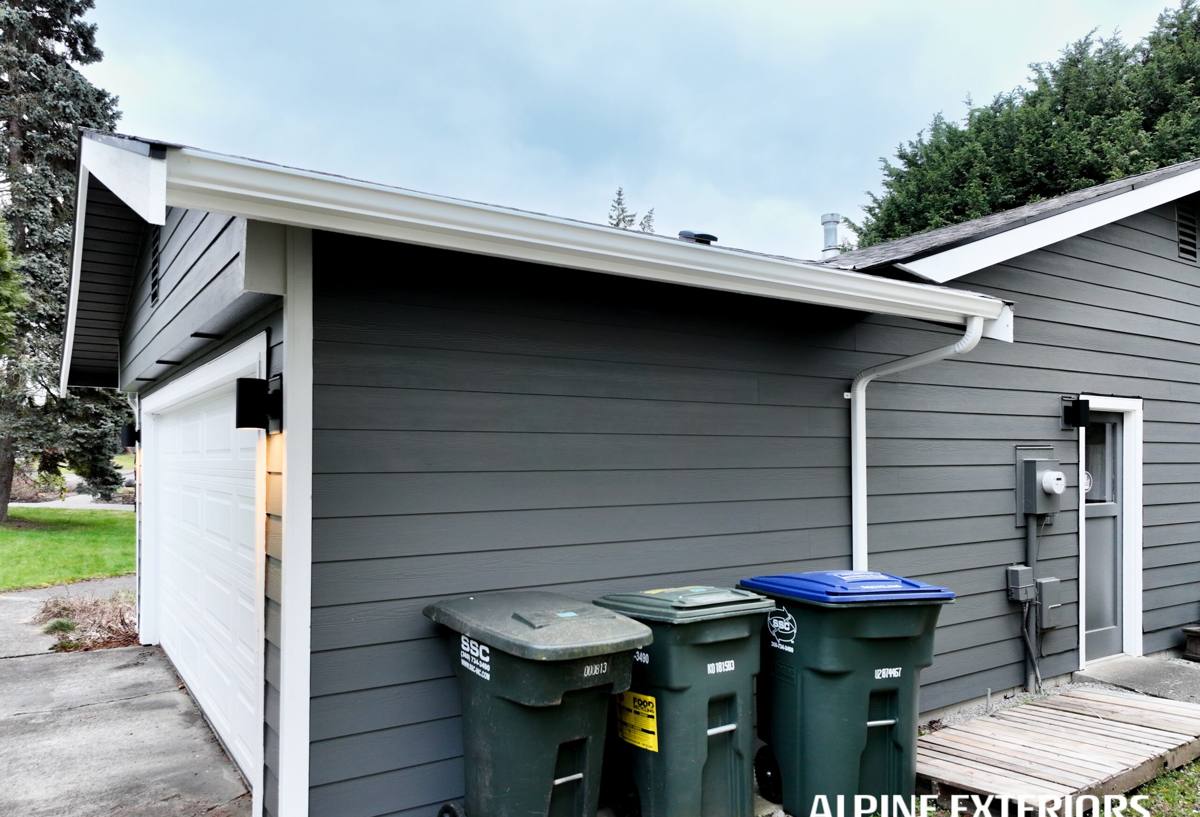
Signs a Home in This Area Needs Replacement, Not a Patch
Not every siding problem calls for a full tear-off. But there's a point where patching becomes a waste of money, and homes in wetter, shadier settings tend to hit that point sooner. Here's what we look for during an assessment:
- Soft or spongy siding, especially near the bottom courses, window sills, and butt joints
- Paint that's failing repeatedly in the same spots even after repainting
- Persistent moss or dark streaking that comes back within a season of cleaning
- Visible gaps, warping, or buckling in panels or lap boards
- Soft trim boards or corner boards, which usually signal moisture is already behind the siding
- Interior signs — musty smell, peeling paint on interior walls, or staining near exterior walls
If you're only seeing one or two of these on a single wall, a repair may hold you for a while. If you're seeing several, or if the damage shows up on more than one side of the house, that's usually evidence the whole system — siding, house wrap, flashing — has reached the end of its service life together, not just the visible surface.
What a Correct Siding Replacement Actually Involves
It's Not Just Swapping Old Boards for New
A siding replacement done right is a full exterior weatherproofing job, not a cosmetic swap. The siding itself is the last line of defense — the water-resistive barrier, flashing, and fastening underneath it do most of the actual work of keeping a house dry. Skipping or rushing those layers is how a brand-new siding job ends up with rot problems five years later.
The Non-Negotiables for This Climate
- Full tear-off inspection: once old siding is off, the sheathing gets checked for rot, soft spots, and prior water damage before anything new goes on
- Correct weather-resistive barrier installed and lapped properly, shingle-style, so water sheds outward instead of behind it
- Proper flashing at every window, door, and roof-to-wall transition — the majority of moisture intrusion we find starts at a flashing detail, not the siding field itself
- Rain screen or drainage gap where appropriate, giving any moisture that does get behind the cladding a path to drain and dry instead of sitting against the sheathing
- Correct fastening pattern and clearances specific to the product being installed, including gaps at the bottom for drainage and clearance from grade, decks, and roof lines
Every one of these steps matters more in a shaded, marine-exposed setting than it does on a dry, sunny lot. A house that doesn't get much direct sun needs its assembly to dry out efficiently on its own, because the sun isn't going to do that job for it.
Why We Install Only James Hardie Fiber Cement
We standardized on James Hardie fiber cement siding, and we don't install vinyl, LP SmartSide, or other fiber cement brands. That's a deliberate call, not a sales preference. Fiber cement is non-combustible, doesn't rot or absorb water the way wood-based products can, and holds its shape and finish in wet, shaded conditions far better than the alternatives we chose not to carry.
Hardie's ColorPlus factory finish is baked on and warrantied against fading and peeling, which matters directly in a location like Edgemoor where UV exposure is uneven — full sun on one side of the house, shade and dampness on the other. A field-painted or vinyl product has to hold up evenly across both conditions; a factory-cured finish is built to. Hardie also builds region-specific HZ product lines engineered for exactly this kind of climate — freeze-thaw cycling, sustained moisture, and marine air — rather than a one-size-fits-all formulation.
We're happy to talk through the honest trade-offs of other products if you're weighing options, but on our own installs, this is the one material we've seen consistently perform on homes in wetter, shaded, coastal-influenced settings without the recurring maintenance headaches.
Our Process for an Edgemoor Siding Replacement
1. On-Site Assessment
We walk the exterior, check for soft spots and moisture damage, look at existing flashing and trim condition, and note anything specific to the lot — tree cover, drainage patterns, sun exposure by elevation — that will affect the job.
2. Scope and Estimate
You get a written scope covering tear-off, sheathing repair contingencies, weather barrier, flashing details, and the Hardie product and color selected, so there's no ambiguity about what's included.
3. Tear-Off and Sheathing Check
Old siding comes off, and we inspect what's underneath before closing anything back up. This is the point where hidden rot or past water damage gets found and addressed — not covered over.
4. Weather Barrier, Flashing, and Install
New house wrap, correct flashing at every penetration, and the Hardie siding installed to manufacturer fastening and clearance specs.
5. Final Walkthrough
We go over the finished job with you, confirm trim and caulking details, and answer questions about care going forward.
What Drives the Cost of a Siding Replacement
Every home is different, but these are the factors that most often move the price up or down:
| Factor | Why It Matters |
|---|---|
| Home size and stories | More square footage and multi-story access both add labor and equipment time |
| Condition of sheathing underneath | Rot or water damage found during tear-off requires repair before new siding goes on |
| Amount of trim and detail work | Corners, window trim, and architectural detail take more time than plain wall runs |
| Siding profile chosen | Lap, shingle, and panel styles from Hardie's lineup vary in material and labor cost |
| Access and site conditions | Tree cover, slope, and tight setbacks common on bluff and wooded lots can affect staging and equipment access |
| Tear-off and disposal | Removing and hauling old siding, especially multiple layers, adds to scope |
We won't quote a number without seeing the house, but these are the variables worth thinking through before you start getting estimates, so you can compare them on equal footing.
Why Local Experience in Edgemoor Matters
A contractor who already works this part of Bellingham knows what to expect before the tear-off even starts: the moisture patterns tied to tree cover and elevation, the kind of drainage detailing that holds up against sustained rain off the bay, and how differently the sunny and shaded sides of a house need to be treated. That's not something you get from a crew that mostly works dry inland lots and treats every job the same way.
It also matters for the practical side of the job — navigating narrow or sloped driveways, protecting landscaping on tighter lots, and scheduling around Whatcom County's wetter months so the assembly isn't left exposed longer than it needs to be. None of that shows up in a bid line item, but it shows up in how smoothly the job goes and how the house performs five and ten years out.
After Your New Siding Is Installed
Fiber cement siding is low-maintenance compared to wood or vinyl, but "low-maintenance" isn't "no-maintenance," especially in a shaded, marine-air setting. A short checklist to keep it performing:
- Rinse siding periodically to keep salt residue and organic buildup from accumulating, especially on shaded or water-facing walls
- Keep gutters clear so water isn't overflowing onto siding runs below
- Trim back vegetation that's holding moisture or shade directly against the wall
- Recaulk trim joints and penetrations if you notice gaps opening up over time
- Address any impact damage or chips in the finish promptly rather than letting them sit
Done right, a Hardie installation on a home like this should mean far fewer of these check-ins than whatever was on the house before.
If you're seeing early signs of trouble or just want an honest read on where your siding stands, we're glad to take a look. Request a free, no-pressure estimate using the form below and we'll walk the property with you.