 Bellingham
 Why Edgemoor's Bluff-Top Setting Changes How a Deck Should Be Built
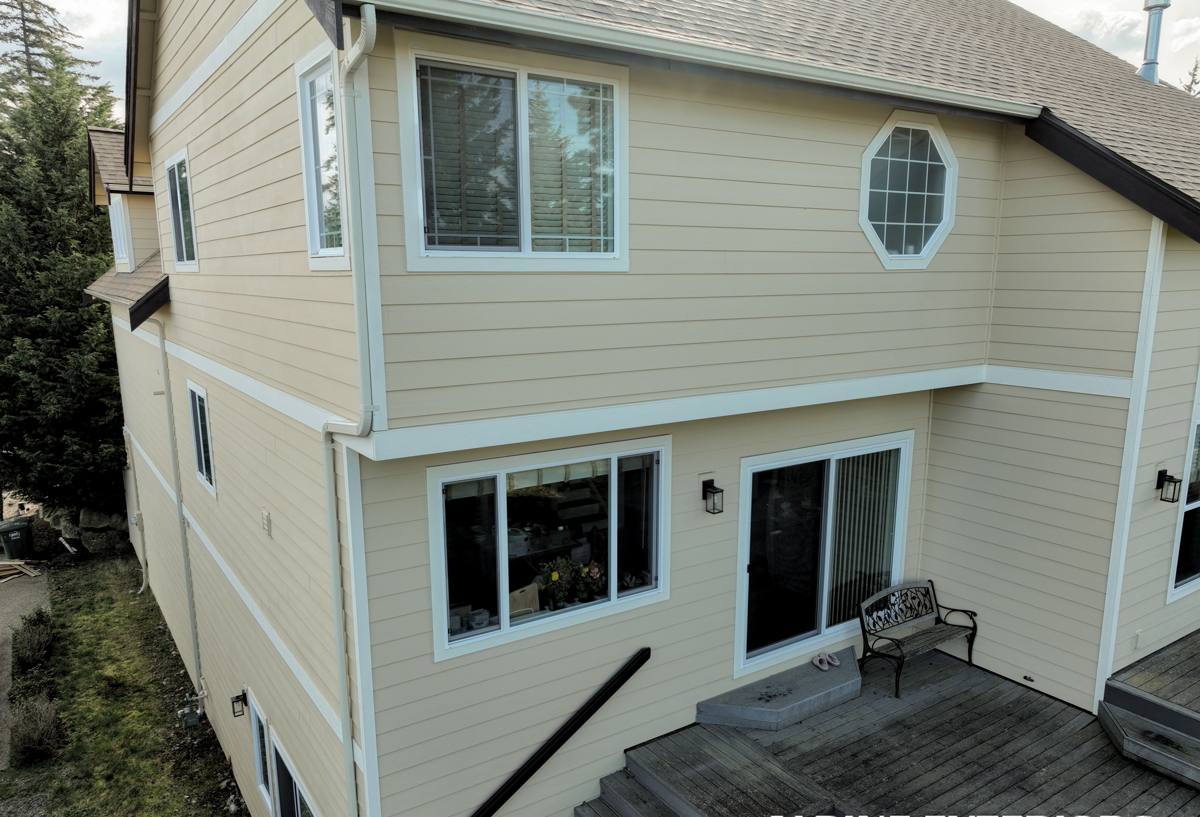
Edgemoor sits on wooded bluffs above Bellingham Bay, and that setting is exactly why decks here fail differently than decks a few miles inland. Mature fir and cedar canopy keeps a lot of yards in shade most of the day, which means decks stay damp longer after every rain. Add in the salt-laden air coming off the bay and the driving rain that blows in off the water during fall and winter storms, and you've got a combination that's hard on fasteners, hard on wood fibers, and ideal for moss and algae growth on any north-facing or shaded deck surface.
None of this is a reason to avoid building or replacing a deck in Edgemoor — it's a reason to build it correctly the first time. A deck designed for a sunny, open lot in a drier part of Whatcom County won't necessarily hold up the same way under Edgemoor's tree cover and bay exposure. The framing, fastener selection, and board spacing all need to account for a site that rarely gets a full day of direct sun or wind to dry things out.
What Composite Decking Actually Solves Here — and What It Doesn't
Composite decking earns its reputation in a climate like this because the boards themselves don't absorb water the way wood does, so they don't swell, cup, or rot from constant dampness. That's a real advantage on a shaded Edgemoor lot where wood decking can stay wet for days at a time during the rainy season. Composite also doesn't need annual staining or sealing, which matters if your deck is tucked under trees and hard to get to with a pressure washer and a paint roller every spring.
That said, composite isn't maintenance-free, and it isn't a cure for every problem a shaded, damp site creates. Moss and algae will still grow on the surface of any decking material — wood, composite, or PVC — if it stays wet and shaded long enough. Composite just gives you a surface that's easier to clean without damaging it, and one that won't rot underneath the growth the way exposed wood fibers can. It also holds heat differently than wood in direct sun, though that's rarely the concern on a shaded Edgemoor lot the way it might be on an open, south-facing deck elsewhere.
Where Composite Makes the Most Sense
Composite tends to be the right call for Edgemoor homeowners who want a deck that holds its footing and its finish through a long, wet Pacific Northwest winter without a yearly maintenance ritual. It's a poor fit for anyone expecting a truly zero-upkeep surface — every deck material in this climate needs periodic cleaning.
Getting the Substructure Right Before Any Boards Go Down
The composite boards themselves get most of the attention, but the framing underneath is what actually determines whether a deck lasts on a shaded, damp Edgemoor lot. We build the substructure to shed water, not hold it:
- Ledger board flashed and sealed at the house connection so water can't work its way behind the siding
- Joists spaced to the manufacturer's specification for the specific composite board being installed, not just standard 16-inch wood-deck spacing
- A slight slope built into the frame so water runs off the deck surface instead of pooling
- Joist tape or a comparable protective barrier on top of the framing lumber, since composite boards trap moisture against the joist longer than wood does
- Corrosion-resistant, coated or stainless fasteners throughout — plain galvanized hardware corrodes faster in salt air
- Ventilation gaps left underneath the deck so air can move and dry out the structure between storms
Skipping any of these steps is how a composite deck ends up with a rotting frame underneath boards that still look brand new on top. The boards get the warranty; the framing is what we're responsible for.
Choosing Composite Boards for a Shaded, Salt-Air Site
Capped vs. Uncapped Composite
Capped composite boards have a plastic shell wrapped around a wood-plastic core, which resists moisture absorption and staining far better than older, uncapped composite products. On a shaded Edgemoor lot where boards may not fully dry out for days, that cap layer is worth the added cost — uncapped composite is more prone to surface fuzzing and moisture wicking at cut ends over time.
Board Color and Surface Texture
Lighter board colors show algae and moss growth faster, which can be a plus — it tells you when it's time to clean — but darker boards hide staining longer while potentially running slightly warmer in direct sun. On a shade-covered lot, sun exposure is rarely the deciding factor; texture matters more, since a wood-grain embossed surface gives better footing when boards are damp, which is most of the year here.
Fastener and Clip Systems
Hidden fastener clip systems keep the deck surface free of screw heads that can corrode or streak in salt air, and they let boards expand and contract without splitting. We match the clip system to the specific board manufacturer's spec rather than using a generic universal clip, since fit tolerances vary between product lines.
Composite vs. Wood vs. PVC: How They Hold Up on a Shaded Bay-Front Lot
| Factor | Wood | Capped Composite | Cellular PVC |
|---|---|---|---|
| Moisture absorption | High — swells, cups, rots over time | Very low | Essentially none |
| Moss/algae resistance | Poor in shade | Better, still needs cleaning | Best surface resistance |
| Annual maintenance | Staining/sealing yearly | Periodic washing | Periodic washing |
| Upfront cost | Lowest | Mid-range | Highest |
| Structural feel underfoot | Firm, natural | Firm, slightly more flex than wood | Can feel softer, needs tighter joist spacing |
| Best fit for shaded, damp lots | Requires diligent upkeep | Strong fit | Strong fit, higher budget |
Wood still has a place for homeowners who want that specific look and are committed to the upkeep, and there's nothing wrong with choosing it as long as the maintenance plan is realistic. For most Edgemoor lots under tree cover, though, capped composite hits the balance of durability and cost that makes the most sense.
Our Installation Process
- On-site walkthrough to check drainage, shade patterns, tree proximity, and existing structure condition
- Measurements and a written estimate showing board selection, substructure scope, and any repair work needed
- Permit application through the City of Bellingham (or Whatcom County, depending on the parcel) where required
- Demo of the old deck surface and inspection of ledger, posts, and footings before any new material goes down
- Framing repairs or replacement, ledger flashing, and joist protection installed to spec
- Composite board installation with manufacturer-approved fasteners and expansion gaps
- Final walkthrough covering board care, cleaning schedule, and warranty paperwork
Moss, Algae, and Realistic Maintenance for a Shaded Deck
A composite deck under tree cover in Edgemoor will still need attention — just less of it, and less demanding work, than a wood deck in the same spot. A simple seasonal routine keeps most decks looking clean without special equipment:
- Sweep debris and needles off the deck regularly — trapped organic matter is what feeds moss growth
- Rinse and scrub with a soft-bristle brush and a composite-safe cleaner a couple of times a year, more often in heavily shaded spots
- Keep gutters and downspouts near the deck clear so runoff isn't dumping extra water onto the surface
- Trim back overhanging branches where practical to let in more light and airflow
- Check fastener heads and board ends each year for any signs of corrosion or lifting
None of this requires pressure-washing at damaging PSI levels or annual sealant — that's the point of composite. But "low maintenance" in a bay-front, tree-covered neighborhood still means some maintenance.
Permits and Bluff-Adjacent Considerations in Edgemoor
Homes on or near the Edgemoor bluffs can fall under additional review beyond a standard deck permit, particularly if the structure is close to a slope or shoreline area governed by critical areas or shoreline regulations. This varies by exact parcel and jurisdiction — City of Bellingham versus unincorporated Whatcom County — and by how close the build is to a regulated slope or buffer. We check this during the initial walkthrough rather than assuming a standard permit path applies, because a deck redesign after a stop-work order costs far more than confirming setbacks up front.
Why a Crew That Already Works Edgemoor Matters
Edgemoor's narrow, tree-lined streets and steep driveways make material staging and access genuinely harder than on a typical suburban lot — something you learn by working the neighborhood, not by reading a site plan. Crews unfamiliar with the area often underestimate how much longer deliveries, debris removal, and equipment staging take here, which shows up later as change orders or rushed work. We also know which permit reviewers to expect on bluff-adjacent parcels and roughly how long that review takes, so it gets built into the schedule instead of surprising anyone midway through the job.
Beyond logistics, Edgemoor homes tend to have a distinct architectural character, and a deck that looks out of place against that backdrop is a bad outcome even if it's built well. Matching board color, rail style, and proportions to the house and the surrounding tree line is part of doing the job right, not an afterthought.
If you're weighing a new composite deck or a replacement for an aging one in Edgemoor, we're glad to walk the site, look at drainage and sun exposure, and put together a straightforward, no-pressure estimate — just fill out the form below.