 Bellingham
 Roofing Built for South Hill's Weather, Not Just Its Rooflines
South Hill sits up above the rest of Bellingham, which means it catches wind and weather a little differently than homes down near the flats. Elevation and exposure change how rain lands on a roof, how fast moss takes hold, and how much punishment shingles or metal take over a winter. A new roof installation here isn't just about swapping old material for new — it's about matching the roof system to what this specific part of Whatcom County throws at it year after year.
We install new roofs for South Hill homeowners who are past the point of patch repairs and ready for a full system that's built to handle the long wet season without constant maintenance. Below is what actually goes into doing that job right, and what to expect when you work with a crew that already knows this neighborhood.
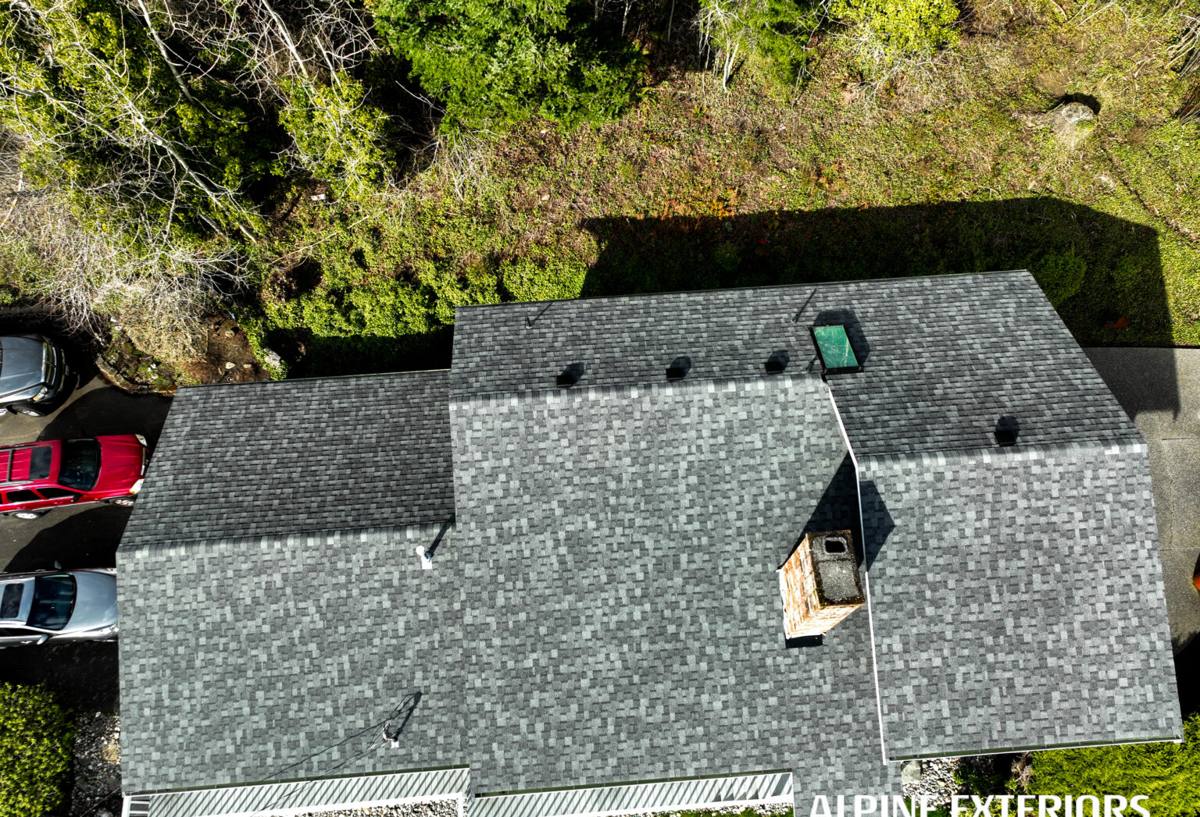
What Bellingham's Climate Does to a Roof
Bellingham gets a combination of factors that's tougher on roofing than a lot of homeowners realize:
- Salt-laden air off the Puget Sound and Bellingham Bay accelerates corrosion on exposed metal fasteners, flashing, and any hardware that isn't rated for coastal exposure.
- Driving rain that comes in sideways during winter storms, which finds weaknesses at valleys, penetrations, and edges rather than just running straight down the slope.
- A long moss and moisture season — often six to eight months of consistently damp conditions that give algae and moss plenty of time to establish on north-facing slopes and shaded sections.
- Tree cover common on South Hill lots, which adds shade, debris, and organic buildup that keeps roof surfaces damp longer than an open, sun-exposed roof would stay.
None of this is unique to South Hill, but the combination of elevation, tree canopy, and proximity to the water means roofs here often show wear patterns — moss streaking, soft spots at valleys, granule loss on shaded slopes — a few years before an identical roof would in a drier, more open part of the county.
Signs a South Hill Home Needs a New Roof, Not Another Repair
Repairs make sense when the damage is localized and the rest of the roof still has life left. A full replacement makes sense once the underlying system — not just the surface — is compromised. Common signs we look for on South Hill homes include:
- Granule loss heavy enough that shingles look bald or blotchy, especially on slopes that stay shaded most of the day
- Moss growth that keeps coming back within a season or two of cleaning, which usually means moisture is being held against the roof surface longer than it should be
- Soft or spongy decking discovered during inspection, a sign water has been getting past the shingles for a while
- Multiple past repairs in different spots, which usually means the material itself is past its service life rather than dealing with isolated damage
- Visible sagging along the ridge or roof plane, which can point to structural moisture damage underneath
If a roof is only showing one or two of these and is otherwise sound, a repair or partial re-roof may be the honest answer. We'll tell you that directly if that's what the inspection shows — a full replacement isn't the right call for every situation.
What a Correct New Roof Installation Includes
A roof is a system, not a single layer. Skipping any part of it is usually where premature failures come from, particularly in a wet climate like ours. A properly installed new roof includes:
Tear-Off and Deck Inspection
Full removal of the old roofing material down to the deck, followed by an actual inspection of the sheathing underneath. Any soft, rotted, or delaminated decking gets replaced before anything new goes down — installing new roofing over compromised decking just hides the problem for a while.
Ice and Water Barrier at Vulnerable Points
Self-adhering waterproof membrane at eaves, valleys, and around penetrations like chimneys and skylights — the spots where driving rain and ice most commonly force their way in.
Synthetic Underlayment
A water-resistant barrier across the full deck that acts as the roof's second line of defense if wind-driven rain gets under the primary roofing material.
Corrosion-Resistant Flashing and Fasteners
Given the salt air common to this part of Whatcom County, we treat flashing and fastener corrosion resistance as a real spec, not an afterthought. Cheaper, uncoated hardware fails faster here than it would further inland.
Proper Ventilation
Balanced intake and exhaust ventilation so moist air escapes the attic instead of condensing against the underside of the deck — a major contributor to hidden rot in roofs that otherwise look fine from the outside.
Final Detailing
Ridge caps, drip edge, and sealed penetrations installed to spec, along with a jobsite cleanup that includes magnetic sweeps for stray nails.
Material Options for South Hill Homes
There's no single "best" roofing material — the right choice depends on budget, roof pitch, house style, and how much long-term maintenance a homeowner wants to take on. Here's how the common options compare for a home in this climate:
| Material | Typical Lifespan | Moss/Moisture Resistance | Maintenance |
|---|---|---|---|
| Architectural asphalt shingle | 25-30 years | Good with algae-resistant granules; still needs periodic cleaning | Low to moderate |
| Standing seam metal | 40-50+ years | Excellent — moss struggles to hold on a smooth, sloped metal surface | Low |
| Synthetic/composite shake | 30-50 years | Good, varies by product; check manufacturer moisture ratings | Low to moderate |
| Cedar shake | 20-30 years | Requires diligent upkeep in a wet climate to resist rot and moss | High |
For homes with heavy tree cover or north-facing slopes that stay damp most of the year, metal or a quality architectural shingle with algae-resistant granules tend to hold up with the least fuss. We'll walk through the honest trade-offs — cost, appearance, longevity, upkeep — for your specific roof rather than pushing one product across the board.
Why Local Experience on South Hill Matters
Roofing crews who haven't worked much on South Hill specifically can underestimate a few things: how much wind exposure certain lots get at that elevation, how tree canopy on a given street changes moss patterns, and how driving rain off the Sound behaves against roofs facing certain directions. That's the kind of thing you only pick up by actually working these streets and seeing how roofs age here over time.
It also matters for practical reasons — permitting familiarity with the City of Bellingham, knowing which material suppliers can get product to a South Hill jobsite without delay, and understanding how narrow or sloped driveways on some of these lots affect staging and material delivery. None of it is glamorous, but it's the difference between a smooth install and a frustrating one.
Our Installation Process
We keep the process straightforward and communicate clearly at each stage:
- On-site inspection and estimate — we look at your current roof, attic ventilation, and any problem areas, and give you a written estimate with material options.
- Material selection — we go over the honest pros and cons of each option for your roof's pitch, exposure, and budget.
- Scheduling around weather — given how much rain this area gets, we plan installation windows carefully and protect the home if weather shifts mid-job.
- Tear-off and deck repair — old material comes off, decking gets inspected, and any damaged sections are replaced before moving forward.
- Installation — underlayment, flashing, ventilation, and final roofing material go on to manufacturer specification.
- Final walkthrough — we review the finished roof with you, cover warranty paperwork, and answer any maintenance questions.
A Simple Maintenance Checklist After Your New Roof Goes On
A new roof still needs a small amount of upkeep to hit its full lifespan in this climate. After installation, we recommend:
- Clearing overhanging branches and debris that keep sections of the roof shaded and damp
- Having gutters cleaned at least twice a year so water sheds properly instead of backing up under the roof edge
- Scheduling a light moss treatment or soft wash if growth starts to reappear on shaded slopes
- Doing a quick visual check after major windstorms for lifted shingles or displaced flashing
- Keeping an eye on attic ventilation, especially if you've added insulation or done other attic work since the roof went on
Ready to Talk About Your Roof?
If your South Hill home is showing signs of wear — moss that keeps returning, granule loss, or a roof that's simply reaching the end of its service life — we're happy to come take a look and give you a straightforward assessment. There's no pressure and no obligation. Fill out the form below and we'll set up a time to walk the roof with you and talk through your options.