 Bellingham
 Siding Replacement in Columbia: A Neighborhood With Its Own Wear Pattern
Columbia is one of Bellingham's established residential neighborhoods, with a mix of home ages, siding types, and exposure conditions from lot to lot. Some houses sit under mature tree canopy that keeps them shaded and damp most of the year. Others catch more open wind off the bay. That variation matters more than most homeowners realize, because it means two houses a few blocks apart can be at very different stages of siding failure even if they were built the same year and sided with the same product.
When we talk about siding replacement in Columbia specifically, we're talking about reading each home's actual exposure — sun, shade, wind, and moisture pattern — rather than applying a one-size-fits-all recommendation. That's the difference between a replacement that holds up for decades and one that starts showing the same problems again in ten years.
What Salt Air, Driving Rain, and Moss Actually Do to Siding
Whatcom County's marine climate is easy to enjoy and hard on exterior building materials. Three factors do most of the damage over time, and they compound each other.
Salt Air Near the Bay
Proximity to Bellingham Bay means a steady, low-level exposure to salt-laden air, especially on west- and south-facing walls that catch onshore wind. Salt air accelerates corrosion of exposed fasteners, trim flashing, and any metal components in the siding system. It also speeds up the breakdown of lower-grade paint finishes, which is one reason factory-applied, baked-on finishes hold color and integrity longer than field-applied paint in this environment.
Driving Rain and Wind-Driven Moisture
Bellingham doesn't just get rain — it gets rain pushed sideways by wind off the water, which finds every gap in flashing, trim, and lap joints that a straight-down rain never would. Over years, wind-driven moisture works its way behind poorly sealed siding, saturating sheathing and framing long before any staining shows up on the surface.
Moss and an Extended Shade Season
Between tree cover common in Columbia and Bellingham's long stretch of overcast, low-sun months, siding here stays damp longer than it would in a drier climate. That extended damp period is exactly what moss and algae need to establish. Once moss gets a foothold on a horizontal lap or in a butt joint, it holds moisture against the material continuously, which is a much bigger problem for wood-based or wood-adjacent products than it is for a moisture-resistant fiber cement panel.
Signs Your Columbia Home Needs Replacement, Not Just Repair
Not every siding problem calls for full replacement. But there's a point where patching individual boards is just delaying a bigger job and spending money that won't carry forward. Signs it's time to talk replacement rather than repair:
- Soft, spongy, or crumbling spots when you press on the siding, especially near the bottom courses or under windows
- Paint or finish that keeps failing within a year or two of repainting, even on a properly prepped surface
- Persistent moss or dark streaking that comes back within a season of cleaning
- Visible warping, cupping, or gaps opening between boards
- Cracking that follows a pattern across multiple boards rather than one isolated impact spot
- Rising energy bills alongside visibly aging siding, which often points to compromised weather barrier underneath
- Siding that's original to a home built more than 20-25 years ago, particularly wood-based products
Why We Only Install James Hardie Fiber Cement
We install one siding system on every job: James Hardie fiber cement. That's a deliberate standard, not a default. We've looked at the alternatives — vinyl, LP SmartSide, primed spruce, cedar — and each has real strengths, but each also carries trade-offs that show up specifically in a climate like Columbia's: sustained moisture, salt air, and long moss seasons.
Vinyl is affordable and low-maintenance in dry climates, but it can warp with temperature swings, fade over time, and its seams and J-channels give wind-driven rain more places to work its way behind the panel. Wood-based products like LP SmartSide, primed spruce, and cedar look great when new and can perform well with diligent upkeep, but they're organic materials in a climate that keeps them damp for months at a time — which means ongoing maintenance commitment and real exposure to moisture-related failure if that maintenance slips even one season.
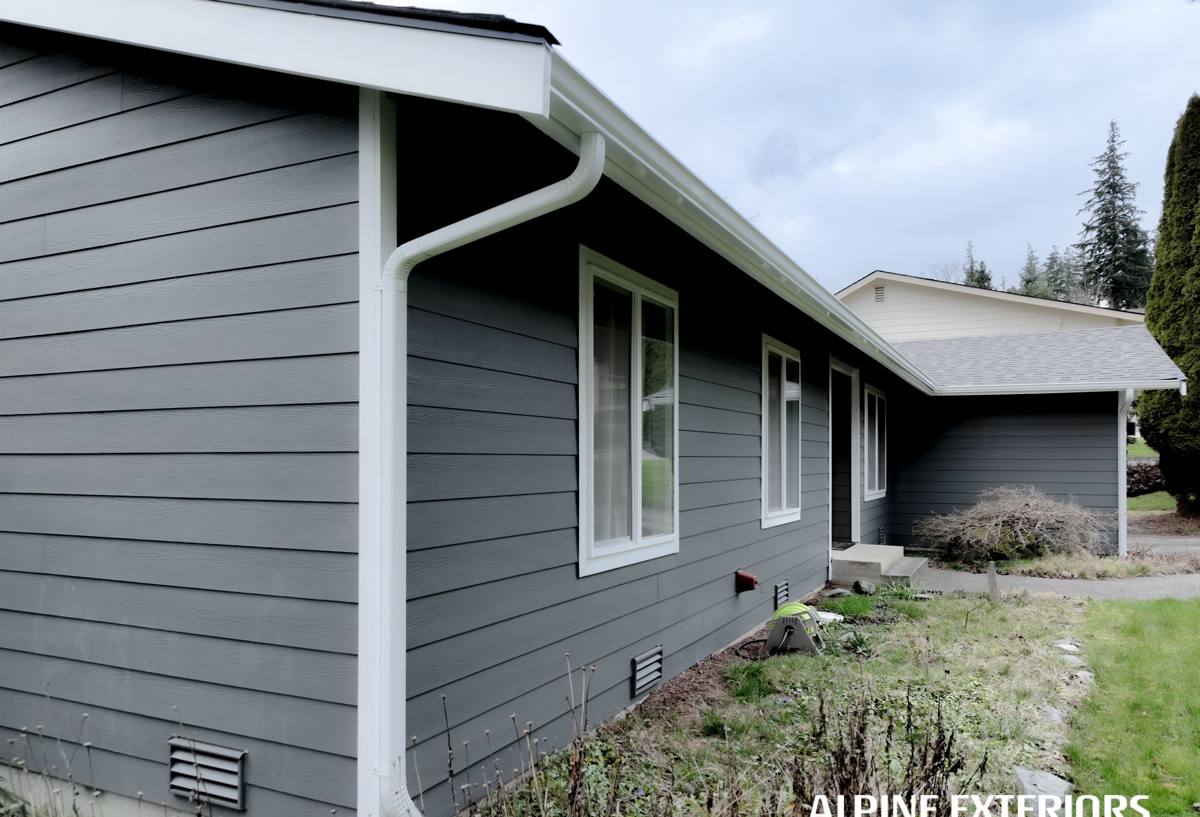
James Hardie fiber cement is engineered specifically to resist the conditions that cause the most trouble here: it doesn't rot, it's not a food source for moss and algae the way wood is, it holds paint and factory finish far longer, and it's non-combustible. Hardie's HZ5 product line is engineered for climates like ours, and the factory-applied ColorPlus finish is baked on and warrantied against fading and peeling in a way field-applied paint on wood siding simply isn't.
| Material | Rain/Moisture Resistance | Moss & Algae Resistance | Salt Air Durability | Ongoing Maintenance |
|---|---|---|---|---|
| James Hardie Fiber Cement | Excellent — non-organic, engineered for wet climates | Strong — not a moss food source | Strong finish durability | Low |
| Vinyl | Fair — seams and channels can trap moisture | Moderate | Can fade and become brittle | Low, but limited repair options |
| LP SmartSide | Good if maintained; wood-strand core is moisture-sensitive | Moderate — needs consistent upkeep | Moderate | Moderate to high |
| Cedar / Primed Spruce | Fair — natural wood, moisture-sensitive | Low without regular treatment | Moderate | High |
What a Correct Siding Replacement Job Actually Involves
Siding replacement is more than swapping old boards for new ones. In a climate that pushes rain sideways and keeps walls damp for weeks at a stretch, what's behind the siding matters as much as the siding itself.
Tear-Off and Sheathing Inspection
Once the old siding is off, we inspect the sheathing underneath for rot, soft spots, or hidden moisture damage that wouldn't have been visible from outside. This is often where years of small leaks around old flashing or failed caulk finally show themselves — and it's much cheaper to address during a siding job than to discover later.
Weather-Resistive Barrier and Flashing
We install a proper weather-resistive barrier and correctly lap and seal flashing at every window, door, and roof-to-wall intersection. This is the layer that actually keeps wind-driven rain out of the wall assembly — the siding itself is the first line of defense, not the only one.
Correct Fastening and Clearances
Fiber cement has specific fastening requirements — nail placement, spacing, and penetration depth all affect long-term performance. We also maintain proper clearance between the bottom of the siding and grade, decks, and roof lines, which matters for keeping moss and standing moisture away from the material's most vulnerable edges.
Our Process, Start to Finish
- Free on-site estimate — we walk the home, assess current siding condition, sheathing risk areas, and sun/shade exposure specific to the property
- Written scope and product selection — plank profile, color, and trim details, with the HZ5 line specified for our climate
- Tear-off and structural inspection — old siding removed, sheathing checked and repaired where needed before anything new goes up
- Weather barrier and flashing installation — the moisture-management layer that does the real work over the siding's lifetime
- Hardie installation to manufacturer spec — correct fastening, clearances, and joint treatment
- Final walkthrough — we review the finished job with you before considering it done
Cost Factors for Siding Replacement in Columbia
Every home is different, so we don't quote pricing sight unseen — but these are the factors that most often move a Columbia siding job's price up or down:
| Factor | Why It Matters |
|---|---|
| Home size and wall complexity | More square footage and more corners, gables, and dormers mean more material and labor |
| Sheathing condition | Rot or moisture damage found during tear-off requires repair before new siding goes on |
| Existing siding type | Some tear-offs are more labor-intensive than others depending on how the old material was installed |
| Trim and detail work | Window and door trim, fascia, and corner detailing add labor beyond flat wall coverage |
| Access and site conditions | Steep grades, tight setbacks, or limited equipment access common on some Columbia lots can affect labor time |
| Plank profile and finish | Different Hardie profiles and colors carry different material costs |
Why Hiring a Crew That Already Works in Columbia Matters
A siding crew that already works in Columbia and similar Bellingham neighborhoods has seen how these specific conditions play out on real homes — which walls take the worst of the wind-driven rain, how fast moss comes back on shaded north sides, and where salt air tends to do the most damage to fasteners and trim over time. That's not something you get from a general contractor working from a national installation manual with no feel for the Pacific Northwest.
It also means practical familiarity with permitting and inspection expectations in the City of Bellingham and Whatcom County, and realistic scheduling around our wet season rather than promising timelines that don't hold up against actual weather. None of that replaces careful workmanship, but it's part of what separates a siding replacement that's built for this climate from one that just looks right on installation day.
If your Columbia home's siding is showing its age, we're happy to take a look and give you a straightforward assessment — no pressure, no upsell, just an honest read on where things stand and what your options are. Request a free estimate using the form below.