 Bellingham
 Birch Bay's Waterfront Climate Asks More of Your Siding
Birch Bay sits right on the water, and that changes what a house needs from its exterior. Homes here take on a combination that inland Whatcom County neighborhoods don't deal with in the same way: salt-laden air coming off the Strait, wind-driven rain that hits siding sideways instead of just running down it, and a wet season that stretches long enough for moss and algae to get a real foothold on north- and west-facing walls. None of this is dramatic on any given day, but it adds up year after year, and it's why siding material and installation quality matter more here than in a sheltered inland lot.
Salt air is the one people underestimate. It doesn't just affect boats and railings — it accelerates corrosion on fasteners, flashing, and any exposed metal trim, and it can work into hairline gaps in a siding system faster than plain rainwater does. Combine that with wind exposure off the bay and you get more water pressure at joints, corners, and butt seams than a typical Bellingham-area home ever sees.
Why Fiber Cement Is the Right Call for This Location
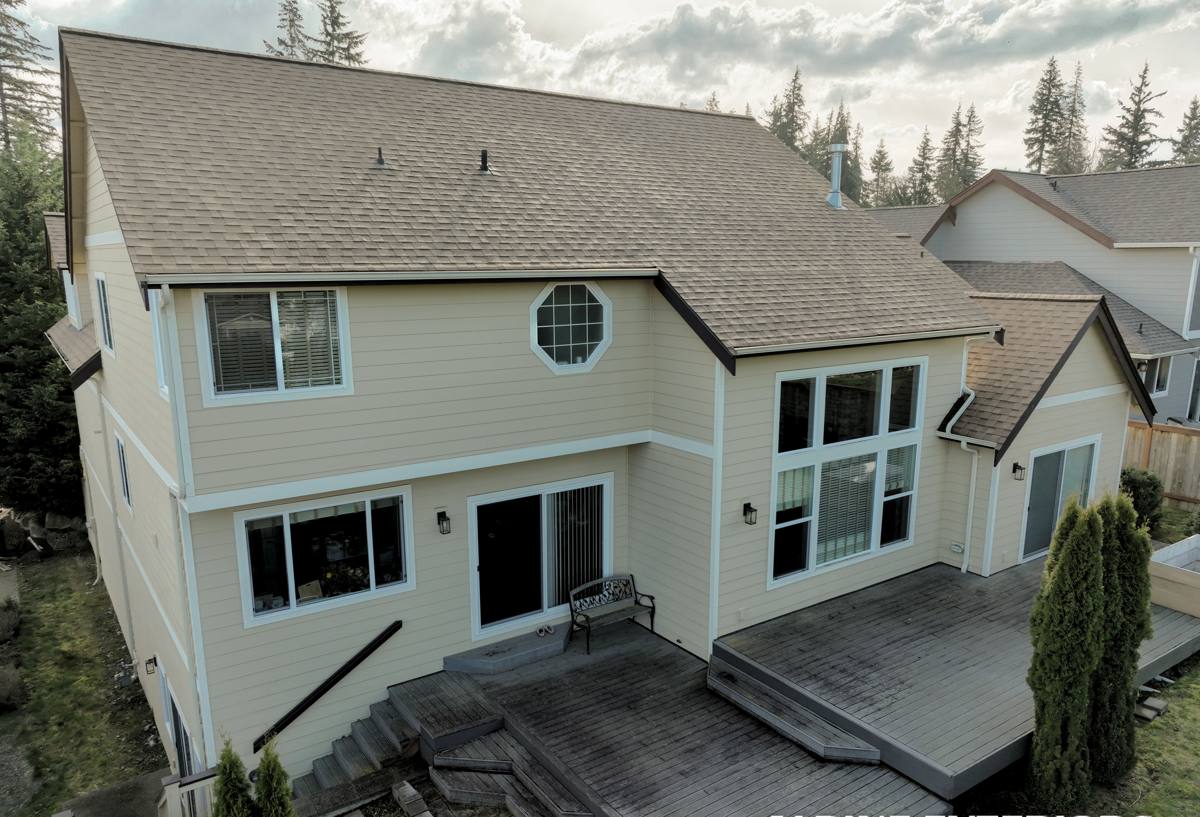
We install James Hardie fiber cement siding exclusively, and a coastal property like a Birch Bay home is a good example of why. Fiber cement doesn't absorb moisture and swell the way wood-based siding products can, and it doesn't rely on caulking and paint film alone to keep water out the way vinyl does. It's also non-combustible, which matters anywhere within reach of dry summer winds, even in a generally wet region like ours.
We don't install vinyl, wood composite panel products, or primed wood siding, and salt-air exposure is part of why. Vinyl expands and contracts more with temperature swings, its seams and J-channels are a place for wind-driven rain to find a way in, and it doesn't hold up to prolonged UV and salt exposure without fading and becoming brittle. Wood-based products need diligent field maintenance to keep water out at cut edges and fastener heads — maintenance that's easy to fall behind on for a property that isn't lived in year-round, which describes a fair number of Birch Bay homes.
Climate-Engineered for a Marine Environment
James Hardie doesn't make one siding formulation for the whole country. Its HardieZone system engineers the product's composition for regional conditions — moisture exposure, freeze-thaw cycling, and humidity — and homes in Whatcom County's marine climate fall into the zone Hardie formulates for consistent moisture and moderate freeze-thaw, not the harsher freeze-thaw zones found inland or at higher elevation. That's a meaningful difference from a generic siding product that isn't engineered with a coastal, rain-heavy climate in mind.
What a Correct Installation Actually Involves
Fiber cement siding performs the way it's supposed to only when it's installed to spec — and on a wind- and salt-exposed home, the installation details matter more, not less. A correct job on a Birch Bay property includes:
- A drainable weather-resistive barrier behind the siding, properly lapped and sealed at every penetration
- Correct clearance gaps at grade, roofline, deck ledgers, and other siding-to-structure transitions so water has somewhere to go
- Flashing at every window, door, and roof-to-wall intersection — not just caulk standing in for flashing
- Factory-primed or field-sealed cut edges, since an unsealed cut edge is the fastest way for moisture to get into the board
- Corrosion-resistant fastening appropriate for a coastal environment
- Properly spaced, back-primed trim and consistent caulk joints at butt seams
Skipping any one of these doesn't usually cause a visible problem in year one. It shows up years later as staining, soft trim, or a fastener that's bled rust down the face of a board — after the damage is already done underneath.
Fasteners and Hardware Near the Water
This is a detail that's easy to overlook and expensive to ignore. Standard fasteners can corrode noticeably faster in a salt-air environment than they would a few miles inland. On Birch Bay projects we use fastening and metal trim rated for coastal exposure, because a corroding fastener head doesn't just look bad — it eventually loses its grip and holding power.
ColorPlus Finish vs. Field-Applied Paint
Most of the siding we install uses James Hardie's ColorPlus factory finish rather than field-primed boards that get painted on site. The finish is baked on in a controlled factory environment, which gives it better, more even adhesion than paint applied outdoors in variable humidity — a real consideration in a climate where you rarely get a long stretch of dry, moderate-temperature days to paint in. It also resists fading and chalking longer than a typical field-applied coat, which matters on walls that face sun, salt, and wind in different combinations depending on which side of the house you're looking at.
Moss, Algae, and Coastal Grime
Whatcom County's wet season is long, and Birch Bay's humidity off the water doesn't help. Roofs, gutters, and north-facing walls in shaded areas are where moss and algae take hold first, and once established they hold moisture directly against the siding surface. A few things keep this from becoming a real problem:
Proper venting and drainage behind the siding assembly keeps moisture from getting trapped, which is as important for resisting moss as it is for resisting rot. Trimming back vegetation and maintaining a gap between plantings and the wall keeps airflow moving. And when siding does need cleaning, a gentle rinse or soft wash is the right approach — high-pressure washing can drive water behind panels and past flashing details, which creates the exact problem you're trying to avoid.
Our Process for Birch Bay Siding Projects
We start with an on-site look at exposure — which walls take the brunt of wind off the water, where existing moisture damage or moss buildup shows up, and where trim, flashing, or fastener choices need to be upgraded rather than just replaced like-for-like. From there:
- Remove existing siding and inspect the sheathing underneath for water damage, addressing anything we find before covering it back up
- Install or repair the weather-resistive barrier and correct any flashing issues at windows, doors, and roof lines
- Install James Hardie siding and trim to manufacturer spec, with coastal-appropriate fastening
- Finish detail work — caulking, trim, and touch-up — and do a full walk-through with the homeowner
We don't cover up a rot or moisture problem just to get the new siding up faster. On a coastal property, whatever's behind the old siding tells you a lot about how well it was originally installed, and that's worth addressing properly the first time.
Cost Factors for a Birch Bay Fiber Cement Project
Every home is different, so we don't quote pricing without seeing the property, but the factors that move the number are consistent:
| Factor | Why It Matters |
|---|---|
| Home size and number of stories | More surface area and taller walls mean more material and labor, and more staging/access work |
| Siding profile (lap, shingle, panel) | Different profiles have different install labor and material costs |
| Amount of trim and window detail | More corners, trim boards, and window surrounds add labor time |
| Condition behind the old siding | Water damage or rotten sheathing found during tear-off adds repair scope |
| Site access | Waterfront lots, slopes, or tight setbacks can affect staging and equipment access |
Maintenance Checklist for a Coastal Whatcom County Home
- Rinse siding gently once or twice a year, more often on shaded, moss-prone walls
- Keep gutters clear so runoff isn't sheeting down the siding face
- Check caulk joints at trim and butt seams annually and recaulk where it's cracked or pulled away
- Trim back plants and shrubs to keep airflow at the wall
- Look at fastener heads and trim metal periodically for early signs of corrosion
- Address any soft trim or staining promptly rather than waiting — coastal moisture problems don't slow down on their own
Why Hire a Crew That Already Works Birch Bay
A siding crew that's worked around the bay knows which walls typically take the worst of the wind and salt exposure before they even walk the property, and they detail flashing and fastening accordingly instead of treating every wall the same. They're also familiar with Whatcom County permitting requirements and know how to price and sequence a project around a waterfront lot's access limitations. That local experience shows up less in the sales pitch and more in the details you don't see once the siding is up — the flashing behind the trim, the fasteners that won't be leaving rust streaks in five years, the gap at grade that's actually correct.
If you're planning a siding project on a Birch Bay home, we're happy to take a look and walk you through what we'd recommend for your specific exposure. Reach out for a free, no-pressure estimate using the form below.