 Bellingham
 When Bellingham Weather Catches Up With a Birchwood Roof
Birchwood is an established neighborhood, and a lot of its homes are carrying roofs that were installed decades ago under a very different set of expectations. A roof that looked fine ten years ago in a drier climate doesn't necessarily hold up the same way here. Whatcom County sits close to the water, gets a long wet season, and grows moss faster than almost anywhere else in the state. When a roof finally needs to come off and be replaced, the job has to be done with that reality in mind, not treated like a generic swap of old shingles for new ones.
We've worked on enough Birchwood roofs to know the pattern: shingles that look okay from the ground but are cupping, moss lines building along the north-facing slopes, and soft spots in the decking that only show up once the old roofing is stripped away. A proper new roof installation in this area isn't just about materials — it's about building a system that can shed water fast, breathe correctly, and resist the organic growth that Bellingham's climate practically guarantees.
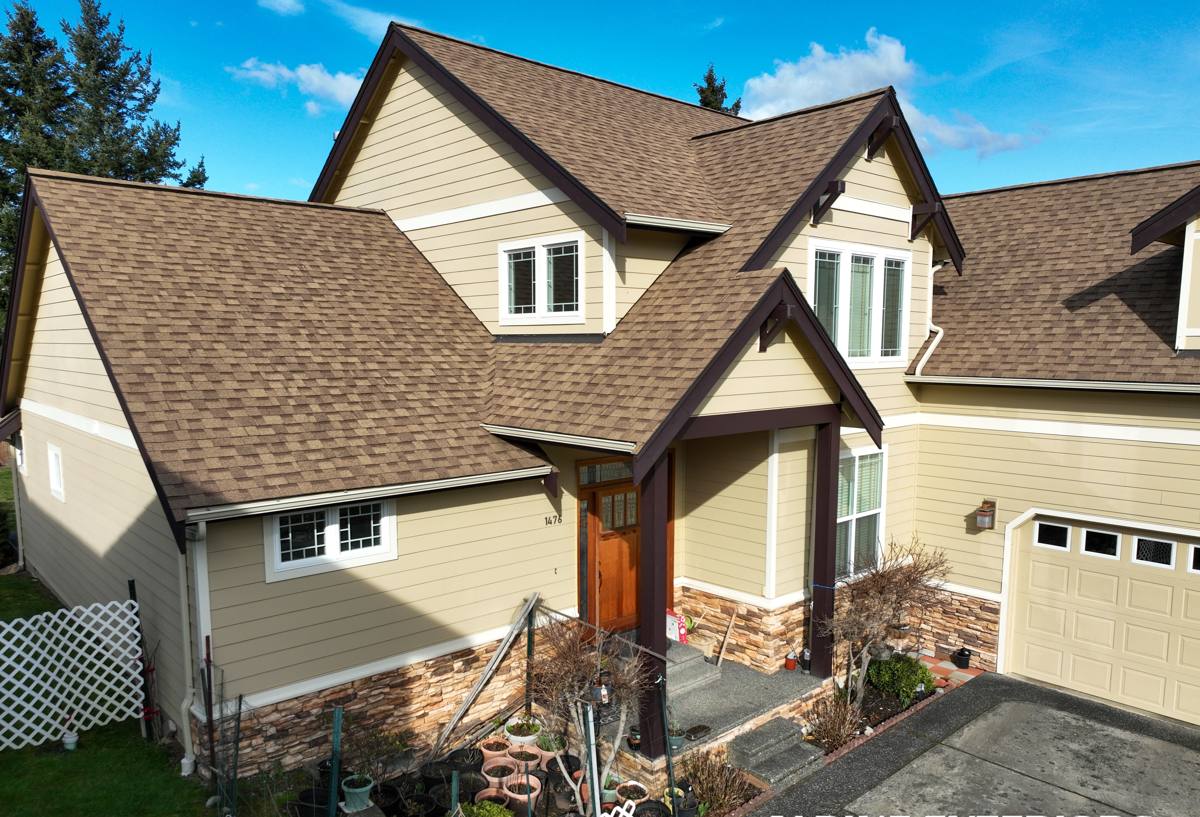
What Bellingham's Climate Does to an Aging Roof
Moss and Organic Growth
Bellingham's long, mild, wet stretches from fall through spring are ideal conditions for moss, algae, and lichen. Once moss takes hold on a roof, it holds moisture against the shingle surface long after the rain has stopped, which accelerates granule loss and speeds up decay underneath. On older roofs in Birchwood, we regularly see moss that's worked its way under shingle tabs and started lifting them, which is when small moisture problems turn into deck rot.
Driving Rain and Wind-Driven Water
Rain here doesn't always fall straight down. Storms off the Sound and coastal weather systems push rain sideways against roof planes, valleys, and anywhere two roof surfaces meet. That kind of wind-driven moisture finds weak flashing, worn nail heads, and thin underlayment a lot faster than a calm, vertical rain would. A roof built for a milder climate elsewhere often just isn't detailed for this.
Salt Air and Metal Fatigue
Being close to Bellingham Bay means salt-laden air is a real factor, especially for any exposed metal — flashing, fasteners, vents, and gutters. Salt air speeds up corrosion on lower-grade metal components, which is one of the most overlooked failure points on older roofs. A new installation is the right time to upgrade those details, not just replace what's already there.
Signs a Birchwood Home Needs a New Roof, Not Another Repair
Repairs make sense when the problem is isolated. Full replacement makes sense when the roofing system as a whole has aged out or the damage has spread past a patchable area. Here's what typically tips a Birchwood roof from "repair" into "replace":
- Shingles that are curling, cracking, or losing granules across multiple slopes, not just one spot
- Moss or dark streaking that keeps coming back within a season or two of cleaning
- Soft or spongy decking felt underfoot in the attic, or daylight visible through the roof boards
- Repeated leaks around the same valley, chimney, or vent even after past repairs
- A roof that's at or past the manufacturer's expected service life for its material and exposure
- Granules collecting heavily in gutters after normal rain, not just after a storm
- Visible sagging along the ridge line or between rafters
If a Birchwood homeowner is only seeing one or two of these, a targeted repair may still buy time. When several show up together, it's usually more cost-effective in the long run to replace the whole system rather than keep chasing individual leaks.
Roofing Materials That Actually Hold Up Here
There's no single "best" roofing material for every home — it depends on budget, roof pitch, and how much maintenance the homeowner wants to take on. What matters most in Whatcom County is how a material handles sustained moisture and moss pressure over time.
| Material | Moisture & Moss Behavior | Typical Lifespan Here | Maintenance |
|---|---|---|---|
| Standard 3-tab asphalt shingle | Adequate but more prone to moss growth and granule loss over time | 15–20 years | Periodic moss treatment recommended |
| Architectural (laminated) shingle | Denser, better wind and water resistance; still needs moss management | 25–30 years | Moderate |
| Standing seam metal | Sheds water and moss quickly due to slick surface and steep profile | 40–50+ years | Low, but fastener/flashing checks matter near salt air |
| Cedar shake | Attractive but holds moisture longest; highest moss and rot risk without diligent upkeep | 20–30 years with upkeep | High |
We're upfront with Birchwood homeowners about trade-offs. Cedar shake has real curb appeal, but it demands the most consistent maintenance in a climate like this, and skipping upkeep even a season or two accelerates moisture damage underneath. Architectural shingles hit a strong balance of cost, durability, and appearance for most homes in the neighborhood, while metal is worth considering for homeowners who want to minimize moss maintenance long-term and are comfortable with the higher upfront cost.
What a Correct New Roof Installation Involves
Full Tear-Off and Deck Inspection
We don't install new roofing over old layers. A full tear-off lets us actually see the deck, which is the only way to catch soft spots, rot, or delaminated sheathing before they get sealed under a brand-new roof. Any damaged decking gets replaced before anything else happens — skipping this step is one of the most common shortcuts that leads to early failure.
Underlayment and Ice-and-Water Protection
Given how much wind-driven rain this area sees, underlayment isn't a formality. Synthetic underlayment across the full roof, with self-adhering ice-and-water membrane at eaves, valleys, and around penetrations, gives the roof a real second line of defense if wind ever drives water under the primary roofing material.
Ventilation
A roof that can't breathe traps moisture in the attic, which accelerates deck rot from underneath and can encourage mold regardless of how good the shingles are. Balanced intake and exhaust ventilation is part of a correct installation, not an optional add-on, especially on homes where the attic was never properly vented to begin with.
Flashing and Edge Details
Chimneys, skylights, valleys, and roof-to-wall transitions are where the vast majority of leaks start. We install new flashing as part of every re-roof rather than reusing old pieces, and we pay particular attention to corrosion-resistant metal given the salt air exposure common throughout Bellingham.
Our Installation Process, Start to Finish
- On-site assessment — We walk the roof and attic, check the decking where accessible, and talk through material options based on the home's exposure and budget.
- Written estimate — A clear, itemized quote covering materials, tear-off, disposal, and any anticipated decking repair.
- Scheduling and material delivery — We time the work around Bellingham's weather windows as much as possible to reduce exposure during install.
- Tear-off and disposal — Old roofing is stripped, hauled away, and the deck is inspected in full daylight.
- Deck repair — Any compromised sheathing is replaced before underlayment goes down.
- Underlayment, flashing, and ventilation install — The moisture-management layer goes in first, correctly, before the finish material.
- Roofing material installation — Shingles, metal panels, or shakes installed to manufacturer spec and local wind/rain conditions.
- Final walkthrough and cleanup — Site is cleared of debris and nails, and we walk the finished roof with the homeowner.
What a New Roof Costs in Birchwood
Every roof is different, but the price of a new roof installation is driven by a consistent set of factors. Understanding them helps homeowners compare quotes honestly rather than just looking at a bottom-line number.
| Cost Factor | Why It Matters |
|---|---|
| Roof size and number of planes | More square footage and more valleys/hips mean more material and labor time |
| Roof pitch | Steeper roofs require more safety setup and slower, more careful work |
| Material choice | Asphalt, metal, and cedar carry very different material and labor costs |
| Number of existing layers | Tear-off of multiple old layers adds labor and disposal cost |
| Deck condition | Rotted sheathing found during tear-off adds repair cost not visible in advance |
| Access and site conditions | Tight lots, tall trees, or difficult staging areas affect labor time |
We provide firm, itemized numbers only after seeing the roof — anyone quoting a full replacement price sight-unseen over the phone is guessing. Broad ballpark ranges are fine for early planning, but the real number depends on the roof in front of us.
Why Hiring a Crew That Already Works Birchwood Matters
A roofing crew that's spent real time in Whatcom County knows what to expect before the tear-off even starts — where moss tends to build fastest given a home's tree cover and orientation, how much ice-and-water protection makes sense for a given exposure, and which flashing details tend to fail first on older Birchwood construction. That local familiarity translates into fewer surprises mid-project and a roof that's actually built for the weather it has to survive, not a generic install pulled from a national playbook. It also means someone who's easy to reach afterward if a question comes up, rather than a crew that worked the neighborhood once and moved on.
If your Birchwood home needs a new roof, we're happy to take a look and walk you through what we're seeing — no pressure, no obligation. Fill out the form below for a free estimate.