 Bellingham
 Siding Repair Built for Sudden Valley's Wooded, Lakeside Setting
Sudden Valley sits in one of the more distinctive microclimates in the Bellingham area. Wooded lots, heavy tree cover, and close proximity to Lake Whatcom mean homes here hold moisture longer than siding on an open, sun-exposed lot across town. Add in the driving rain and long moss season that define this part of Whatcom County, and you get siding that ages differently — and often fails differently — than siding on a typical suburban street.
We repair siding throughout Bellingham, but Sudden Valley gets its own approach. Shaded north walls, damp crawlspaces under sloped lots, and tree canopy that keeps siding wet for days after a storm all change where damage shows up first and how urgent it is. A repair crew that treats every home the same will miss the patterns that matter here.
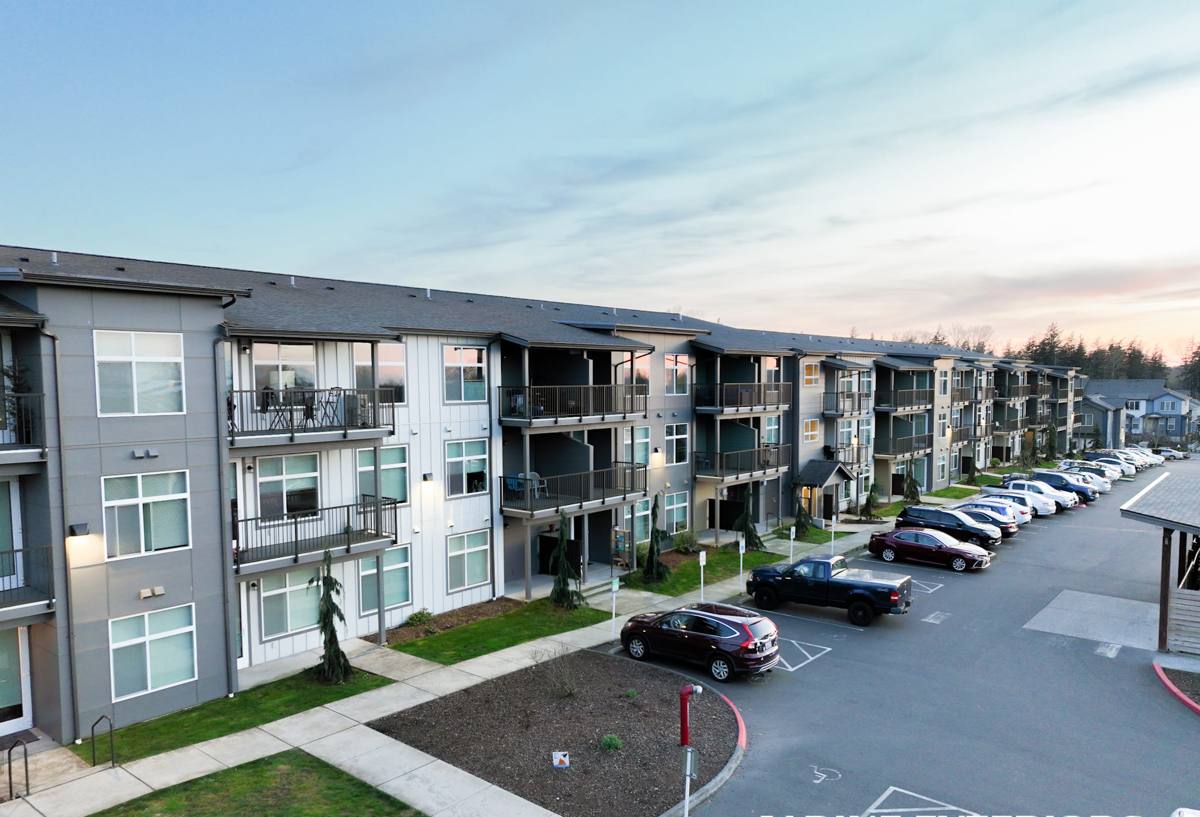
What Sudden Valley's Environment Does to Siding Over Time
Three environmental factors do most of the damage to siding in this neighborhood, and they compound each other.
Extended Moisture Exposure
Tree cover blocks the sun and slows drying. On a lot with full afternoon sun, siding that gets wet in a storm is usually dry by the next day. On a shaded Sudden Valley lot, the same wall can stay damp for several days. That extended wet time is what allows moisture to work its way behind seams, around trim, and into any gap in the water-resistive barrier.
Moss, Algae, and Organic Growth
A long moss season isn't just a cosmetic issue. Moss and algae hold water directly against the siding surface and, on wood-based products, create the conditions for rot even when the material looks intact from a distance. On fiber cement, moss growth is mostly a maintenance and appearance problem — but it's a sign that a wall isn't drying properly, which is worth paying attention to regardless of siding type.
Driving Rain and Wind-Driven Wetting
Storms off the water don't fall straight down — wind pushes rain sideways into wall assemblies, seams, and any place where flashing or caulking has started to fail. This is where a lot of hidden damage originates: not from a leaky roof, but from rain forced horizontally into a joint that was never fully sealed to begin with.
Signs Your Siding Needs Repair
Most siding problems in Sudden Valley don't announce themselves. They show up as small, easy-to-miss changes that get worse the longer they sit. Walk your exterior and look for:
- Soft or spongy spots when you press on a panel or board, especially near the bottom courses
- Visible gaps, cracks, or separation at seams, corners, and window and door trim
- Paint that's bubbling, peeling, or discoloring in a specific area rather than evenly across the whole wall
- Persistent moss or dark staining that keeps returning after cleaning
- Warping, buckling, or panels that no longer sit flush against the wall
- Musty smells or visible moisture inside on an exterior wall, which usually means water has already gotten behind the siding
- Insect activity or soft, crumbling material around penetrations like hose bibs, vents, or light fixtures
Any one of these can be a small, contained repair if it's caught early. Left through another wet season, most of them turn into a larger job involving sheathing and framing repair, not just siding.
What a Correct Siding Repair Actually Involves
A proper repair is more than pulling off a damaged board and nailing up a new one. Done right, it addresses why that section failed in the first place.
Diagnosis Before Demolition
Before we replace anything, we find out how water got in. That might mean checking flashing above a window, inspecting a butt joint between panels, or looking at how a deck ledger or porch roof ties into the wall. Replacing siding without fixing the entry point just buys a few years before the same spot fails again.
Checking What's Behind the Siding
Once damaged material is removed, we look at the sheathing and water-resistive barrier underneath. If there's rot in the sheathing or framing, that has to be addressed before new siding goes back on — patching over compromised structure is exactly the kind of shortcut that causes bigger problems down the road.
Matching Material and Finish
Repairs should blend in, not stand out as an obvious patch. That means matching profile, reveal, and color as closely as possible, and it's part of why we standardized on one siding system rather than juggling products from different manufacturers with inconsistent panel dimensions and paint formulations.
Proper Flashing and Sealing on the Way Back Together
The final step is where a lot of repairs go wrong. Flashing, house wrap integration, and sealant at joints all have to be installed correctly — not just caulked over — or the repair fails the same way the original section did.
Repair or Replace? What Actually Drives That Decision
Homeowners often ask us to just tell them whether they need a repair or a full re-side. It depends on how much of the wall system is affected, not just how bad one section looks.
| Factor | Leans Toward Repair | Leans Toward Replacement |
|---|---|---|
| Extent of damage | Isolated to one wall or a few sections | Recurring damage across multiple elevations |
| Underlying structure | Sheathing and framing intact | Rot or moisture damage found behind siding |
| Siding age and material | Newer material still performing well elsewhere | Original material at or past its practical service life |
| Cause of failure | A single fixable source, like one bad flashing detail | Systemic issue, like a water-resistive barrier that was never installed correctly |
| Appearance goals | Match to existing siding is acceptable | Homeowner wants a full color or product change |
We'll always tell you honestly when a repair makes sense versus when it's a temporary fix that's likely to need revisiting. Our goal on every visit is the right scope for the actual problem, not the largest job we can sell.
Our Process for Sudden Valley Siding Repairs
1. On-Site Inspection
We look at the affected area plus the rest of the exterior, since shaded and moisture-prone walls often show early problems before they've spread. We'll point out anything we find, even if it's not why you called.
2. Clear, Written Estimate
You'll get a scope of work and price before anything is scheduled — what's being repaired, what materials are used, and what the work involves. No vague line items.
3. The Repair
We remove only what needs to come off, inspect and address anything underneath, and rebuild the wall assembly correctly before new siding and trim go back on.
4. Cleanup and Walkthrough
We clear debris and walk the finished work with you so you can see exactly what was done and why.
Why We Use James Hardie Fiber Cement for Repair Work
We install and repair with James Hardie fiber cement exclusively. We don't install LP SmartSide, vinyl, Cemplank, Allura, primed spruce, or cedar, and that standard applies to repairs as much as full re-sides.
For a climate like Sudden Valley's — long wet seasons, heavy shade, and moisture that lingers against exterior walls — fiber cement holds up in a way wood-based and engineered wood products often don't. It's non-combustible, it doesn't swell or rot when it stays damp, and Hardie's ColorPlus factory finish resists the fading and peeling that shaded, moss-prone walls tend to accelerate. When we replace a damaged section, matching to Hardie's HZ5 product line (engineered for Pacific Northwest moisture conditions) gives you a repair that's built for the same environment that caused the original failure — not just a patch in a different material bolted onto an old wall.
If your home currently has a different siding product and you're facing repeated repairs in the same spots, that's often a sign the underlying material isn't suited to how wet this area stays for how much of the year. We'll always give you a straight answer about whether a targeted repair is enough, or whether the recurring failures point to a bigger conversation.
Why It Matters That We Already Work in Sudden Valley
Sudden Valley isn't a typical Bellingham subdivision. Winding, wooded streets, shared community infrastructure, and in many cases an HOA or community association overseeing exterior work all mean a repair crew unfamiliar with the neighborhood can lose time just figuring out access, parking, and whatever approval process applies to your property. We've worked in this community enough to know what to expect and to plan around it instead of discovering it on the day of the job.
Just as important, we know what to look for on a Sudden Valley home specifically — the shaded elevations that stay wet longest, the trim details most exposed to wind-driven rain off the lake, and the areas where moss returns fastest. That local pattern recognition is often the difference between a repair that solves the problem and one that just replaces the symptom.
Ready for an Honest Look at Your Siding?
If you're seeing soft spots, recurring moss, or trim that's starting to separate, it's worth having someone look before another wet season passes. We offer free, no-pressure estimates for Sudden Valley homeowners — we'll tell you plainly whether you're looking at a simple repair, a larger fix, or something in between. Fill out the form below to get started.