 Bellingham
 Windows Built for South Hill's Exposure
South Hill sits up on the slope above downtown Bellingham, which means the homes there catch weather that flatter neighborhoods don't see as directly. Elevation brings more open exposure to wind and driving rain off Bellingham Bay, and the mix of older housing stock with newer additions means window conditions on any given block can range from original single-pane units to windows that were already replaced once and are failing again. When we work on windows in South Hill, we're not just swapping glass — we're accounting for how that specific exposure has aged the opening underneath.
Whatcom County's climate is mild by most standards, but it's relentless in a specific way: salt-tinged air off the water, long stretches of driving rain in fall and winter, and a moss season that can run most of the year on shaded north- and west-facing walls. None of that is dramatic on its own. Over five, ten, twenty years, it's what quietly rots sills, corrodes hardware, and turns a small sealant gap into a soft spot in the wall framing.
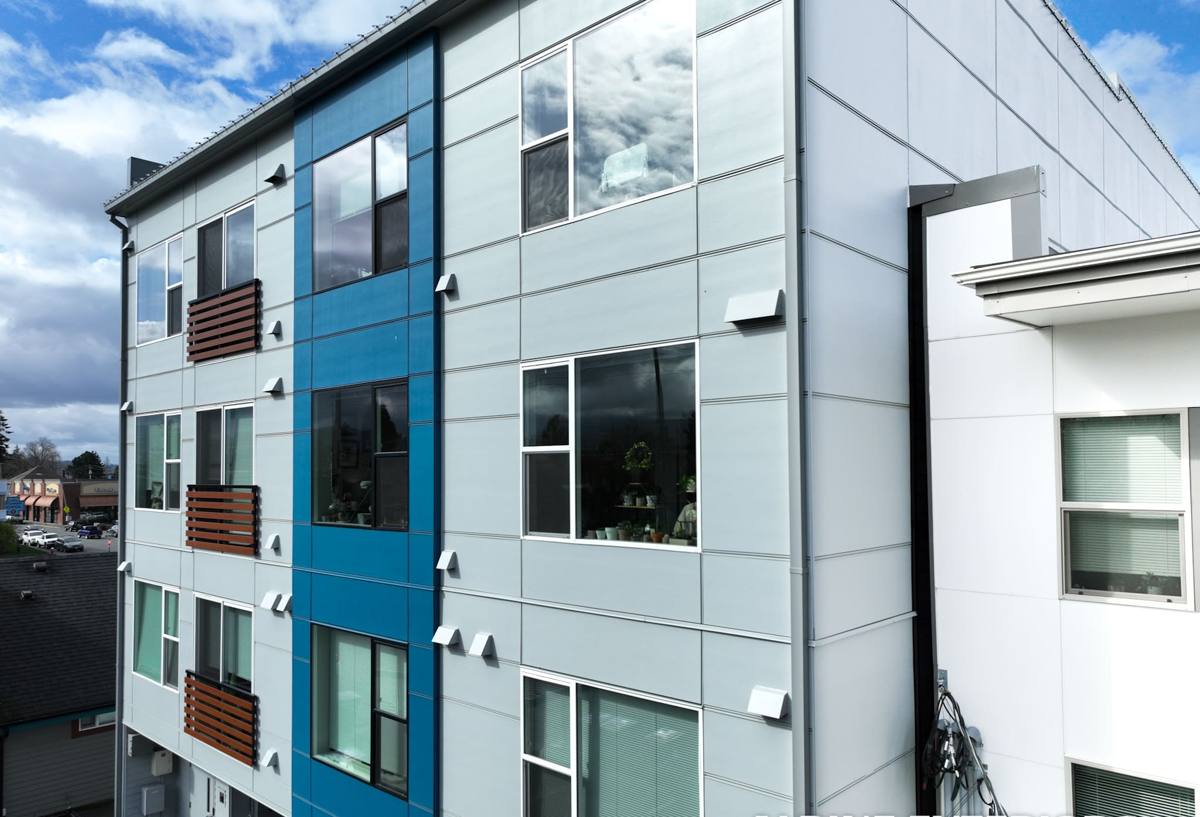
What South Hill Homes Need From Their Windows
Salt Air and Coastal Moisture
Homes with any bay exposure deal with airborne salt that accelerates corrosion on window hardware — hinges, cranks, locks, and especially older aluminum frames. Salt-laden moisture also works its way into wood trim and sills faster than plain rainwater would, which is why we pay close attention to hardware finish and frame material on any home with a clear line of sight to the water.
Driving Rain and Wind-Driven Exposure
Rain that comes in sideways finds every weak point in a window installation — a flashing lap installed backward, a bead of caulk substituting for real weather barrier, a sill pan that was never installed at all. South Hill's elevation and open exposure mean wind-driven rain is a bigger factor here than it is for a home tucked into a low, sheltered lot. The installation details matter more, not less.
The Long Moss Season
Whatcom County's moss season isn't confined to a few weeks — shaded, north-facing walls can stay damp enough to grow moss for most of the year. Moss and algae holding moisture against a window frame or the trim around it keeps that wood wet longer than it would otherwise be, which is a slow but steady path to rot if the original installation didn't leave the assembly able to dry out.
Signs Your Windows Are Due for Replacement
Some window problems are obvious. Others show up as small annoyances long before anyone connects them to the window itself. Worth checking for:
- Fogging or a permanent haze between the panes of a double-pane window (seal failure)
- Soft or spongy wood at the sill or bottom corners of the frame
- Visible gaps, drafts, or a noticeable temperature difference near the window in cold weather
- Difficulty opening, closing, or locking — often a sign the frame has shifted or swollen
- Paint that keeps peeling or bubbling on the interior or exterior trim, faster than elsewhere on the house
- Moss or dark staining building up on the sill or in the corners of the frame
- Visible daylight around the frame from inside, or a whistling sound in wind
Any one of these is worth a look. Several together usually mean the window and the opening around it both need attention, not just the sash.
What a Correct Installation Actually Involves
Flashing and Weather Barrier Integration
This is the part that's invisible once the trim goes back on, and it's the part that determines whether a window lasts fifteen years or forty. A correct installation ties the window's flashing into the house's existing weather-resistive barrier in the right shingle-lap order — top piece over the sides, sides over the sill pan — so water is always directed outward, never trapped behind the siding. Caulk is a backup, not a substitute for that sequence.
Frame Material Choices
There's no single "best" window frame material — it depends on the home, the exposure, and the budget. We walk homeowners through the honest trade-offs rather than pushing one product:
| Material | Moisture / Salt Air Behavior | Maintenance | Typical Lifespan |
|---|---|---|---|
| Vinyl | Won't rot or corrode; performs well in salt air | Low — occasional cleaning | 20–30 years |
| Fiberglass | Excellent stability, resists warping and moisture | Low | 30+ years |
| Wood (painted or clad) | Best for period-correct older homes; needs a maintained exterior finish to keep moisture out | Moderate to high — repainting or resealing on a schedule | 20–40 years, condition-dependent |
| Aluminum | Prone to corrosion and condensation in this climate unless thermally broken | Moderate | 15–25 years |
For a lot of South Hill's older homes with real wood trim and a specific architectural character, a wood or clad-wood window is the right call to keep the look intact — as long as the homeowner understands the exterior finish needs to be kept up. For homes where low maintenance matters more than matching an original profile, vinyl or fiberglass is usually the more honest recommendation.
Sealing and Insulation
Around the rough opening, we use a proper air-sealing foam or backer rod and sealant system rather than filling gaps with spray foam alone, which can bow thinner frames if overfilled. The goal is a continuous air seal without putting pressure on the window unit itself.
Our Process, Start to Finish
- On-site assessment. We look at every window being discussed — not just the ones with obvious problems — and check the condition of the surrounding trim, sill, and siding, since window failure is often a symptom of a bigger moisture issue.
- Honest scope and estimate. We tell you which windows need full replacement, which need repair, and which are fine, along with straightforward material options and what they cost. No pressure to replace more than the house actually needs.
- Removal and opening inspection. Once the old window comes out, we check the framing underneath for rot or moisture damage before anything new goes in. This is the point where hidden problems get caught — or missed, if it's skipped.
- Correct flashing and installation. Sill pan, flashing sequence, air sealing, and fastening done to manufacturer spec and sound building practice, not shortcuts hidden behind trim.
- Trim, finish, and cleanup. Interior and exterior trim reinstalled or replaced, finished to match, site cleaned up.
- Final walkthrough. We check operation, seals, and finish with you before calling the job done.
Choosing the Right Style for South Hill's Mix of Homes
South Hill has a genuine mix of housing ages and styles, from older homes with original wood trim details to newer construction. For older homes, we generally recommend matching the existing window proportions and grille pattern rather than defaulting to whatever's cheapest or most common today — it preserves the character of the house and tends to hold resale value better. For view-oriented homes catching a look toward the bay, larger fixed or picture units paired with operable casements or double-hungs for ventilation is a common, sensible combination. We size and place windows based on what the wall and framing can support, not just what looks good in a catalog.
Why Hire a Crew That Already Works in South Hill
A window installer who hasn't worked much in this part of Bellingham can still do competent work, but they're guessing at things a local crew already knows: how exposed a given block tends to be to wind-driven rain, which older homes in the area tend to have original wood-frame construction under later siding layers, and how much shade certain lots hold onto through the year — all of which shape material and flashing decisions before the first window ever comes out. We've done this work up and down South Hill and the surrounding Bellingham hillside long enough to walk into an assessment already knowing the right questions to ask, which shortens the guesswork and gets to an accurate estimate faster.
Keeping New Windows Performing Long-Term
A correctly installed window still benefits from basic upkeep, especially in this climate. Rinse sills and tracks periodically to keep moss and organic debris from holding moisture against the frame. Check exterior caulk lines yearly for cracking, particularly after a hard winter. If you have painted wood windows, keep the exterior finish maintained rather than waiting until bare wood is exposed. None of this is complicated, but skipping it is how a well-installed window ends up with an avoidable problem ten years in.
If you're dealing with drafty, foggy, or failing windows on a South Hill home — or just want an honest read on whether repair or full replacement makes sense — we're glad to come take a look. The estimate is free, there's no pressure attached to it, and you can request one using the form below.