 Bellingham
 Why Birch Bay Siding Wears Out Faster Than Inland Homes
Birch Bay sits right on the water, and that changes what siding has to survive. Homes a few blocks from the beach take on salt-laden air almost daily, driving rain off the Strait during winter storms, and a long, damp moss season that keeps north-facing walls wet for weeks at a time. Add the wind that funnels down the bay and you have a combination that finds every weak point in a siding system — loose caulk joints, thin factory coatings, and seams that were never meant to handle sustained wind-driven moisture.
We see the results in the same places over and over: paint failing years ahead of schedule, siding that's soft or delaminating near the ground and around window trim, and moss or algae staining that keeps coming back no matter how many times it's pressure washed. None of that is a sign of a bad homeowner — it's what happens when a siding product built for a milder, drier climate gets installed on a coastal Whatcom County lot.
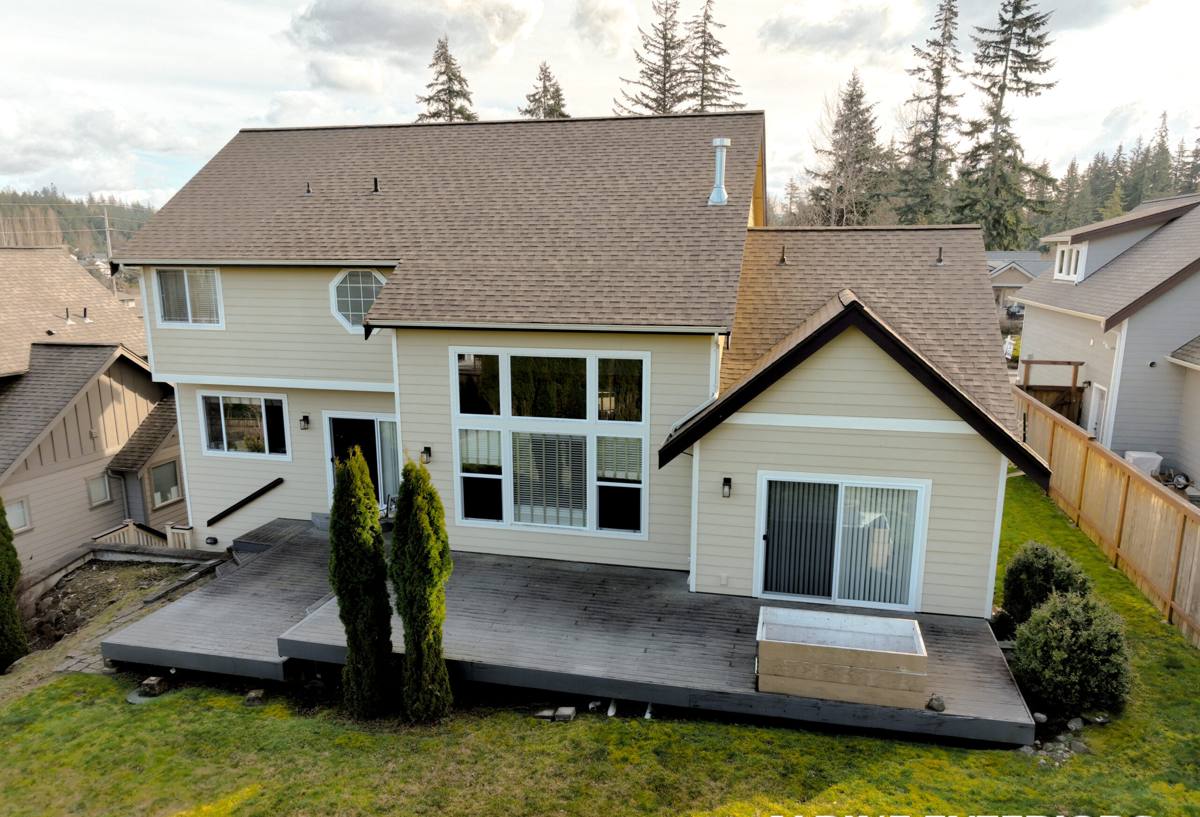
What Birch Bay Homes Actually Need From Their Siding
Replacement siding here has to do three jobs at once: shed wind-driven rain before it reaches the wall assembly, resist moisture absorption at the material level so it doesn't swell or soften over time, and hold a factory finish that doesn't chalk or fade under constant salt exposure and UV. A lot of siding failures aren't really "siding failures" — they're finish failures or water-management failures that happen to show up on the siding first.
This is also why we don't treat Birch Bay like a generic Bellingham job. A house two miles inland and a house facing the bay can need different detailing at the same budget — tighter flashing at penetrations, more attention to the water-resistive barrier lap sequence, and sometimes a different siding profile depending on wind exposure.
Signs It's Time for Replacement, Not Another Repair
- Siding that's soft, spongy, or crumbling when pressed, especially within a foot or two of grade
- Paint that's peeling or bubbling repeatedly in the same spots within a few years of repainting
- Persistent moss or black streaking on north and west-facing walls that returns quickly after cleaning
- Visible gaps, warping, or cupping in board siding, particularly at butt joints
- Musty smell or soft drywall on interior walls that back up to exterior siding
- Caulk that's cracked or missing at seams, trim, and window edges across large sections of the house
One or two of these on their own might be a repair. Several at once, especially on a house that's had multiple repaint or patch jobs already, usually means the underlying material or the water management behind it has failed — and repair work at that point is just delaying a bigger repair later.
Why We Install Only James Hardie Fiber Cement
We don't carry vinyl, LP SmartSide, cedar, primed spruce, or other fiber cement brands. That's a deliberate standard, not a limitation on what's available — and it matters more in a place like Birch Bay than almost anywhere else in Whatcom County. Wood-based products, including engineered wood, depend on an intact factory coating to keep moisture out; once that coating is compromised by salt air and constant wetting, the substrate underneath is vulnerable to swelling and rot. Vinyl handles moisture fine but can't compete on wind resistance, impact resistance, or a finished, painted look, and it's prone to warping under the temperature swings and direct sun some Birch Bay elevations get.
James Hardie fiber cement is cement, sand, and cellulose fiber — it doesn't absorb water the way wood-based siding does, and it's non-combustible, which matters given the dry summer wildfire smoke seasons the whole region has seen more of. Hardie's ColorPlus factory finish is baked on in a controlled environment rather than field-applied, which means better adhesion and UV resistance than a job-site paint job — a real advantage against salt-air fading. Hardie's HZ5 product line is specifically engineered for harsh, wet, freeze-prone climates, which is a closer match to a bay-front lot than a standard interior-climate product.
None of that means Hardie is maintenance-free. It still needs to be caulked, painted eventually, and installed with the right clearances and flashing. But it starts from a material that isn't fighting the climate from day one.
What a Correct Siding Replacement Involves
Replacing siding well is mostly about what happens before the new boards go up. The siding itself is the visible layer; the water management behind it is what actually keeps the house dry.
Tear-off and inspection
Old siding comes off in sections so we can inspect the sheathing underneath for rot, soft spots, or prior water damage — common where old caulk joints or trim have failed. Anything compromised gets repaired or replaced before we move forward, not covered up.
Water-resistive barrier and flashing
A new WRB goes on with correct shingle-lap sequencing so water is always directed outward and down, never trapped behind the barrier. Flashing at windows, doors, and any wall penetrations gets installed or upgraded — this is the detail that matters most on a wind-exposed bay lot, since wind-driven rain will find any shortcut in the flashing before it ever gets through the siding itself.
Installation to manufacturer spec
Hardie siding has specific requirements for fastener spacing, clearance from grade, roof lines, and decks, and joint treatment. Installed off-spec, even good siding can fail early — gaps that let water behind the plane, or fasteners placed wrong that split boards over time. We install to Hardie's published specs because that's what keeps the manufacturer's warranty valid and what actually performs in this climate.
Finish work
Caulking, trim, and touch-up painting at cut edges finish the job. On a coastal property we're deliberate about caulk quality and joint placement, since it's the first thing salt air and UV go after.
Our Process for Birch Bay Projects
| Step | What Happens |
|---|---|
| Site visit | We walk the exterior, check exposure to wind and water, and look at trim, decking, and grading that affect siding performance |
| Estimate and scope | Written scope covering tear-off, sheathing repair allowance, WRB, flashing, Hardie product line and color, and finish details |
| Scheduling | Timed around typical Whatcom County weather windows; we don't rush water-management steps to beat rain |
| Tear-off and repair | Old siding removed, sheathing inspected and repaired as needed before anything new goes on |
| Installation | WRB, flashing, and Hardie siding installed to manufacturer spec |
| Final walkthrough | Caulk, trim, and paint checked with the homeowner before we call it done |
Cost Factors for Birch Bay Homes
Every house is different, but the same variables tend to move the price on bay-front and near-water properties specifically:
| Factor | Why It Matters Here |
|---|---|
| Sheathing condition | Homes with a history of moisture intrusion often need more sheathing repair than inland properties |
| Wind exposure | Open, water-facing elevations may call for additional fastening or flashing detail |
| Siding profile and trim complexity | Lap, panel, and shingle-style Hardie products carry different material and labor costs |
| Access and staging | Waterfront lots with limited access or steep grades can affect labor time |
| Existing paint or coating removal | Older homes with failed coatings may need extra prep before new siding or trim goes on |
We give a firm written scope after the site visit, not a rough phone estimate — the sheathing condition alone can swing a project enough that we don't want to guess on a house we haven't walked.
Why Hiring a Crew That Already Works Birch Bay Matters
Birch Bay isn't a generic subdivision job. Crews unfamiliar with bay-front exposure sometimes under-detail flashing or skip extra caulk attention because it's not something they deal with on a typical inland Bellingham street. A crew that's worked this shoreline knows which elevations take the worst of the wind, where moss builds up fastest, and how much lead time the local weather patterns actually require to keep a tear-off from sitting open in the rain.
That local knowledge shows up in small decisions — sequencing the job around a forecast, adding an extra flashing detail at a corner that catches wind, or flagging a soft spot in sheathing before it becomes a bigger repair. Those are the calls that determine whether siding lasts fifteen years or thirty on a property like this.
Questions to Ask Before You Hire
- Do you have experience with waterfront or near-water properties specifically, not just general siding work?
- What's your process if you find rot or soft sheathing once tear-off starts?
- Which Hardie product line and HZ zone rating are you specifying for this house, and why?
- Will you provide a written scope covering WRB, flashing, and fastener spacing, not just "install siding"?
- Who handles the manufacturer warranty registration, and what's required to keep it valid?
If your Birch Bay home is showing signs of siding failure — or you just want an honest read on whether repair still makes sense or it's time to replace — we're happy to take a look. The estimate is free, there's no pressure, and you'll get a straight answer either way.