 Bellingham
 Birch Bay Siding Takes a Different Kind of Beating
Birch Bay sits right on the water, and that changes what siding has to survive here compared to a home a few miles inland in Bellingham or Ferndale. Homes facing the Strait of Georgia deal with salt-laden air moving off the water almost year-round, plus wind-driven rain that hits siding at an angle instead of falling straight down. That combination finds every weak seam, every gap in caulking, and every spot where flashing wasn't lapped correctly — usually years before a homeowner notices anything from the ground.
Add in Whatcom County's long, wet moss season — realistically October through May most years — and you've got siding that's rarely fully dry. Moisture that would evaporate off a wall in a drier climate instead sits, wicks into seams, and works on fasteners and trim. This is the environment we repair siding in every week, and it's why a repair that would hold up fine in a dry inland climate can fail fast on a west- or north-facing wall in Birch Bay.
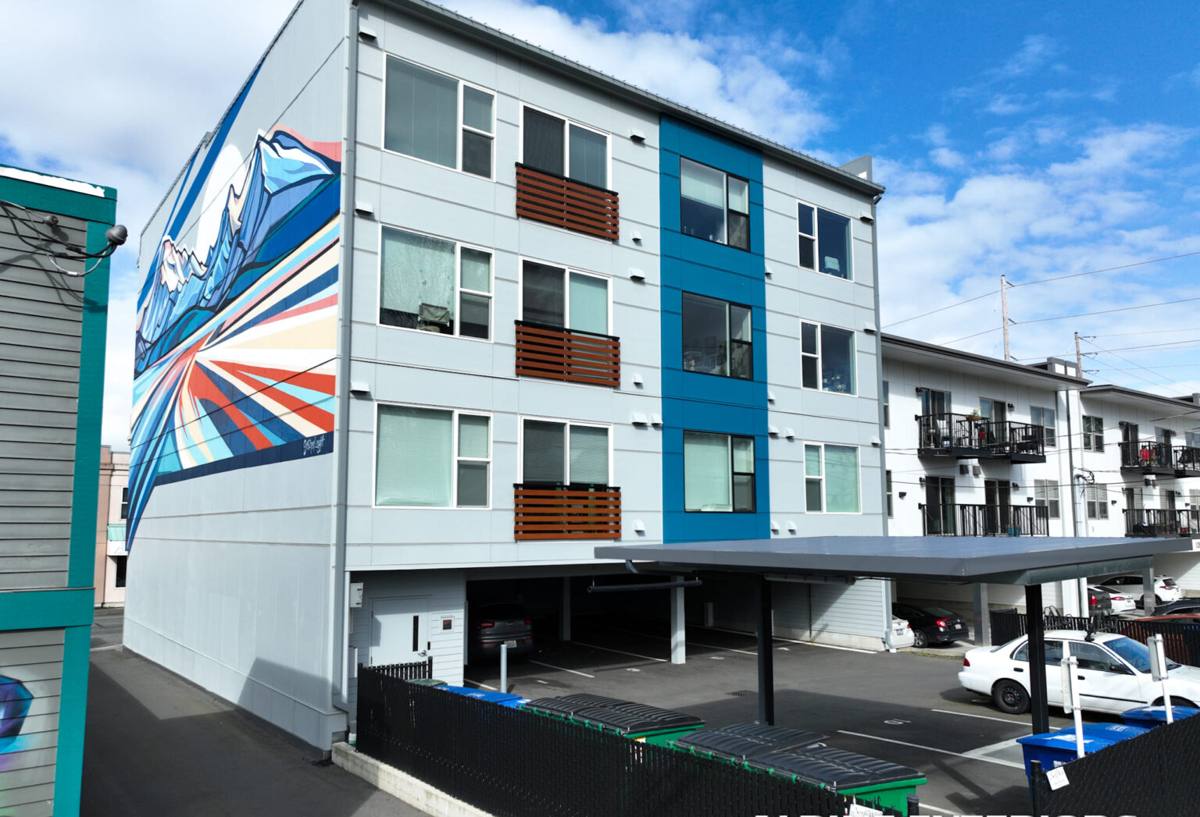
What Salt Air and Driving Rain Actually Do to Siding
It helps to understand the specific damage mechanisms, because they determine what a correct repair needs to address:
- Salt air accelerates corrosion on fasteners, flashing, and any exposed metal trim — a nail that would last decades inland can start bleeding rust through paint much sooner this close to the water.
- Wind-driven rain pushes water sideways into laps, seams, and butt joints that were designed for water running down, not water being forced sideways or upward under pressure.
- Persistent moisture feeds moss and algae, which hold water against the siding surface longer and can work into hairline cracks or failed caulk joints, widening them over time.
- Freeze-thaw cycles, while milder here than inland, still stress any siding that's already saturated — trapped moisture that freezes even briefly can push joints further apart.
None of this means siding is doomed at Birch Bay — it means the installation and repair details that get treated as optional elsewhere are not optional here.
Signs Your Siding Needs Repair Now
Most siding problems we see in Birch Bay started small and got ignored because they weren't obviously urgent. Here's what we tell homeowners to check, especially on walls facing the water or prevailing weather:
- Cracked, missing, or crumbling caulk at butt joints, corners, and around windows and doors
- Soft or spongy spots when you press on the siding near the bottom courses or under windows
- Visible gaps or separation at seams, especially after a windy winter
- Streaking, bubbling, or peeling paint in a localized area rather than across the whole wall
- Persistent moss or dark algae buildup that keeps returning even after cleaning
- Rust streaks bleeding down from nail heads or metal trim
- Soft trim boards, especially at corners and around windows, where water tends to collect
- Any interior sign — a musty smell, a soft spot on drywall, or a stain near an exterior wall — that suggests water is already getting past the siding
Any one of these is worth a look. Several at once, or anything showing up on an interior wall, means water has likely been getting behind the siding for a while.
What a Correct Repair Actually Involves
There's a real difference between a patch job and a repair that actually holds up to another Birch Bay winter. The table below is the kind of comparison we walk homeowners through on-site.
| Step | Quick Patch Approach | Correct Repair Approach |
|---|---|---|
| Diagnosing the cause | Fixes the visible crack or gap only | Traces the damage back to its source — flashing, fastener, or drainage issue — before closing anything up |
| Checking behind the siding | Skipped if the surface looks okay | Removes affected boards to inspect house wrap, sheathing, and framing for hidden rot or moisture |
| Flashing and water management | Left as-is | Re-flashed or corrected where water intrusion originated, not just where it became visible |
| Matching material | Whatever's on hand, sometimes a different siding type | Matched James Hardie profile, and ColorPlus finish matched or coordinated so the repair doesn't stand out |
| Fasteners and trim | Reused or standard fasteners | Corrosion-resistant fasteners appropriate for a salt-air environment, installed to Hardie's spec |
| Sealing details | Caulk over the gap and move on | Correct joint treatment per Hardie's installation guidelines, sized for expansion and drainage |
Why We Repair With James Hardie, Not a Mixed Bag of Materials
We install and repair James Hardie fiber cement siding exclusively — we don't carry vinyl, LP SmartSide, or other fiber cement brands, and that shapes how we handle repairs too. When a Hardie board is cracked or a section needs to be replaced, we replace it with the matching Hardie profile and, where possible, a factory ColorPlus finish that's engineered to weather consistently with the rest of your siding. That matters more here than in a lot of climates: mismatched materials or mismatched paint sheens age differently under salt air and constant moisture, and a repair that looks fine on day one can look like a patch within a year or two.
Fiber cement also gives us something vinyl repairs can't: it doesn't warp, doesn't get brittle in cold snaps, and won't develop the chalky fade that mismatched touch-up paint often shows against factory-finished siding a few seasons later. When we're cutting into an existing Hardie installation, we're working within a system that was engineered as a whole — board profile, finish, and fastening spec — rather than improvising a fix with whatever's compatible.
Where We Typically Find Damage on Birch Bay Homes
Repair needs aren't random — they cluster in predictable spots based on how wind, rain, and moisture actually move across a home near the water:
| Location | Why It Fails First |
|---|---|
| West- and north-facing walls | Take the brunt of prevailing wind and driving rain off the water |
| Bottom courses near grade | Splash-back, ground moisture, and slower drying time |
| Around window and door trim | Common point for failed caulk and water intrusion if flashing wasn't done correctly at install |
| Corners and butt joints | Seams are the weak point in any siding system; salt air accelerates fastener corrosion here |
| Areas with heavy shade or tree cover | Slower to dry out, which extends moss and algae exposure |
Our Repair Process
When we come out for a Birch Bay siding repair, we're not just patching what's visible:
- On-site inspection of the damaged area and a broader check of walls exposed to wind and water, since one visible problem often points to a pattern elsewhere
- Removing affected boards to check the condition of the house wrap, sheathing, and framing underneath before deciding on scope
- Identifying the actual cause — failed caulk, damaged flashing, a fastener issue, or a drainage problem — so the repair addresses the source, not just the symptom
- Replacing with matched James Hardie material, correctly fastened and flashed to current installation standards
- Finishing and sealing joints and trim so the repaired section holds up to the same wind and rain load as the rest of the wall
If we find rot or moisture damage that goes beyond the siding itself, we'll tell you plainly what we're seeing and what it means before any work continues — no surprise scope changes after the fact.
Repair or Replace? How We Help You Decide
Not every problem calls for full replacement, and not every problem should be patched and left. A few honest factors we weigh with homeowners:
- How much of the wall is affected — isolated damage versus a pattern across multiple walls
- Whether the underlying structure (sheathing, framing) shows moisture damage
- The age and overall condition of the existing siding
- Whether the original installation had systemic issues — poor flashing details or fastening patterns that will keep causing problems in other spots
If a repair will genuinely hold, we say so and repair it. If the damage points to a bigger underlying issue, we'll explain why and what your options are — we're not going to talk you into a full re-side when a proper repair will do the job.
Why a Crew That Already Works Birch Bay Matters
Siding repair isn't just about the material — it's about knowing what this specific stretch of coastline does to a house. A crew based in Bellingham that regularly works Birch Bay, Blaine, and the rest of Whatcom County's coastal areas already knows which walls tend to fail first, how far moss and algae growth typically extend before it's a real problem, and how much wind-driven rain a given exposure actually sees in a normal winter. That local pattern recognition shortens the diagnosis, and it means the repair is built for the conditions your specific wall faces — not a generic fix that happens to work in a drier part of the state.
It also means we're not driving in cold on a callback. If a repair doesn't hold the way it should, we're a short trip away, not a company based hours south that treated your job as a one-off.
If you're seeing cracked caulk, soft spots, persistent moss, or any sign of water getting where it shouldn't on your Birch Bay home, we're happy to take a look. Reach out for a free, no-pressure estimate — we'll tell you honestly whether you're looking at a repair or something bigger, and what it would take to fix it right.