 Bellingham
 Siding Built for South Hill's Hillside Exposure
South Hill sits up on the slope overlooking downtown Bellingham and the bay, and that elevation cuts both ways. The views are real, but so is the exposure. Homes up here catch wind and wind-driven rain that lower, more sheltered blocks never see, and they sit close enough to the water to pick up salt air on top of it. Add in Whatcom County's long, damp shoulder seasons — the kind of weather that keeps roofs and north walls shaded and wet for weeks at a stretch — and you've got a siding environment that's noticeably tougher on materials than the regional average.
That combination — salt air, driving rain, and a moss season that can run from October into May — is exactly what breaks down siding that isn't built or installed for it. This page covers what a correct siding installation looks like for a South Hill home specifically: what the climate demands, what we install, how we install it, and what to look for in a contractor before you sign anything.
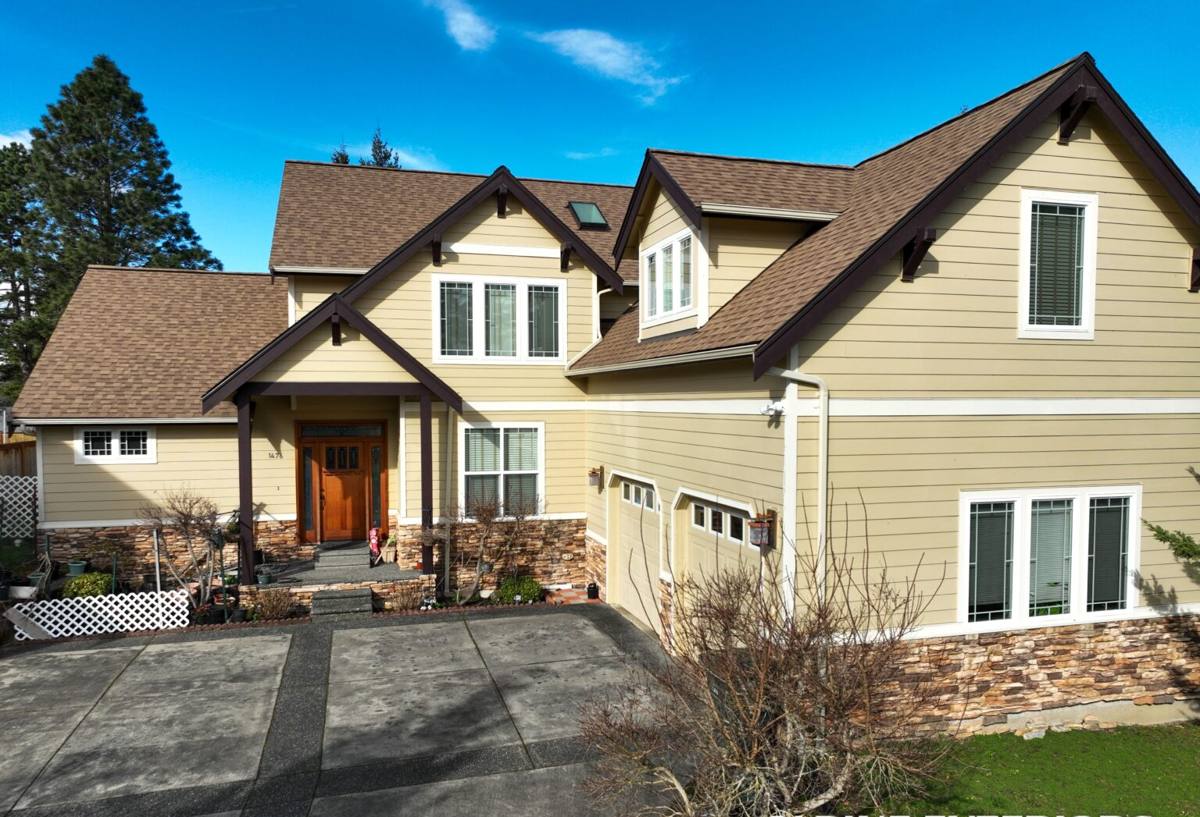
What Salt Air, Rain, and Moss Actually Do to Siding
Salt Air
Airborne salt from Bellingham Bay accelerates corrosion on anything metal — fasteners, flashing, trim edges — and it draws moisture. Siding materials that rely on paint film alone for protection tend to chalk and fade faster in a salt-air environment, and any fastener that isn't corrosion-rated becomes a weak point years before the siding field itself fails.
Driving Rain
Rain that comes in sideways doesn't behave like rain falling straight down. It gets pushed up under laps, into butt joints, and around trim if the installation didn't account for it. On an exposed hillside lot, wind-driven rain is a design load, not an afterthought — it changes how much lap overlap, flashing, and sealant detailing a wall actually needs.
Moss and Prolonged Dampness
Shaded north and east walls in this climate can stay damp for days after a storm passes. That's the environment moss and algae need to get established, and once they take hold on a wall surface they hold moisture against it, which is bad news for any siding material that isn't dimensionally stable when wet.
None of this is unique to South Hill — it's Whatcom County weather generally — but the hillside exposure and salt-air proximity make it more pronounced here than on a sheltered lot a few miles inland.
Why We Install Only James Hardie Fiber Cement
We standardized on James Hardie fiber cement siding and we don't install vinyl, LP SmartSide, primed wood, or other fiber cement brands. That's a deliberate call, not a sales preference, and it comes down to how each material handles the conditions above.
- Non-combustible core — fiber cement doesn't feed a fire the way wood-based products can, which matters for insurance and peace of mind alike.
- Dimensionally stable when wet — Hardie's fiber cement doesn't swell, cup, or delaminate the way engineered wood siding can when it takes on moisture at a cut edge or a failed joint.
- Factory-applied ColorPlus finish — a baked-on finish holds color and resists the fading and chalking that salt air and UV speed up on field-painted siding.
- Climate-engineered HZ product lines — Hardie builds regional versions of its siding formulated for wet, humid climates like ours, rather than a one-size-fits-all product.
- A real transferable warranty — backed by the manufacturer and tied to correct installation, not just the material itself.
We're not going to tell you other products are junk — vinyl is cheap and low-maintenance in the right application, and engineered wood siding has genuine fans. But for a South Hill home taking direct wind-driven rain and salt air, we've seen enough of how those materials age here to know we'd rather not put our name on the job. Hardie, installed correctly, is what holds up.
What a Correct Installation Involves
Fiber cement siding is only as good as the installation underneath it. Most of the failures we get called out to inspect on older homes aren't material failures — they're installation shortcuts that let water in behind the siding. On an exposed South Hill lot, these details matter more than usual:
Water-Resistive Barrier and Flashing
A continuous, properly lapped weather-resistive barrier goes down first, with flashing integrated at every window, door, and horizontal trim transition so water sheds outward rather than tracking behind the siding plane.
Clearances
Hardie's install specs call for minimum clearances from grade, roof lines, and decks — typically several inches — so splashback and standing water don't wick into the bottom edge of the siding. On sloped South Hill lots, grading and hardscape right up against the foundation is a common reason these clearances get ignored, and it's one of the first things we check.
Fastening
Corrosion-resistant fasteners, driven to the manufacturer's spacing and depth, are non-negotiable this close to the bay. Overdriven or underdriven nails are a leading cause of premature siding movement and cracking.
Joint and Seam Treatment
Butt joints get flashed or sealed per spec, not just caulked and hoped for. On a wall taking driving rain, a shortcut here is where water finds its way in first.
Field Cuts
Every cut edge on fiber cement needs to be sealed and primed before it's exposed to weather. Skipping this is invisible on install day and shows up as edge deterioration years later.
Our Process, Start to Finish
- On-site assessment — we walk the exterior, check for existing moisture damage, note exposure direction, drainage, and any areas where moss or algae growth points to a chronic damp spot.
- Tear-off and substrate check — old siding comes off, sheathing gets inspected for rot or soft spots before anything new goes up. This is where hidden problems from a prior install usually surface.
- Weather barrier and flashing installation — done to spec, not shortcut, especially around penetrations and trim.
- Hardie siding installation — installed to manufacturer clearances, fastening schedule, and joint detailing appropriate for a wind- and rain-exposed elevation.
- Trim, caulking, and touch-up — finish details sealed and inspected before we consider the job done.
- Final walkthrough — we go over the finished work with you, not a crew foreman you never meet.
Comparing Siding Options for South Hill's Conditions
| Material | Moisture & Moss Resistance | Salt Air Durability | Maintenance | Typical Lifespan |
|---|---|---|---|---|
| James Hardie fiber cement | Dimensionally stable, resists moisture damage when installed to spec | Baked-on finish holds up well | Occasional wash, repaint decades out | 30+ years |
| Vinyl siding | Doesn't rot, but can warp/crack in temperature swings | Can chalk and fade faster in salt air | Low, but panels can't be spot-repaired invisibly | 20-30 years |
| LP SmartSide / engineered wood | Vulnerable at cut edges and joints if moisture gets in | Finish can degrade faster near the coast | Higher — edge sealing and inspection matter | 15-30 years, install-dependent |
| Primed cedar/spruce | Natural material, needs consistent upkeep to resist moisture | Requires more frequent refinishing near salt air | Highest — regular repainting/staining | 15-25 years with upkeep |
These are general tendencies, not guarantees — installation quality changes the numbers for every material on this list. It's why we put so much weight on the details above rather than just the product label on the box.
What to Ask Before Hiring a South Hill Siding Contractor
- Do they carry Hardie manufacturer certification or documented training on Hardie's install specs?
- Will they tell you the clearance and fastening details they plan to follow — and why?
- Do they inspect and address sheathing/moisture issues before covering them up?
- Is the warranty backed by the manufacturer and tied to correct installation, or just a verbal promise?
- Have they worked on homes with similar hillside or coastal exposure, and can they explain how that changed their approach?
- Do they give you a written scope before work starts, not just a verbal estimate?
Why a Crew That Already Works South Hill Matters
South Hill's mix of older homes and updated properties, its hillside grading, and its closer proximity to the bay all add up to conditions a generic siding install doesn't fully account for. A crew that already works this neighborhood has seen how these houses actually take weather — which walls hold moss longest, which corners take the worst of the driving rain, where grading tends to crowd the siding's clearance. That's not something you get from a install manual alone; it comes from doing the work here, repeatedly, and paying attention to what holds up and what doesn't.
If your current siding is showing chronic moss staining, soft spots, cracked caulk lines, or paint failure that keeps coming back no matter how often it's touched up, that's usually a sign the assembly underneath isn't handling the climate — not just a cosmetic problem.
Ready to Talk About Your South Hill Home?
We'll come look at your siding, walk you through what we're seeing, and give you a straightforward, no-pressure estimate for a James Hardie installation built for South Hill's exposure. Use the form below to get started.