 Bellingham
 Building on South Hill Means Building for the Weather Off the Bay
South Hill sits up above downtown Bellingham with open exposure toward Bellingham Bay, and that elevation is a double-edged sword. The views are real, but so is the weather that comes with them. Homes up here take wind-driven rain straight off the water, salt-laden air that corrodes hardware faster than it would a few miles inland, and a wet season that stretches long enough to grow moss on anything that stays damp too long. When you're framing a new house or a major addition, the windows you choose and how they're installed will decide whether that home stays dry and comfortable for the next 30 years or starts showing rot and leaks in five.
New construction gives you one real advantage over a remodel: you get to do it right from the start, before siding, trim, and drywall cover up the mistakes. We work new-construction window installs across South Hill and the rest of Bellingham, and this page covers what that actually involves.
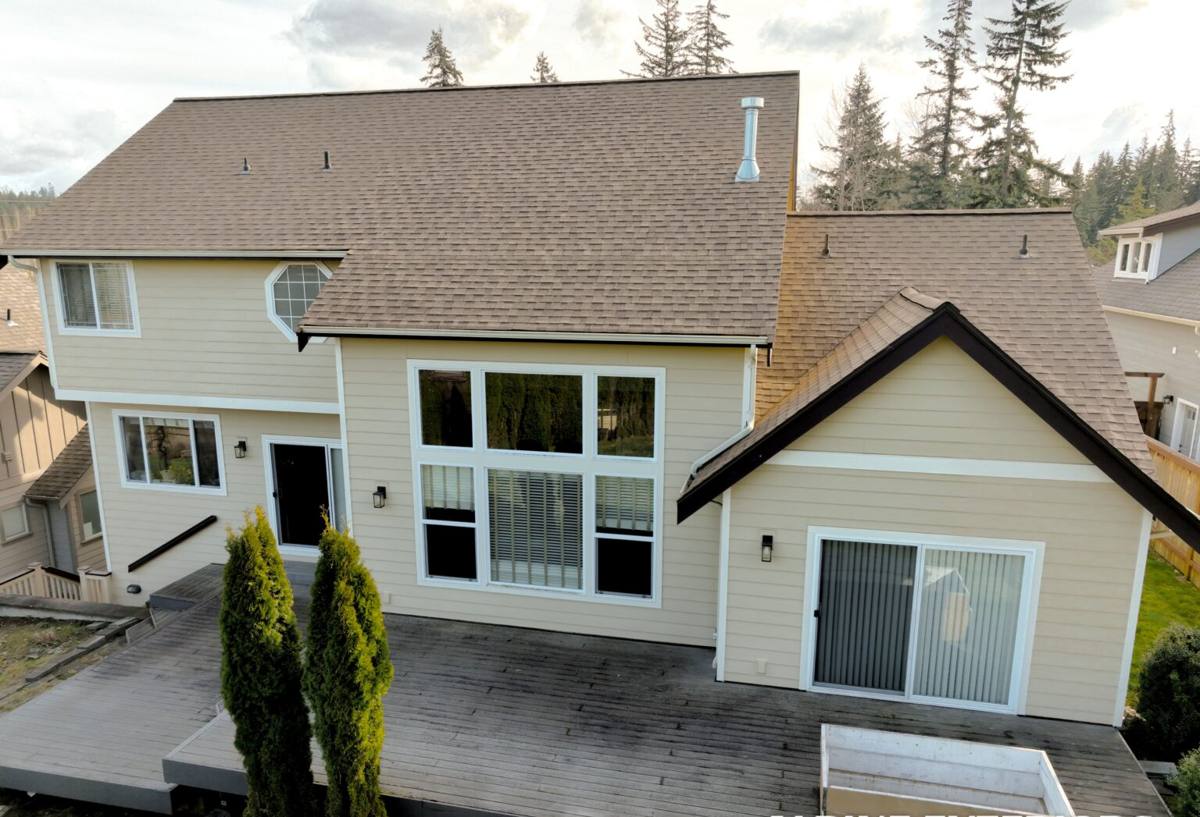
New Construction vs. Replacement — Why the Job Isn't the Same
Replacement window work fits a window into an existing rough opening, often reusing the old flange or working around finished siding. New construction is different. You're setting the window into a framed opening before the weather-resistive barrier (WRB) and siding go on, which means the window itself becomes part of the building's water-management system, not just a piece dropped in afterward. That's a good thing — it means the flashing, the WRB laps, and the window's nailing fin can all be integrated properly, with no shortcuts forced by existing finishes.
It also means there's less room for excuses. If a new-construction window leaks in a few years, it's almost always a sequencing or flashing error, not bad luck. Getting the order of operations right — sill pan first, then window, then side and head flashing, then WRB integration — is the whole job.
What "Correct" Actually Looks Like
- A sloped or pre-formed sill pan under every window opening, so any water that gets past the frame drains back out, not into the wall
- Self-adhered flashing tape at the jambs and head, lapped shingle-style so water always sheds downward and outward
- The window's nailing fin fully sealed to the sheathing or WRB — not just fastened, sealed
- WRB integrated over the head flashing last, so the whole assembly drains like shingles on a roof
- Backer rod and quality exterior sealant at the trim-to-siding joint, sized for the gap rather than smeared over it
- Shims and fasteners set so the frame stays square and doesn't bow, which keeps the sash operating smoothly for years
Why Driving Rain and Salt Air Change the Calculus
A lot of window installation guidance is written for drier climates where a missed flashing detail might not show up for a decade. Whatcom County isn't that climate. South Hill's exposure to wind coming off the bay means rain doesn't just fall on windows here, it gets driven sideways into any gap that will take it. That makes the sill pan and the flashing sequence non-negotiable, not a nice-to-have.
Salt air is the other factor people underestimate. It accelerates corrosion on exposed fasteners, hinges, and lower-quality cladding on window frames. That doesn't mean every window needs to be a premium coastal-rated product, but it does mean we pay attention to hardware finish and cladding quality on homes with more direct bay exposure, and we flag it when a builder-grade window is likely to show corrosion issues early.
Then there's moss. Bellingham's long wet season means anything that stays shaded and damp — north-facing walls, areas under eaves, spots with poor airflow — will grow moss and algae over time. On windows, that shows up as staining and, if wood trim is involved, as a moisture trap that leads to rot. Detailing that allows water to actually drain and dry, rather than pool at sills or behind trim, is what keeps that from becoming a problem.
Choosing Materials and Glass for a South Hill Build
There's no single "best" window for every new build — it depends on budget, the home's style, and how much direct weather exposure a given wall gets. Here's how the common options generally compare for this climate and elevation.
| Frame Material | How It Handles Local Weather | Trade-Offs |
|---|---|---|
| Vinyl | Won't rot or corrode; performs fine in rain and moisture generally | Lower upfront cost; frame flexes more in larger sizes, limited color/finish options |
| Fiberglass | Very stable in temperature swings, holds paint well, resists moisture-related expansion | Higher cost than vinyl; fewer installers stock every size |
| Aluminum-clad wood | Attractive wood interior, durable exterior cladding sheds rain well | Cladding seams and hardware need decent quality to resist salt-air corrosion; higher cost |
| Wood (uncladded) | Classic look, but exterior wood needs consistent maintenance in this climate | Highest maintenance burden in driving rain and moss conditions; we steer clients away from exposed exterior wood on bay-facing walls |
On glass, double-pane with a low-E coating and argon fill is standard for new construction in this climate and meets typical Washington energy code requirements. Triple-pane adds cost and weight for a marginal comfort gain here — it's worth discussing case by case, but we don't push it as a default upsell.
Our Process for New-Construction Window Installs
1. Plan Review Before Framing Locks In
We look at window schedules and rough opening sizes early, while changes are still cheap. Catching a sizing or header issue before framing is done saves real money compared to catching it after.
2. Sill Pan and Flashing Sequence
Every opening gets a sill pan and a full flashing sequence before the window goes in — this is where most future leaks are prevented or guaranteed, depending on whether it's done right.
3. Set, Shim, and Fasten
Windows are set plumb, level, and square, shimmed at the right points, and fastened per the manufacturer's schedule — skipping fasteners to save time is how frames rack and sashes stop closing properly.
4. WRB and Trim Integration
The weather-resistive barrier gets lapped over the flashing correctly, and trim goes on with backer rod and sealant sized to actually flex with the building rather than crack out in a year or two.
5. Final Check
We walk every opening before drywall or siding closes it up. Once it's covered, a mistake is expensive to find and expensive to fix — so we find problems now, not later.
Common Problems We See on New Builds in This Area
Most of the callbacks we get asked to fix on newer South Hill homes trace back to a handful of repeatable mistakes: no sill pan (or one improvised from tape instead of a real pan), house wrap taped over the flashing instead of under it at the head, sealant used to compensate for a missing flashing step, and trim installed tight against siding with no room for the joint to move or drain. None of these save meaningful time on the install — they just move the cost from labor now to repair later, usually after the damage is already inside the wall.
What to Ask Before You Sign a Window Contract
- Will every opening get a sill pan, or only where "needed"?
- Who's responsible for WRB integration — the window crew or the siding crew — and how do those two trades hand off?
- What's the manufacturer's fastening schedule, and will it actually be followed?
- What warranty covers the installation itself, separate from the window manufacturer's product warranty?
- Has this crew installed windows on homes with similar bay exposure before?
Why a Crew That Already Works South Hill Is Worth It
South Hill isn't a uniform lot — homes range from older infill sites to newer builds, with a mix of exposure depending on elevation and which direction a given wall faces. A crew that already works this neighborhood knows which walls take the worst of the driving rain, where moss tends to build up fastest, and how salt air affects hardware choices over time. That's not something you get from a spec sheet; it comes from doing the work here repeatedly and seeing what holds up and what doesn't.
We're a Bellingham crew working in Whatcom County, and new-construction windows are a job we do carefully because the flashing and sequencing decisions made during framing are the ones nobody can go back and fix later without tearing into finished walls.
Get a Straight Answer on Your Project
If you're framing a new home or addition on South Hill and want a crew that treats window installation as part of the building's water-management system rather than an afterthought, we'll walk your plans with you and give you an honest look at materials, sequencing, and cost. Use the form below to request a free, no-pressure estimate.