 Bellingham
 Siding Built for Columbia's Corner of Bellingham
Columbia is one of Bellingham's older established residential neighborhoods, with a housing stock that spans mid-century single-family homes, postwar bungalows, and newer infill construction sitting side by side. That mix means siding needs vary block to block — a 1950s home with original wood siding has different problems than a 1990s build with aging vinyl or a home that's already had one siding replacement done wrong. What doesn't change is the climate every one of those homes sits in. Whatcom County's marine air, near-constant winter rain, and shaded, moisture-holding lots put real stress on exterior materials, and siding is usually the first thing to show it.
We install James Hardie fiber cement siding exclusively, and we work Columbia regularly enough to know what tends to fail first on homes in this part of Bellingham and what a correctly done job needs to hold up against it.
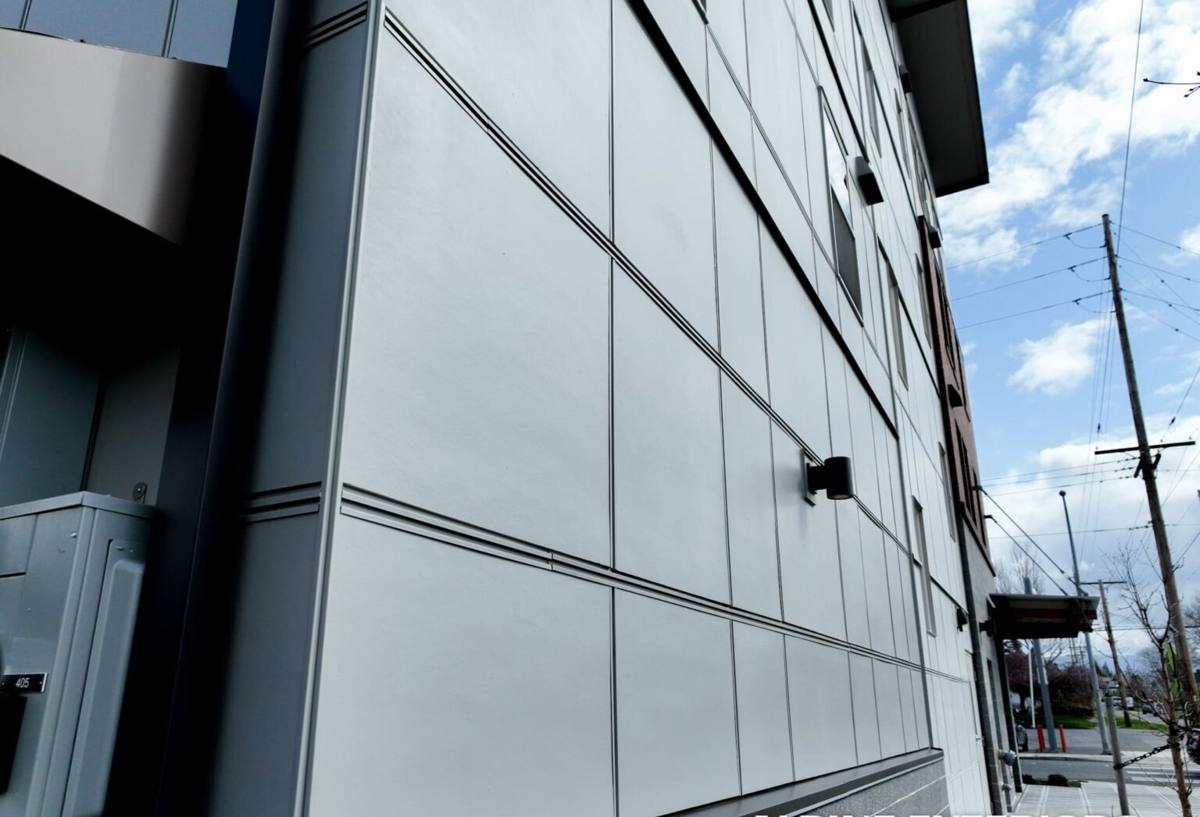
What Bellingham's Climate Actually Does to Siding
Bellingham sits close enough to the water that salt-laden air reaches inland neighborhoods, including Columbia, especially on west-facing walls. Combine that with driving rain that comes in sideways during winter storms, and long stretches of the year where surfaces simply don't dry out, and you get a climate that's hard on almost every siding material in a different way:
- Salt air accelerates corrosion of fasteners, trim metal, and any exposed hardware, and it degrades cheap paint finishes faster than inland climates.
- Driving rain tests every seam, joint, and piece of flashing. Siding that isn't detailed correctly at these points lets water behind the cladding, where it does the real damage.
- Moss season — realistically most of the year here — means anything organic (wood, some composite products) stays damp long enough to feed mold, mildew, and rot. Even non-organic siding gets a moss and algae film if it can't shed water and dry between rain events.
None of this is unique to Columbia, but Columbia's tree cover and older lot layouts mean a lot of homes here have shaded, slow-drying wall sections — north and east elevations especially — where these effects show up first and worst.
Why We Standardized on James Hardie
We used to get asked why we don't offer vinyl, LP SmartSide, or other fiber cement brands as cheaper options. The honest answer is that we made a call to install one product because we were tired of doing warranty-adjacent repair work on materials that weren't built for this climate.
Vinyl is inexpensive and easy to install, but it's a plastic product that expands, contracts, and can warp or crack in temperature swings, and it doesn't hold paint if a homeowner ever wants to change the color. LP SmartSide is a wood-strand product — better than old-fashioned wood siding, but it's still an engineered wood product with a resin coating, and any breach in that coating in a climate this wet is a moisture entry point. James Hardie fiber cement is cement, sand, and cellulose fiber — it doesn't rot, it's not attractive to insects, and it's non-combustible. It also comes with a factory-applied ColorPlus finish that's baked on and warranted separately from the substrate, which matters in a climate that's hard on paint.
We're not saying other products can't work anywhere. We're saying that after years of doing exterior work in Whatcom County, Hardie is the product we're willing to put our name behind here.
Getting the Installation Right — Not Just the Material
Hardie siding fails prematurely almost exclusively because of installation mistakes, not the product itself. This is where a lot of the "why did my siding fail early" calls we get actually trace back — a previous crew that didn't build in the details this climate demands.
Rainscreen and Drainage Gap
In a climate as wet as Bellingham's, we build in a drainage gap behind the siding rather than fastening it flat against the weather-resistive barrier. That gap lets any moisture that gets past the cladding drain and evaporate instead of sitting against the wall sheathing.
Flashing and Water Management
Every window, door, and roofline intersection is a place water wants to get behind the siding. Correct step flashing, head flashing, and kick-out flashing at rooflines aren't optional extras — they're the difference between a wall assembly that sheds water and one that slowly rots from the inside where nobody can see it until it's expensive.
Fastening and Clearances
Hardie's installation specs call for specific fastener types, spacing, and embedment depth, plus minimum clearances from grade, roof lines, and decks. Skipping these is common on rushed jobs and is one of the fastest ways to void the manufacturer warranty without the homeowner ever knowing it happened.
Caulking and Joint Treatment
Butt joints and trim transitions need the right sealant, applied correctly, not just for appearance but because a bad joint is a direct path for driving rain to get behind the board.
Matching the Product Line to This Climate
James Hardie makes different product formulations for different climate zones under its HardieZone system, and Whatcom County's marine, high-moisture climate typically calls for their higher-moisture-tolerance HZ10 engineering rather than the standard HZ5 formulation used in drier or more freeze-prone regions.
| Consideration | Standard-Zone Formulation | Wet-Climate (Coastal PNW) Formulation |
|---|---|---|
| Primary design concern | Freeze-thaw cycling | Sustained moisture and humidity exposure |
| Typical use region | Drier interior climates | Coastal and marine climates like Whatcom County |
| What it means for your home | Not optimized for constant rain exposure | Engineered specifically for climates like Bellingham's |
We spec the product line based on the actual conditions the wall assembly will face, not just whatever's cheapest to have on the truck.
Our Process for a Columbia Siding Job
- On-site assessment: we look at existing siding, sheathing condition where visible, trim, window flashing, and any moisture staining or soft spots before quoting anything.
- Written scope and product plan: what's being removed, what the wall assembly will include (barrier, rainscreen, flashing details), and which Hardie profile and color.
- Tear-off and sheathing check: old siding comes off and we inspect sheathing for rot or damage before anything new goes on — this is where hidden problems from a prior bad install often surface.
- Weather barrier and drainage plane installation: done to manufacturer spec, not shortcuts.
- Hardie installation: correct fastening, flashing, and clearances at every penetration and transition.
- Final walkthrough: we go over the finished job with the homeowner before calling it done.
What Drives Cost on a Columbia-Area Home
| Factor | Why It Matters |
|---|---|
| Existing siding removal | Multiple layers or hidden damage under old siding add labor |
| Sheathing repair | Rot found during tear-off has to be fixed before new siding goes on |
| Home shape and trim detail | Corners, dormers, and multiple rooflines mean more flashing and cut work |
| Product profile and color | Lap width, shake-style panels, and ColorPlus color selection vary in cost |
| Access and site conditions | Slopes, tree cover, and tight lot lines common in older Columbia lots affect setup time |
We give homeowners a real number after a site visit, not a phone-quote guess — too many variables here to do it responsibly any other way.
Living With Hardie Siding in a Moss-Heavy Climate
Fiber cement doesn't rot or feed moss the way wood-based siding can, but any exterior surface in this region will collect surface growth over time if it's shaded and stays damp. That's cosmetic, not structural, on properly installed Hardie — but a little routine attention keeps it looking right.
- Rinse siding annually, focusing on shaded north and east walls where moss and algae build up fastest.
- Keep gutters clear so overflow isn't running down the siding face.
- Trim back vegetation and tree limbs that keep wall sections shaded and damp longer than the rest of the house.
- Watch caulked joints and trim transitions for cracking or gaps over time — catching a failed joint early is a small fix; ignoring it isn't.
- Repaint or touch up trim (not the ColorPlus siding itself, which shouldn't need repainting) per manufacturer guidance.
Why a Local Crew Matters for This Job
Siding installation instructions read the same everywhere, but the judgment calls — how much drainage gap to build in, how aggressive the flashing detail needs to be at a given roofline, which elevations need extra attention — come from having actually installed and later inspected siding through a few Whatcom County winters. A crew that works Columbia and the surrounding Bellingham neighborhoods regularly has seen which details hold up here and which ones don't, and builds every job around that, not around a generic install sheet written for a different climate.
If you're weighing a siding replacement or repair on a Columbia-area home, we're happy to take a look and give you a straight, no-pressure estimate — what your home actually needs, and why.