 Bellingham
 Siding That Has to Work Under Trees, Near Water, and Through a Long Wet Season
Sudden Valley sits in one of the more demanding micro-climates in Whatcom County. Lots here tend to be wooded and shaded, close to the lake, and slower to dry out after a storm than open, sun-exposed properties closer to town. That combination — filtered sun, standing humidity under the canopy, and a rainy season that stretches for months — is exactly the kind of environment that exposes weak siding systems fast. Paint that should last a decade starts failing in five years. Seams that were caulked instead of properly detailed start letting moisture behind the cladding. Anything with exposed wood grain becomes a moss magnet by the second winter.
We install James Hardie fiber cement siding exclusively, and jobs in and around Sudden Valley are a good example of why. Fiber cement doesn't feed mold or moss the way wood-based or wood-look products can, it doesn't swell and buckle when it stays damp for days at a time, and Hardie's factory-applied ColorPlus finish holds its color far longer than field-applied paint on any substrate. None of that means a fiber cement job is automatically a good job — how it's detailed at the ground, around windows, and at every seam matters as much as the material itself. This page covers what a correct installation looks like for homes in this specific setting, and what to expect if you're considering it.
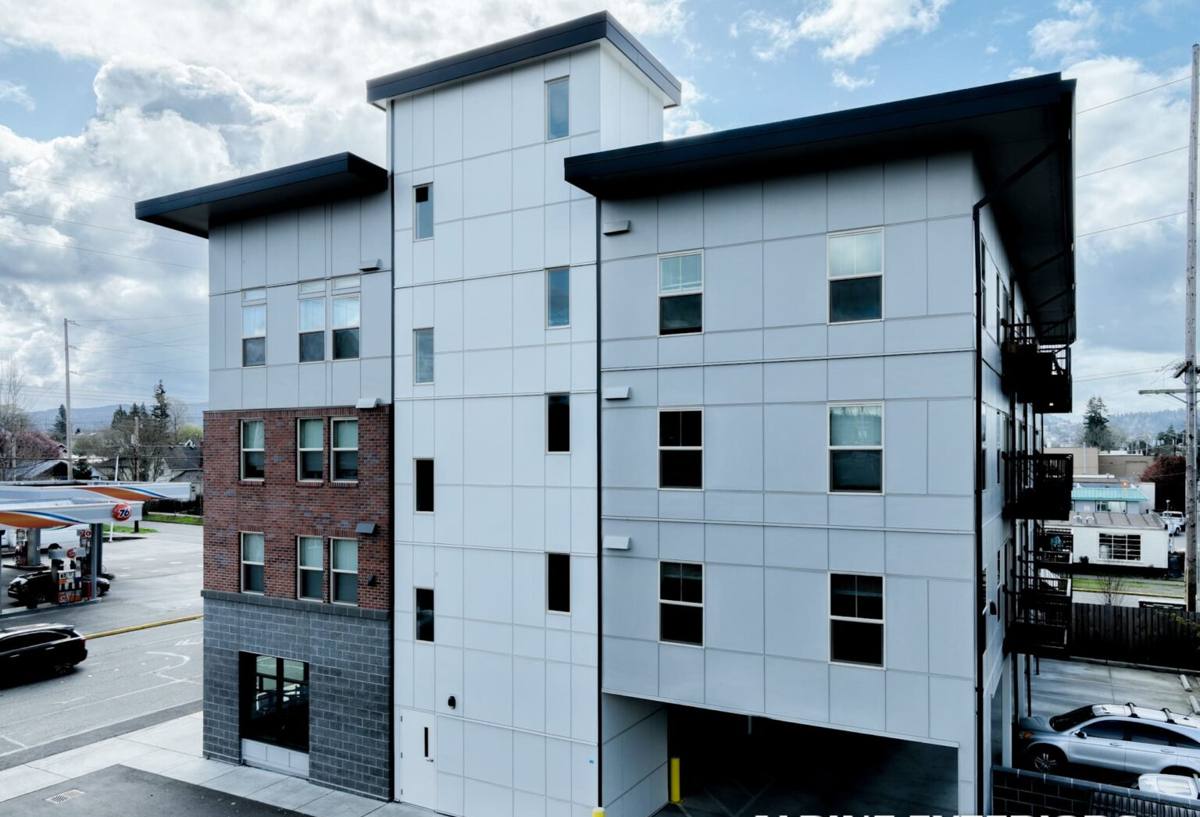
What Sudden Valley's Climate Actually Does to Siding
Shade and Slow Drying
Homes tucked into trees don't get the same drying cycle as a house sitting in open sun. After a rain, siding on a shaded wall can stay damp for a day or more longer than an unshaded wall a few miles away. That extended damp period is what drives moss and algae growth, and it's also what accelerates rot in any wood trim or wood-based siding that isn't perfectly sealed.
Driving Rain Off the Water
Wind-driven rain doesn't just wet the surface of a wall — it gets pushed sideways into laps, seams, and butt joints if those details aren't built correctly. Whatcom County gets long stretches of this kind of weather, not just isolated storms, so a siding system has to shed water at every joint, every time, not just most of the time.
A Long Moss Season
Between shade, moisture, and mild temperatures, moss and algae have a long window to establish themselves on north-facing and tree-covered walls. Once organic growth gets a foothold on a porous or textured surface, it holds moisture against the substrate and speeds up whatever deterioration is already happening underneath.
Why Fiber Cement Fits This Setting
James Hardie fiber cement is a cement, sand, and cellulose fiber composite — it doesn't have the wood grain or cellulose-rich surface that gives moss and algae something to latch onto and feed on the way some wood-based and wood-look products do. It also doesn't absorb and swell with moisture the way wood substrates can, which matters directly for a shaded, slow-drying lot. Hardie's HZ5 product line is engineered for wetter, harsher climates like the Pacific Northwest, with a moisture barrier and formulation suited to exactly this kind of exposure.
The factory-applied ColorPlus finish is also worth understanding on its own terms. It's baked on in a controlled environment rather than rolled or sprayed on site, which means more consistent coverage and a finish that's backed by its own warranty against fading and peeling — a meaningful advantage on a shaded wall where a field-applied coat would take longer to cure properly in the first place.
What We Don't Install, and Why
We don't install vinyl, LP SmartSide, cedar, primed spruce, Cemplank, or Allura. Each of those has a place in the market, but for a shaded, wet, moss-prone setting like Sudden Valley, we've seen the trade-offs consistently work against the homeowner over time: wood and wood-based products need more diligent maintenance to keep moisture and organic growth from getting a foothold, vinyl can warp and doesn't hold up the same way structurally at seams and terminations, and the other cement-board alternatives don't carry the same factory finish warranty or manufacturer engineering for this specific climate that Hardie's HZ5 line does. We'd rather install one system well and stand behind it than offer several we have reservations about.
What a Correct Installation Involves
The siding board itself is only part of the job. Most of the failures we get called out to inspect on older homes trace back to installation details, not the material. On a Sudden Valley property specifically, we pay close attention to:
- Water-resistive barrier and flashing: a continuous drainage plane behind the siding, with flashing integrated at every window, door, and penetration — not caulk used as a substitute for flashing.
- Proper clearances: siding held up off decks, patios, and grade per Hardie's specifications, so splash-back and standing moisture at the base of the wall don't get trapped against the board.
- Correct fastening: nailing pattern and fastener type matched to the board and substrate, avoiding the loose or overdriven fasteners that lead to cracking and water intrusion at panel edges.
- Joint treatment: factory-primed cut edges sealed, and butt joints detailed so they shed water instead of wicking it in.
- Ventilation behind the cladding: a rainscreen gap where the wall assembly calls for it, giving any moisture that does get behind the siding a path to dry out rather than sit against a shaded wall indefinitely.
Skip any one of these and you can still end up with moisture problems behind a material that, installed correctly, would have resisted them.
Our Process for Sudden Valley Jobs
- On-site assessment: we look at sun exposure, tree cover, drainage around the foundation, and the condition of the existing siding and sheathing before quoting anything.
- Scope and product selection: confirming Hardie plank profile, texture, and ColorPlus color, and identifying any areas — typically shaded north walls or spots close to grade — that need extra attention to flashing or clearance.
- Tear-off and sheathing check: removing the old siding lets us actually inspect the sheathing and framing underneath for rot or existing moisture damage before anything new goes up, rather than covering up a problem.
- Weather barrier and flashing installation: the drainage plane and flashing details go in before a single piece of Hardie touches the wall.
- Siding installation: installed to Hardie's published specifications for fastening, clearance, and joint treatment.
- Final walkthrough: we go over the finished job with you, including any maintenance notes specific to shaded areas of the house.
Cost Factors for a Sudden Valley Project
Every home is different, but the same handful of factors tend to move the price on jobs in this area more than they would on a straightforward, open-lot property elsewhere in Bellingham.
| Factor | Why It Matters Here |
|---|---|
| Existing sheathing condition | Shaded, slow-drying walls are more likely to have hidden moisture damage that needs repair before new siding goes on |
| Access and site layout | Wooded lots and tighter driveways can affect staging, scaffolding, and material handling |
| Trim and detail work | Homes with more window and roofline detail require more flashing and cut work per square foot |
| Siding profile and texture | Lap width and texture (smooth vs. cedar-textured) affect material cost modestly, not installation quality |
| Tear-off scope | Full removal of old siding versus a simpler re-side affects both labor and disposal |
Maintenance in a Wooded, Wet Setting
Fiber cement lowers the maintenance burden compared to wood, but it isn't zero-maintenance, especially under tree cover. A short annual routine goes a long way:
- Rinse siding gently once a year, focusing on shaded and north-facing walls where moss and algae are most likely to appear.
- Keep gutters clear so overflow doesn't run down the face of the siding.
- Trim back branches and foliage that keep a wall in near-constant shade or drip water directly onto it.
- Check caulking at trim and penetrations every year or two, and re-caulk before a gap becomes a path for water.
- Address any moss buildup early with a soft wash rather than pressure washing, which can damage the finish.
Why Local Experience in Sudden Valley Matters
A crew that has worked in Sudden Valley before knows which walls on a typical lot see the least sun, where moisture tends to collect, and how to sequence a job around a wooded, sometimes tighter site. That's different knowledge than installing siding on an open, sun-exposed lot on the other side of town. It shows up in small decisions — where extra flashing attention goes, how clearances are handled near a shaded foundation wall, how the job is staged around trees and access — that don't show up on a quote sheet but do show up in how the siding performs five and ten years out.
If you're weighing a re-side or new construction siding for a home in Sudden Valley, we're glad to walk the property with you, look at what your specific lot and exposure actually need, and give you a straightforward, no-pressure estimate. There's a form below to get that started.