 Bellingham
 Composite Decking for Columbia Homes
Columbia is one of Bellingham's older, well-established neighborhoods, and that shows up in its decks as much as anywhere else — a lot of the outdoor living space on these lots was built decades ago, in wood, and is either due for replacement or getting close to it. When homeowners here start looking at composite decking, most of the questions are the same ones we hear across Whatcom County: how long will it actually last, what does it need from me, and is it worth the cost difference over wood. The honest answer depends a lot less on the brand name on the board and a lot more on how the deck is built underneath it, and on whether that build actually accounts for what this specific climate does to an outdoor structure year after year.
Bellingham's weather isn't dramatic the way a hurricane coast or a desert climate is. It's persistent — steady rain through the fall and winter, salt-tinged marine air working on any exposed metal, and enough shade and dampness on a lot of lots to keep moss established for most of the year. A composite deck built without those specifics in mind can still look fine for a couple of years. This page covers what a Columbia-area deck actually needs, what a correct composite build involves, and why the details matter more here than a generic install guide would suggest.
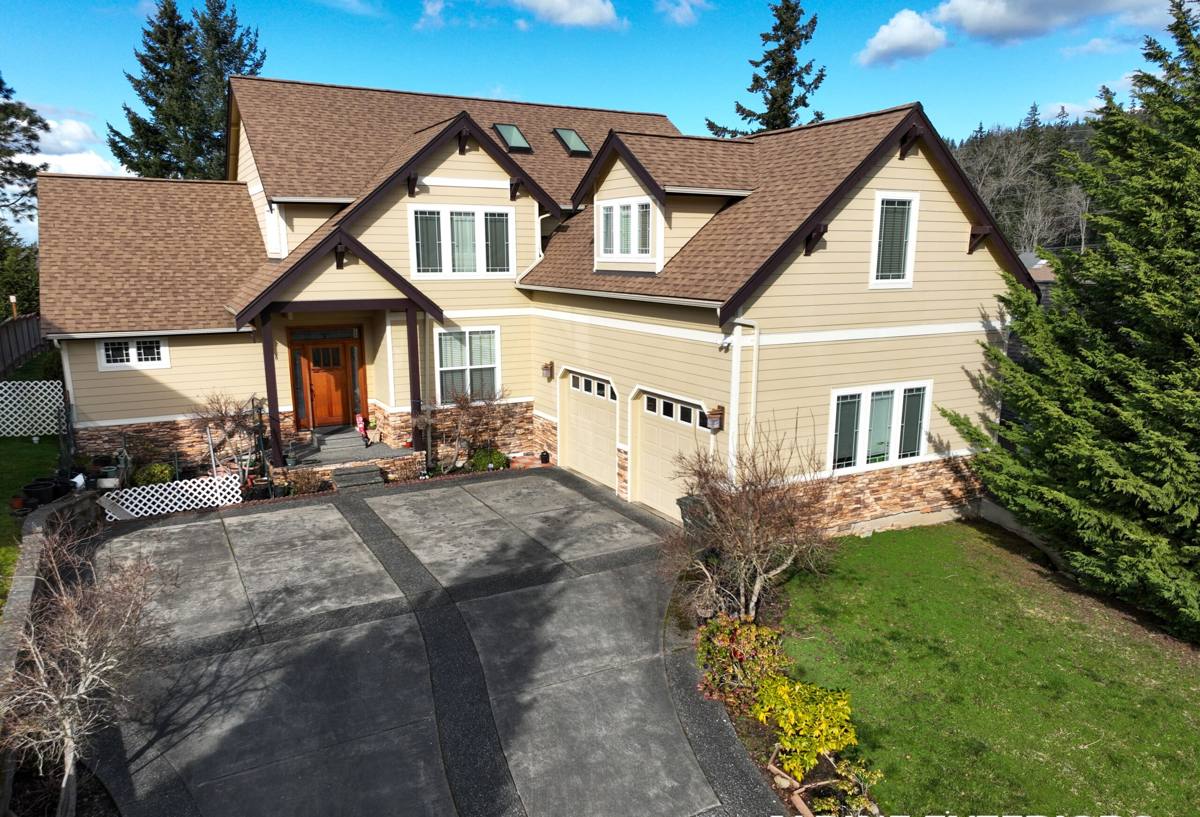
What This Corner of Bellingham's Climate Does to a Deck
Driving Rain, Not Just Rain
A lot of Bellingham's rain doesn't fall straight down — wind off Bellingham Bay and the Salish Sea pushes it sideways, which means it gets driven into gaps, under railings, and against ledger connections that a calmer climate wouldn't stress nearly as hard. A deck surface built with the correct board gapping sheds that water fine. One built too tight, or without attention to how water moves underneath the boards, ends up holding moisture against the framing exactly where it's hardest to see and hardest to dry out.
A Long Moss Season on Shaded Lots
Columbia has a mix of mature trees and older lots with real shade cover, and shaded, damp surfaces in this climate grow moss for most of the year, not just a few weeks in spring. On a wood deck, moss holds moisture against the boards and accelerates rot. On composite, moss is mostly cosmetic — but only if the board surface and drainage are built to let the deck actually dry between rain events. A deck that never gets a chance to dry out stays green longer no matter what the surface material is.
Salt Air and Fastener Corrosion
Bellingham sits close enough to the bay that marine air reaches most of the city, including inland neighborhoods like Columbia, on a regular basis. That steady salt exposure is hard on any exposed metal — screws, brackets, railing hardware — and corrosion doesn't announce itself. A fastener can be losing holding strength well before it looks obviously rusted, which is why fastener grade on a deck out here isn't a place to save money.
Ground Moisture Under the Deck
Whatcom County's clay-heavy soils in a lot of established neighborhoods don't drain especially fast, and a deck built low to the ground, or over a yard with poor grading, can end up with a substructure that stays damp for months at a stretch through the wet season. That dampness is doing its work on the framing long before anyone notices a problem on the surface boards above it.
What "Composite Decking" Actually Means
Composite decking is generally a blend of wood fiber and plastic, but the ratio, the plastic type, and how the board is finished vary significantly between manufacturers and product lines. Two distinctions matter most for a climate like this one.
Capped vs. Uncapped
Capped composite boards have a protective plastic shell wrapped around a wood-plastic composite core, which keeps the core from absorbing moisture directly and resists staining and UV fade at the surface. Uncapped composite — the older style of the product — is exposed wood-plastic blend on every face, so it absorbs moisture more readily and is more prone to mold growth and surface wear over time. In a climate with this much sustained dampness and shade, that difference shows up faster than it would somewhere drier, which is why we standardize on capped composite for decks in this area.
Board Profile: Grooved vs. Solid-Edge
Most capped composite comes in a grooved-edge profile designed for hidden fastener clips, which give a clean surface with no visible screw heads, or a solid-edge profile meant for face-screwing. Grooved boards with hidden clips look cleaner and reduce exposed metal on the surface, which matters in a salt-air environment, but they also depend on the clip system being installed correctly and the boards being properly seated — a detail that's easy to rush and hard to spot once the deck is finished.
What a Correct Composite Deck Build Involves Here
The decking boards get most of the attention when homeowners picture a new deck, but in this climate the substructure and drainage details underneath are what actually determine whether the deck holds up. A build done right for a Columbia-area lot includes:
- Pressure-treated framing rated for ground contact where the substructure sits low or the yard doesn't drain quickly, not standard framing-grade lumber used out of convenience
- Stainless steel or coated, corrosion-resistant fasteners throughout, including hidden clip systems where the board profile calls for them
- Correct board gapping for expansion, contraction, and drainage — composite moves with temperature and moisture differently than wood, and the gap has to account for that
- Joist spacing matched to the specific composite product's published span rating, not a generic wood-framing spacing carried over out of habit
- Proper ledger board flashing where the deck ties into the house, since a driving-rain climate makes this connection point a common source of hidden water intrusion
- A drainage path and, where the deck is low or covered, a system to route water off the substructure instead of letting it pool against the framing
- Ventilation underneath the deck so wood-framed substructures actually get a chance to dry out between wet stretches instead of staying damp all winter
- Railing and post attachment built to hold up under regular exposure to wind and rain, not just to pass a quick visual check
Skip any one of these and the deck usually still looks fine on install day. The problems — soft framing, a loosening post, staining where a fastener has started to corrode — tend to show up two, five, or ten wet seasons in, which is exactly why they're easy for a rushed install to get away with until the homeowner is the one dealing with it.
How Our Process Works
Site Visit and Assessment
We start by looking at the actual lot — existing framing condition if it's a deck replacement, how the yard drains, how much shade and moss the site deals with, and whether the deck ties into the house in a way that needs particular attention at the ledger. Two decks with the same square footage in the same neighborhood can need genuinely different builds depending on these factors.
Planning the Build
Before any material shows up, we work out framing layout, joist spacing for the composite product being used, drainage, and how the deck will meet the house and any stairs or railings. Sorting this out on paper first avoids field improvisation later, which is usually where corners get cut on a job under time pressure.
Permitting
Deck construction in the City of Bellingham generally requires a permit once you're past a certain size or height, and that process typically covers footing depth, ledger attachment, and railing requirements. We handle that as part of the job rather than leaving it for the homeowner to navigate.
Building the Substructure First
The framing goes in to the plan — correct material for ground contact, correct fastener grade, correct spacing for the composite product — because everything visible depends on this part being right. This is also where drainage and ventilation get built in, not added as an afterthought once the surface boards are already down.
Installing the Composite Surface
Boards go down with the gapping and fastening method the manufacturer specifies for the product, whether that's hidden clips or face screws, along with any trim, fascia, or railing work the job calls for.
Final Walkthrough
We walk the finished deck with you and cover what maintenance actually looks like for the specific product installed — usually not much, but not nothing either, and it's worth knowing what to check for and when.
Composite Decking Compared to the Alternatives
| Material | How It Handles This Climate | Maintenance | Typical Lifespan Here |
|---|---|---|---|
| Capped composite | Strong — cap layer resists moisture absorption, staining, and moss taking hold on the surface | Occasional washing; no sealing or staining | Long-term, backed by manufacturer warranty |
| Uncapped composite | Moderate — absorbs some moisture, more prone to mold and surface wear in a wet, shaded climate | Periodic cleaning to manage mold and staining | Shorter than capped products in this climate |
| Pressure-treated wood | Workable, but fasteners corrode faster in marine air and boards absorb moisture readily | Regular sealing or staining, plus moss and mildew treatment | Shortest of the common options, with the most upkeep |
| Cedar | Naturally moisture-resistant compared to other wood, but still absorbs water over time without upkeep | Periodic oiling or sealing to prevent graying and checking | Moderate if maintained; degrades faster if neglected |
We install capped composite as our standard for decks in this area because the cap layer's resistance to moisture and moss is exactly what matters most in a climate this consistently wet and shaded. Wood decking is a legitimate product and plenty of contractors build them well — we've simply made the professional call that composite's lower maintenance burden and moisture behavior serve our customers better here, especially on lots with the shade and dampness Columbia's mature tree canopy tends to bring.
Cost Factors for a Composite Deck in This Part of Bellingham
Composite decking generally costs more upfront than pressure-treated wood, largely offset over time by lower maintenance. Beyond the base material choice, a few things move the price on a specific Columbia-area job:
| Factor | Why It Matters |
|---|---|
| Deck height and substructure complexity | Taller decks and multi-level layouts need more framing, footings, and structural detail |
| Existing structure condition | A replacement over rotted or undersized old framing needs substructure work before new decking goes down |
| Yard drainage and grading | Poor drainage under a low deck can call for added grading or drainage work to protect the framing |
| Board profile and fastening system | Hidden-fastener grooved boards typically cost more in labor than face-screwed solid-edge boards |
| Railing and stair requirements | Code-required railings and stairs add material and labor beyond the deck surface itself |
| Site access | Tight side yards or limited equipment access on an older lot can add labor time |
We'll walk your specific property and give you real numbers based on what your deck actually needs, rather than a rough estimate off square footage alone. Two homes in Columbia with similarly sized decks can land at very different costs depending on how many of these factors come into play.
What Composite Decking Still Needs From You
Composite decking is genuinely low-maintenance compared to wood, but low-maintenance isn't the same as no-maintenance, especially in a climate that keeps surfaces damp and shaded for long stretches. A little routine care keeps a composite deck performing the way it's supposed to:
- Rinse or sweep the surface regularly, especially on shaded sections, so organic debris doesn't sit long enough to feed moss or algae growth
- Keep the gaps between boards clear of leaves and needles so water and airflow can move through as the deck was built to allow
- Check railing posts and visible hardware once or twice a year for early signs of corrosion or loosening, particularly after a rough winter
- Trim back landscaping that shades the deck or blocks airflow underneath it, since more sun and airflow both mean less moss
- Address any signs of a damp or soft substructure right away rather than waiting — that's a structural issue, not a cosmetic one
Why It Matters That We Already Work Columbia
A crew that mostly builds decks elsewhere in the county can still put together a competent composite deck, but Columbia's mix of mature trees, older lot grading, and established homes brings up questions that don't come up as often on a newer subdivision — how much a given yard actually drains, how much shade a particular deck orientation is going to deal with year-round, and what condition a decades-old substructure is likely to be in once the old decking comes off. Working in this neighborhood regularly means we're not guessing at those answers on your project. We've seen what moss does to a north-facing deck that never gets sun, what a low deck over clay soil needs for drainage, and which composite products actually hold their color and resist moss after several wet seasons here rather than just on a manufacturer's spec sheet.
That familiarity is also what lets us give you a straight answer about what your specific deck needs instead of a generic recommendation that happens to fit every job the same way.
Get a Straight Answer About Your Deck
Whether you're replacing an old wood deck that's finally had enough of Bellingham's winters or building new, we're happy to walk your Columbia property, look at the actual conditions your deck will deal with, and lay out honest options and pricing. There's a form below — reach out and we'll set up a time to take a look, no pressure and no obligation.