 Bellingham
 Why Board & Batten Takes a Different Beating in Blaine
Blaine sits right on the water in far northern Whatcom County, and that waterfront position changes what siding has to survive. Board and batten is one of the most requested looks up here — the vertical lines read as classic Pacific Northwest farmhouse or modern coastal, depending on the trim and color — but the same wind that makes Blaine's shoreline scenic also drives salt-laden air and horizontal rain straight into exterior walls. Add in a moss season that runs longer than most of the country ever deals with, thanks to shaded north walls, tree cover, and near-constant damp winters, and you've got a climate that will find every weakness in a siding system within a few years, not a few decades.
That's the honest starting point for this page: board and batten is a great look for a Blaine home, but it is not a forgiving one if the materials or the installation are wrong for this environment. The rest of this page covers what a correct job actually involves, why we install it the way we do, and why a crew that already works this stretch of Whatcom County coastline matters more here than it would somewhere inland.
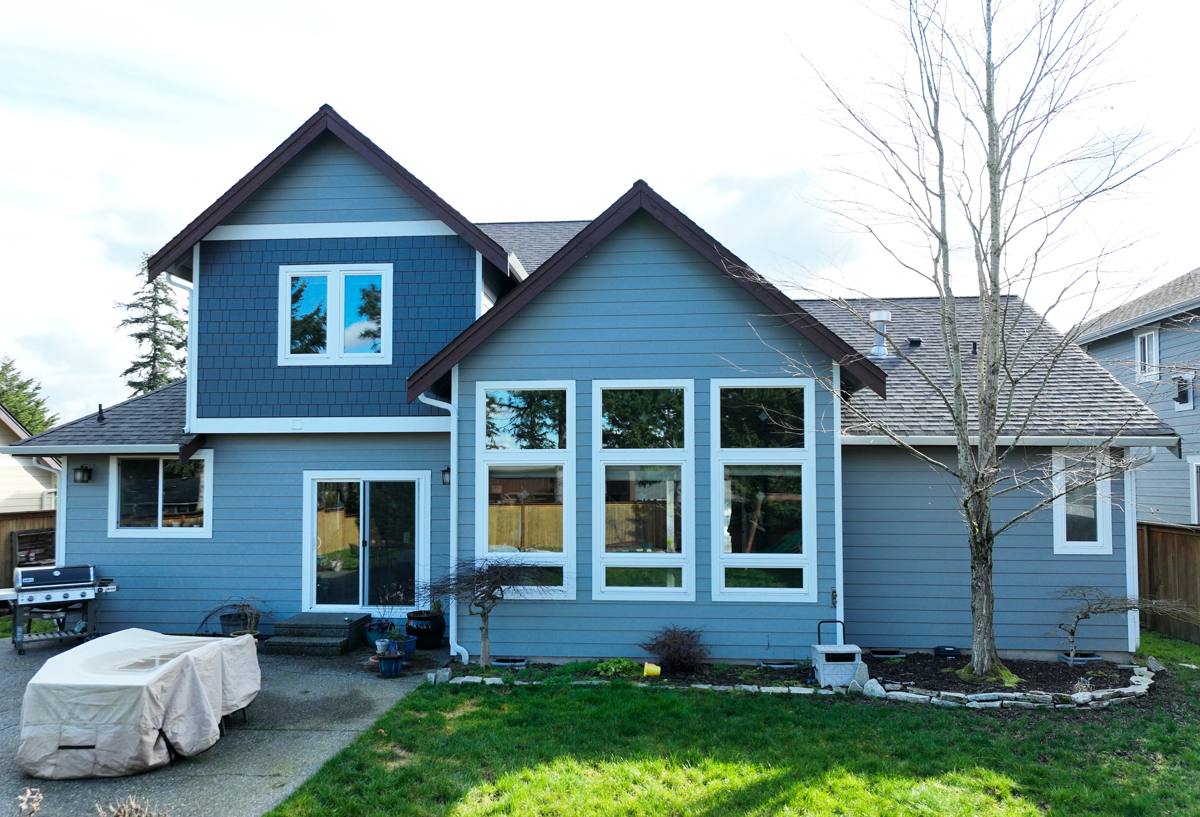
What Correct Board & Batten Construction Actually Involves
The Panel and Batten System
Board and batten isn't a separate siding material — it's a pattern built from wide vertical panels with narrower battens covering the seams. The look is simple, but the assembly underneath is what determines whether it lasts. Panel thickness, batten spacing, and how tightly the seams are sealed all affect how the wall handles wind-driven rain, which is the dominant weather pattern coming off the water in Blaine for a good part of the year.
Moisture Management Behind the Boards
The siding itself is the least important part of keeping water out of the wall. A correctly built board and batten wall has a weather-resistive barrier underneath the panels, properly lapped and taped, with flashing at every window, door, and horizontal trim break. In a coastal climate like Blaine's, we also install a rainscreen gap — a small air space between the barrier and the siding — so any moisture that does get past the panels can drain and dry instead of sitting against the wall sheathing. Skipping the rainscreen is one of the most common shortcuts we see on older installs, and it's usually the reason a wall that "should" have lasted twenty years starts showing rot at twelve.
Fasteners and Hardware
Salt air corrodes ordinary fasteners faster than most homeowners expect. Every nail, screw, and piece of trim hardware on a Blaine project needs to be rated for coastal exposure — bare or poorly coated fasteners will bleed rust streaks down a wall within a couple of seasons and eventually lose their holding strength. It's a small detail that has an outsized effect on how the siding looks and performs ten years out.
Why We Install James Hardie Board & Batten — and Not the Alternatives
We only install James Hardie fiber cement, and board and batten is a good example of why. Vinyl board and batten panels are affordable and low-maintenance, and we understand the appeal — but vinyl expands and contracts significantly with temperature swings, which shows at the seams over time, and it can crack or dent in wind-driven debris. In a location that sees real coastal wind, that's a real trade-off, not a hypothetical one.
LP SmartSide is a wood-strand product, and wood-based substrates are more sensitive to sustained moisture exposure at cut edges and seams — exactly the conditions Blaine's driving rain and long damp season create. Real wood board and batten, whether cedar or pine, is genuinely attractive, but it demands a repainting and caulking cycle that most owners underestimate, and it's the most vulnerable of all the options to rot and moss growth in constant shade and dampness.
James Hardie fiber cement doesn't expand and contract like vinyl, doesn't have a wood substrate that swells at cut edges, and is non-combustible. The ColorPlus factory finish is baked on under controlled conditions rather than field-painted, which matters in a climate where field-applied paint has fewer good drying days per year. Hardie's HZ product lines are engineered for specific climate zones, and the Pacific Northwest specification is built around exactly the moisture exposure Whatcom County sees. It's also backed by a strong transferable warranty — worth more to a homeowner than a warranty on paper if the installer isn't still around to stand behind it.
Material Comparison for Board & Batten in a Coastal Climate
| Material | Moisture Behavior | Maintenance | Coastal/Salt Air Fit |
|---|---|---|---|
| James Hardie fiber cement | Does not swell or rot; factory-sealed edges | Occasional rinse; no repainting cycle | Engineered HZ lines for this climate zone |
| Vinyl board & batten | Doesn't absorb water, but seams move with temperature | Low, but panels can crack or fade | Wind and debris exposure is a real risk |
| LP SmartSide | Wood-strand substrate, sensitive at cut edges/seams | Requires diligent caulk and paint upkeep | Sustained damp seasons are a weak point |
| Real wood (cedar/pine) | Absorbs moisture readily; prone to rot in shade | High — refinishing every few years | Most vulnerable to moss and rot locally |
How Our Installation Process Works
- Site assessment — we look at wall orientation, shade patterns, existing moisture damage, and how exposed each elevation is to wind and driving rain off the water.
- Removal and inspection — old siding comes off and we check the sheathing underneath for rot or existing moisture problems before anything new goes up.
- Weather barrier and flashing — a properly lapped weather-resistive barrier goes on first, with flashing detailed at every window, door, and penetration.
- Rainscreen furring — furring strips create the drainage gap behind the panels so moisture that gets past the surface can dry out instead of sitting against the wall.
- Panel and batten installation — Hardie panels go up to spec with coastal-rated fasteners, followed by battens set to the spacing and reveal the homeowner chooses.
- Sealant and trim detail — seams, trim, and penetrations get sealed with products rated for this climate, not whatever's cheapest on the shelf.
- Final walkthrough — we go over the finished job with the homeowner and flag anything worth keeping an eye on.
What Drives Cost on a Blaine Board & Batten Project
We don't publish blanket prices because the honest answer is "it depends," but these are the factors that actually move the number on a board and batten project in this area:
| Factor | Why It Matters |
|---|---|
| Condition of existing sheathing | Hidden rot from past moisture problems adds repair scope before new siding goes up |
| Number of exposed elevations | Sides facing prevailing wind and rain need the most careful detailing |
| Trim and window count | Every opening needs flashing and clean batten layout around it |
| Batten spacing and reveal | Tighter batten spacing uses more material and labor than a wider pattern |
| Site access | Waterfront lots and wind exposure can affect staging and scaffolding needs |
Why a Crew That Already Works Blaine Matters
Siding installation isn't one-size-fits-all across Whatcom County. A crew that mostly works drier, more sheltered inland neighborhoods doesn't always carry the same instincts about rainscreen detailing, fastener corrosion, or where moss actually takes hold on a given lot. We work this coastline regularly, so we're not guessing at how a wall in Blaine behaves differently from one a few miles inland in Bellingham — we're building for it from the first nail. That local familiarity also means we're not disappearing after the invoice clears; warranty follow-through matters more when the installer is still local and still reachable.
Maintenance Checklist for Blaine Homeowners
- Rinse salt spray and grime off exterior walls a couple of times a year, especially wind-facing elevations
- Check caulking at trim, windows, and batten seams annually for cracking or gaps
- Inspect shaded and north-facing walls for early moss growth before it spreads
- Confirm gutters and downspouts are draining away from the wall, not down it
- Look for any fastener heads showing rust or paint loss and have them addressed early
- Keep vegetation trimmed back from walls to reduce trapped moisture and shade
If you're weighing board and batten siding for a home in Blaine, we're happy to walk the property, look at what your walls are actually dealing with, and give you a straightforward, no-pressure estimate — just fill out the form below.