 Bellingham
 Storm Damage Roof Repair in Birchwood: What Local Homes Are Up Against
Birchwood sits close enough to Bellingham Bay that its roofs deal with a combination most inland Whatcom County homes don't: salt-tinged air, wind that comes off the water with real force, and rain that doesn't just fall straight down but drives sideways into flashing, vents, and roof edges. Add in a moss season that runs long in this climate, and you have a roof that's under quiet pressure almost year-round, not just during the one big windstorm that finally causes visible damage.
That's the part homeowners in this neighborhood often don't realize until a repair estimate is already high: storm damage on a Birchwood roof is rarely a single clean event. It's usually one storm finishing off what months of moisture and moss have already started. A repair done right accounts for both.
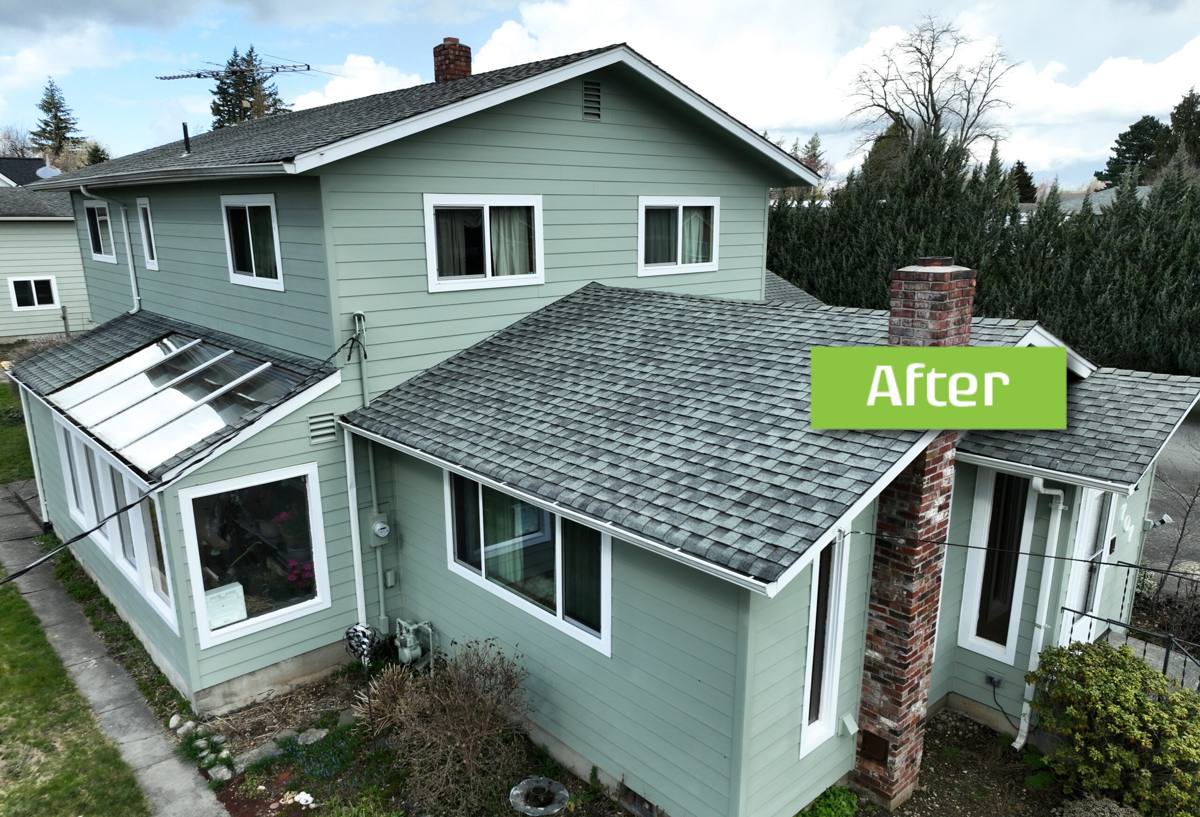
What Storm Damage Actually Looks Like on a Whatcom County Roof
Storm damage isn't always a hole or a missing shingle. On roofs in this area, it's more often subtle, which is exactly why it gets missed until water shows up inside the house.
Common damage patterns we see after wind and rain events
- Shingles lifted or creased at the tab, breaking their seal without fully detaching
- Granule loss on the windward slope, leaving asphalt exposed to UV and moisture
- Flashing pulled slightly away from chimneys, walls, or skylights, just enough to let wind-driven rain behind it
- Nail pops from repeated wind flex, backing shingles out over several storm cycles
- Debris strikes from branches or limbs, which can crack shingles without leaving an obvious hole
- Moss-clogged valleys and gutters that back water up under the shingle edge during heavy rain
Any one of these on its own might not leak right away. Combined, or left through a second or third storm, they usually do.
Signs it's time to have your roof looked at
- A ceiling stain that appears or grows after a windy, rainy stretch
- Shingle pieces or granules showing up in gutters or on the ground
- Visible moss buildup, especially on north-facing or shaded slopes
- Daylight or drafts noticed in an attic that weren't there before
- A neighbor's roof getting worked on after the same storm you rode out
Why Minor Damage Doesn't Stay Minor Here
In a drier climate, a lifted shingle or a small flashing gap can sit for a season without consequence. That's not how it works in Bellingham. The combination of near-constant moisture and a long moss season means small openings get exploited quickly. Moss holds water directly against the roofing material instead of letting it shed, which keeps shingles and the deck underneath damp far longer than they're built to tolerate. Salt air adds a second layer of wear, gradually breaking down metal flashing and fasteners faster than it would inland.
The practical result: a storm that damages a roof in July might not show a leak until the heavy rains of November, by which point moisture has had months to work into the decking. That's why we look past the obvious damage on every storm call and check the areas most likely to be quietly compromised — valleys, penetrations, and anywhere moss has been sitting.
What a Proper Storm Damage Repair Includes
A correct repair isn't just replacing what's visibly broken. It's confirming the damage stops where it looks like it stops.
Our repairs typically involve
- A full-slope inspection, not just a look at the reported problem area — wind damage is often worse a few feet from where it's most visible
- Deck inspection at the repair site once shingles are pulled back, since sheathing that's gone soft needs to be replaced, not covered over
- Matching shingle replacement using the closest available match to your existing roof, understanding that some color variation is normal with weathered shingles
- Flashing repair or replacement at any penetration near the damage, since flashing failure is the most common cause of repeat leaks
- Proper fastening to current wind-resistance standards, not just matching what was there before if what was there before is part of why it failed
We also treat moss removal as part of storm repair when it's contributing to the problem, not as an unrelated upsell. Cutting moss without addressing the shingle damage it caused just delays the same repair.
Repair or Replace? Weighing the Factors
Not every storm-damaged roof needs full replacement, and not every roof is a good candidate for another patch repair. The right call depends on the roof's age, how much of it is affected, and what we find once we're actually up there.
| Factor | Leans toward repair | Leans toward replacement |
|---|---|---|
| Roof age | Under 12-15 years | Nearing or past expected lifespan |
| Extent of damage | Isolated to one slope or area | Spread across multiple slopes |
| Decking condition | Solid, no soft spots found | Soft or rotted decking discovered |
| Moss history | Recently treated or minimal | Long-term, widespread moss damage |
| Shingle match availability | Close match still available | Discontinued, mismatch would be obvious |
| Prior repair history | First repair on this roof | Multiple past repairs in different spots |
We'll tell you honestly which side of that table your roof falls on. A repair that's genuinely sound is almost always the better value, and we don't push replacement on a roof that doesn't need it.
Our Process, Start to Finish
Storm calls move differently than routine work, since water intrusion is time-sensitive. Here's how we handle it.
- Same-window contact and assessment. We get eyes on the roof and, when safe, the attic, to see how far the damage actually goes.
- Photo documentation. We document the damage clearly, both for your records and for insurance if you're filing a claim.
- Straight talk on scope. We tell you what needs fixing now, what to watch, and what can wait — not everything found gets bundled into an inflated repair.
- The repair itself. Shingles, flashing, and any compromised decking get replaced correctly, not just covered.
- Cleanup and final check. Debris is cleared, and we confirm the repair area is sealed and water-tight before we consider the job done.
Working With Insurance on a Storm Claim
Many storm repairs in this area go through homeowners insurance, and we work with that process regularly, though we're not a substitute for your adjuster or agent. What we can do is document damage clearly and specifically enough that it holds up in a claim, explain in plain terms what's storm-related versus what's pre-existing wear, and give you a written scope that matches what your insurer needs to see. If you're not sure whether damage is significant enough to file a claim, we'll tell you honestly rather than encourage a claim that isn't warranted.
Moss, Salt Air, and the Long Game of Roof Maintenance
A one-time storm repair fixes the immediate problem, but Birchwood roofs are working against ongoing conditions, not a single event. Moss doesn't stop growing because a repair is finished, and salt air doesn't stop working on exposed metal. A roof that's had storm damage repaired is a good time to also address what let that damage take hold — moss buildup in shaded areas, clogged valleys, or flashing that's due for attention anyway.
We're not going to tell you to re-roof preventively every few years — that's not honest advice for most homes. But we will point out, plainly, when moss or wear patterns suggest your roof is heading toward another storm call sooner than it should, so you can decide what to do with that information on your own timeline.
Why a Crew That Already Works Birchwood Matters
Storm damage repair rewards local knowledge in ways a lot of other exterior work doesn't. A crew that already works this part of Bellingham knows what these roofs typically look like at different ages, what moss patterns tend to mean once you're actually up on the slope, and how fast conditions can change between a morning inspection and an afternoon squall coming in off the bay. That local familiarity means less time spent diagnosing and more time spent fixing, along with faster response when a storm has just come through and water is already a concern.
It also means accountability that isn't going anywhere. We're working in Whatcom County long-term, which is part of why we'd rather tell you a repair is sufficient than sell you more roof than you need.
If your Birchwood roof took a hit in the last storm — or you're just not sure whether what you're seeing is a problem — we're happy to come take an honest look. The estimate is free, there's no pressure attached, and you'll get a straight answer either way. Use the form below to get started.