 Bellingham
 Why Birch Bay Siding Takes a Different Approach
Birch Bay sits right on the water, and that changes what a siding job needs to survive. Homes here take a steady diet of salt-laden air off the bay, wind-driven rain that gets pushed sideways into wall assemblies, and a moss season that runs longer than it does just a few miles inland in Bellingham proper. Add in the freeze-thaw swings that hit Whatcom County in winter, and you have a climate that finds every weak point in a siding system within a few years, not a few decades.
We install James Hardie fiber cement siding exclusively, and Birch Bay is one of the clearer examples of why that standard matters. This page focuses on one service in one place: what a correctly installed Hardie system needs to do for a Birch Bay home, and how we get there.
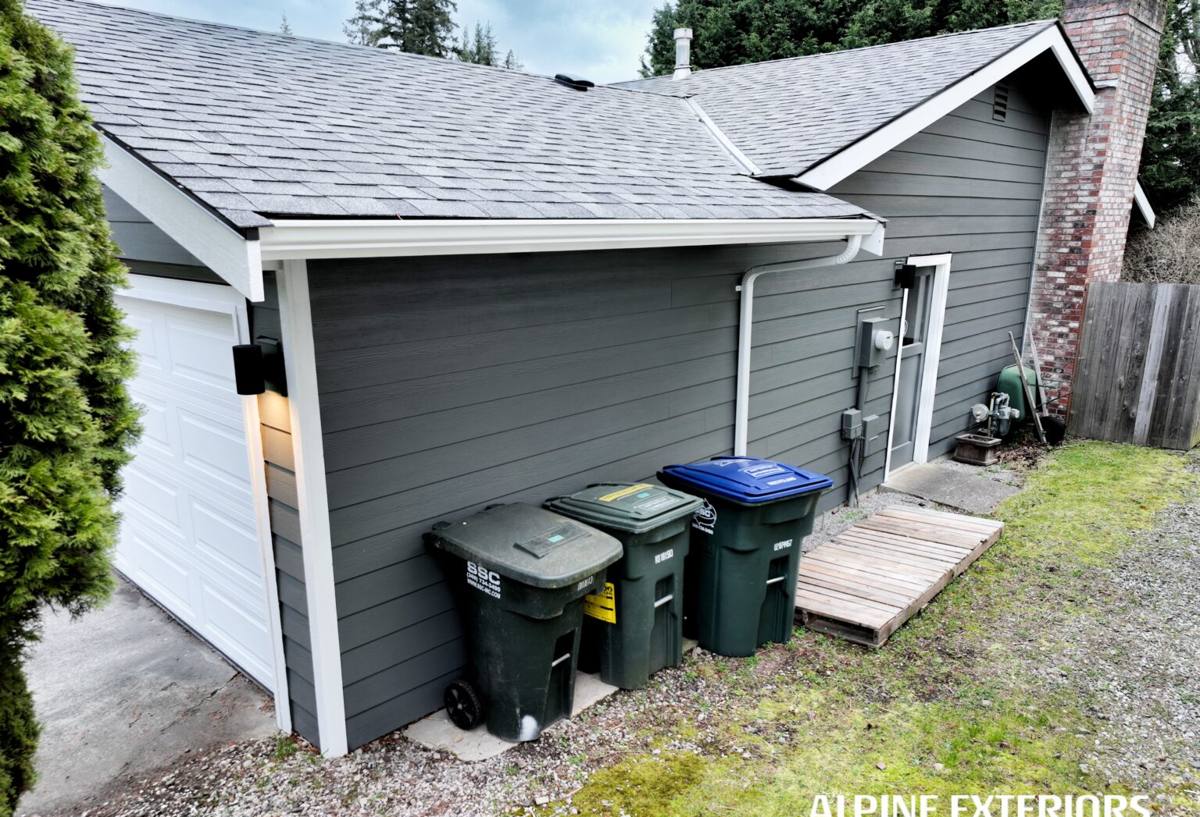
What Salt Air and Driving Rain Actually Do to a Wall
Salt air isn't just a coastal inconvenience — it's chemically aggressive toward fasteners, flashing, and cheap trim. Metal components corrode faster near the water, which is why fastener and flashing selection on a Birch Bay job matters more than it would on a home a few miles east. Meanwhile, wind-driven rain off the bay doesn't fall straight down; it gets pushed at an angle into siding laps, corner boards, and window trim. A siding system that relies on paint or caulk alone to keep water out will eventually let moisture in around one of those transitions.
Moss is the visible symptom of the same problem. Whatcom County's damp, mild winters give moss and algae a long growing season, and north-facing or shaded walls near the bay hold moisture longer than sun-exposed walls elsewhere in Bellingham. Siding that stays damp for extended periods is siding that's working harder — and aging faster — than it should.
The Three Things That Fail First
- Butt joints and laps — where two pieces of siding meet is where wind-driven rain finds a way in if the joint isn't detailed correctly.
- Fasteners — the wrong fastener type or spacing corrodes or backs out faster in salt air, leaving gaps.
- Bottom edges and trim transitions — moisture wicks up from the bottom of boards and trim pieces that aren't properly primed and sealed on cut edges.
Why We Standardized on James Hardie for This Climate
James Hardie fiber cement is engineered from cement, sand, and cellulose fibers — it doesn't absorb and swell with moisture the way wood-based products do, and it's non-combustible, which matters given Washington's wildfire seasons even on the coast. For a property exposed to salt air and near-constant moisture cycling, that dimensional stability is the difference between siding that holds paint and caulk lines for years and siding that needs constant touch-up.
Hardie also builds climate-specific product lines (HZ5 and HZ10 engineered formulations) designed around regional moisture and freeze-thaw exposure, and their ColorPlus factory-applied finish is baked on under controlled conditions rather than field-painted — which means better, more consistent coverage on the cut edges and details that take the brunt of coastal weather. We chose to install only this product because we don't want to hand a Birch Bay homeowner a siding job that looks right at handoff and starts showing problems in year three.
What We Don't Install, and Why It Matters Here
We don't install vinyl, LP SmartSide, Cemplank, Allura, primed spruce, or cedar. Each of those has legitimate uses elsewhere, but in a salt-air, high-moisture environment like Birch Bay, they carry trade-offs we're not willing to put our name behind:
- Vinyl can warp and become brittle with UV and temperature cycling, and its seams and J-channels give wind-driven rain more entry points than a properly lapped fiber cement system.
- Wood-based siding (LP SmartSide, primed spruce, cedar) is more moisture-sensitive by nature — even with engineered wood strand products, prolonged damp exposure near the bay accelerates swelling and edge deterioration if maintenance ever slips.
- Other fiber cement brands (Cemplank, Allura) use the same base material category as Hardie but don't carry the same factory finish system, climate-specific engineering, or transferable warranty structure we've standardized our installs and warranty commitments around.
This isn't a claim that those products fail outright — it's that for a property taking this much coastal exposure, we'd rather install the system best engineered for it than manage callbacks later.
What a Correct Installation Involves
The siding itself is only part of the system. On a Birch Bay home, the water-management details behind and around the boards are what determine whether the wall stays dry.
The Install Process
- Tear-off and substrate inspection — old siding comes off and we check the sheathing underneath for existing moisture damage before anything new goes on.
- Weather-resistive barrier — a correctly lapped and taped house wrap goes down first, with extra attention to seams facing the prevailing wind and rain direction off the bay.
- Flashing at every penetration — windows, doors, and any wall penetration get flashed so water is directed out and down, never trapped behind the siding.
- Rainscreen or proper drainage gap where conditions call for it, giving any moisture that does get behind the siding a way to drain and dry out instead of sitting against the wall.
- Hardie board installation to manufacturer fastening specs — correct fastener type and spacing for coastal exposure, correct lap and joint detailing, cut edges primed and sealed.
- Trim, caulking, and touch-up using compatible sealants and factory-matched touch-up paint at cut edges.
- Final walk-through so the homeowner sees exactly what was done and where.
Choosing a Contractor Who Already Works Birch Bay
Coastal detailing isn't optional knowledge — it's the difference between a job that holds up and one that doesn't. A crew that already works Birch Bay and the surrounding bay-front stretches of Whatcom County has already made the adjustments a coastal install requires: fastener selection for salt exposure, flashing sequencing for wind-driven rain, and product choices that account for a longer moss season. A crew that mostly works inland jobs may not think to make those adjustments, because inland homes don't demand them the same way.
When you're vetting a contractor for coastal siding work, the questions worth asking go beyond price:
| Question | Why it matters near the bay |
|---|---|
| Do you install a weather-resistive barrier and flashing to code, not just siding? | Siding is the visible layer — the barrier and flashing behind it do the actual water-stopping work. |
| What fastener type do you use for coastal exposure? | Corrosion-resistant fasteners cost more but don't fail early in salt air. |
| Are you a certified James Hardie installer? | Certification and manufacturer training affect warranty eligibility and correct installation practice. |
| How do you handle cut edges and trim transitions? | Unsealed cut edges are a common early failure point in wet climates. |
| Can you walk me through your process before work starts? | A contractor who can explain the sequence in detail is one who's actually thought it through. |
Cost Factors Specific to a Birch Bay Job
Every project is different, but a few factors tend to move the price on coastal Whatcom County installs more than they would on a typical inland job:
- Existing substrate condition — if moisture has already gotten behind old siding, repair or replacement of sheathing adds cost but shouldn't be skipped.
- Home exposure — a wall facing directly into prevailing wind and rain off the bay may warrant additional flashing detail or a drainage gap that a sheltered wall doesn't need.
- Access and site conditions — waterfront lots sometimes have tighter access, slopes, or landscaping that affect scaffolding and staging.
- Trim and detail complexity — more corners, windows, and architectural detail mean more flashing and cut-edge work, which is where coastal durability is won or lost.
We give straightforward estimates based on what your home actually needs, not a generic per-square-foot number that ignores the site.
Maintenance After Installation
A correctly installed Hardie system in Birch Bay is low-maintenance, not no-maintenance. A simple annual routine keeps it performing:
- Rinse siding periodically to clear salt residue and organic buildup, especially on shaded or north-facing walls prone to moss.
- Inspect caulking at trim joints and penetrations yearly, since sealant is the first thing UV and salt exposure degrade.
- Trim back vegetation and landscaping that holds moisture against the wall.
- Address any touch-up paint needs promptly at cut edges or impact points to keep the factory finish protecting the board underneath.
What to Expect From Us
We're straightforward about scope, timeline, and what your home specifically needs — no upsell into a product line we don't install, and no vague promises about performance we can't back up. If you're in Birch Bay and thinking about siding replacement, we'd be glad to take a look at your home and walk you through what a correct James Hardie installation would involve for your specific exposure and layout. Reach out for a free, no-pressure estimate using the form below.