 Bellingham
 Why Sudden Valley Decks Wear Differently Than Decks in Town
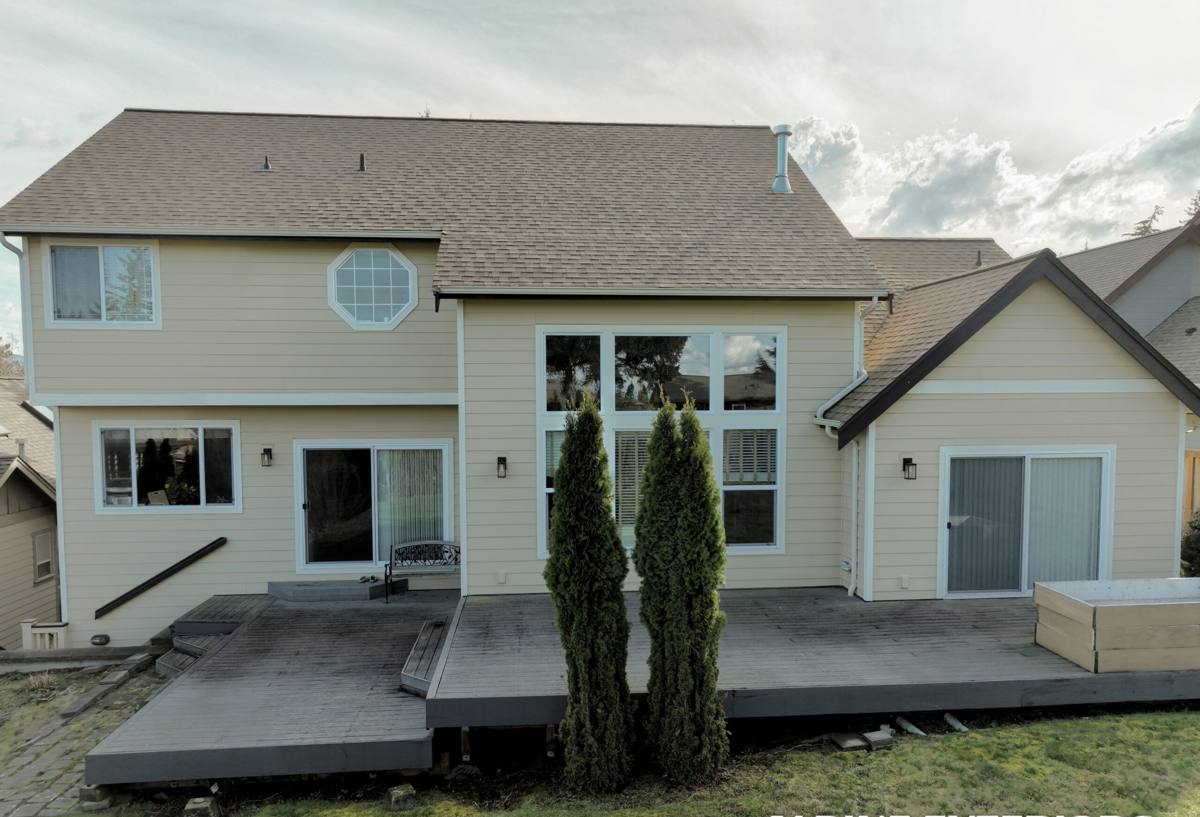
Sudden Valley sits in a pocket of Whatcom County that gets its own version of our regional weather. Bellingham as a whole deals with a long wet season, driving rain off the Salish Sea, and a moss season that can run eight months or more. Sudden Valley adds a layer on top of that: heavily wooded, lakeside lots with mature tree canopy overhead. That shade keeps decking boards from ever fully drying between rains, and the steady drop of needles, leaves, and pollen builds up in board gaps and against ledger boards where it holds moisture against the wood.
The result is a deck that can look fine from a distance but be quietly failing where you can't see it — at the ledger connection to the house, under the surface of shaded boards, and around fasteners that have been sitting damp for years. We've repaired enough decks in this specific pocket of the county to know the pattern, and it's a different pattern than what we see on open, sunny lots closer to town.
The Three Things Working Against Your Deck
- Shade and slow drying — tree cover means boards stay damp longer after every rain, which is exactly what wood rot and moss need to establish themselves.
- Organic debris — needles and leaves collect in board gaps, stair treads, and against the house, trapping moisture right where you don't want it.
- Regional moisture load — the broader Whatcom County climate, with its driving rain and salt-influenced air near the water, means fasteners, flashing, and connectors corrode faster here than in drier inland climates.
Signs Your Deck Needs Repair — Not Just a Cleaning
A lot of Sudden Valley decks get an annual power wash and call it maintenance. That helps, but it doesn't tell you what's happening underneath. Here's what we actually check for, and what should prompt a call before you use the deck again.
- Soft, spongy, or springy spots underfoot, especially near the house or at stair landings
- Black or green staining that comes back within weeks of cleaning
- Gaps opening up between the ledger board and the house siding or trim
- Rust streaks below joist hangers, screw heads, or bolt connections
- Railing posts that wiggle or flex when pushed
- Stair stringers that feel different under one foot than the other
- Visible daylight or gaps where the deck meets the foundation or a support post
- Wood that looks fine on the surface but a screwdriver sinks into without much pressure
Any one of these on its own might be minor. Two or three together, especially in a shaded or low-airflow section of the deck, usually means the problem is more than surface-deep.
What a Correct Deck Repair Actually Involves
"Deck repair" gets used loosely, so it's worth being specific about what a repair should cover if it's going to hold up through another Whatcom County winter. A repair that only replaces the boards you can see, without checking what's underneath, is a repair that fails again in a season or two — especially on a shaded lot where the framing never fully dries out.
Structural Framing First
Before we touch decking boards, we check the framing that carries the load: joists, beams, posts, and the ledger board where the deck attaches to the house. This is the part most homeowners never see, and it's also the part most likely to be quietly rotting on a shaded lot. Any soft or compromised framing gets sistered or replaced — patching boards on top of failing framing just hides the problem for another year.
The Ledger Connection
The ledger board — where the deck bolts to your house — is the single most common failure point we find on older decks in this area, and it's the one with the highest stakes if it fails, since it's what keeps the whole deck attached to the structure. Proper flashing behind and over the ledger keeps water from running down the house wall and pooling right at that connection. On a lot of older decks, especially ones built before flashing standards tightened up, this flashing is missing, undersized, or failed. We correct that as part of any real repair.
Fasteners and Hardware
Galvanized fasteners that were adequate decades ago corrode faster in this climate than most people expect, especially with tree cover keeping wood damp longer. We replace corroded hardware with fasteners and joist hangers rated for ground contact and treated lumber, matched to whatever decking material is going back on.
Decking Surface
Only once framing, ledger, and hardware are sound do we move to the visible boards — replacing what's damaged, refastening what's loose, and making sure drainage gaps between boards are correct so water and debris don't sit and hold moisture the way they have been.
Repair or Replace? How We Help You Decide
Not every deck problem calls for a full rebuild, and not every deck is worth patching. The honest answer depends on how much of the structure is affected, not just how old the deck looks.
| Factor | Leans Toward Repair | Leans Toward Replacement |
|---|---|---|
| Framing condition | Isolated soft spots, most joists and beams sound | Widespread rot across multiple joists or the ledger itself |
| Age of structure | Under 15-20 years, built to a reasonable original standard | Original construction is old, undersized, or code-outdated |
| Extent of damage | Concentrated in one shaded corner or near a single downspout | Damage spread across the whole deck footprint |
| Railings and stairs | Solid posts, minor hardware corrosion | Loose or rotted posts, undersized or missing structural connections |
| Your plans for the deck | Keeping the current size and layout | Wanting a different footprint, added shade cover, or upgraded materials |
We'll give you a straight answer on which side of that line your deck falls on, including what we find once we're actually under the boards — not just an estimate based on what's visible from the yard.
Our Repair Process, Start to Finish
- On-site assessment — we walk the full deck, check framing from underneath where accessible, probe suspect boards and posts, and look closely at the ledger and flashing.
- Written scope and estimate — you get a clear breakdown of what's structural, what's cosmetic, and what we recommend versus what's optional.
- Framing and structural repairs — any compromised joists, beams, posts, or the ledger connection get addressed first, with correct flashing and fasteners.
- Decking and railing work — damaged boards, loose railings, and worn stair components get replaced or resecured.
- Final check and cleanup — we walk the deck with you, confirm everything is solid underfoot, and clear the site.
Materials: What We Use and Why
For framing repairs, we use pressure-treated lumber rated for ground contact where it's in contact with soil or persistent moisture, paired with corrosion-resistant, code-rated hardware — not general-purpose fasteners that will start rusting within a few wet seasons under tree cover. For flashing at the ledger, we use a proper self-adhering membrane or metal flashing detail, not just caulk, since caulk alone tends to fail well before the wood underneath does.
On decking surfaces, both quality wood and composite decking can work well in Sudden Valley's conditions, but each comes with trade-offs worth knowing upfront.
| Wood Decking | Composite Decking | |
|---|---|---|
| Upfront cost | Generally lower | Generally higher |
| Maintenance | Periodic cleaning, staining or sealing | Occasional washing, no staining |
| Moss and algae resistance | Moderate, depends on species and sealing | Better in shaded areas, still needs cleaning |
| Repairability | Individual boards easy to replace | Board replacement possible, color matching can be harder on older product |
| Appearance over time | Natural look, changes with weathering | Consistent look, holds color longer |
We'll talk through which fits your deck, your budget, and how much upkeep you actually want to do, rather than pushing one option as universally better — the right call depends on your specific lot and how much sun that section of yard actually gets.
Why It Matters That We Already Work in Sudden Valley
A crew that's worked this neighborhood before isn't guessing at what they'll find under the boards. We already know that wooded, lakeside lots here tend to hide framing damage that doesn't show on the surface, that ledger flashing is a recurring weak point on older builds, and that access on some Sudden Valley lots — steep driveways, limited parking, HOA considerations — takes a bit of planning ahead of time. That familiarity means fewer surprises mid-project and a more accurate estimate from the first visit, rather than a number that grows once we start pulling boards.
It also means we're a known, local crew if a repaired deck needs a follow-up years down the line — not a company that did one job in the area and moved on.
Keeping a Repaired Deck in Good Shape
A correct repair buys you years, but a shaded Sudden Valley deck still needs more attention than one sitting in open sun. A few habits go a long way:
- Sweep needles and leaf debris out of board gaps regularly, especially in fall
- Keep gutters and downspouts near the deck clear so water isn't dumping directly onto it
- Trim back overhanging branches where practical to let in more light and airflow
- Rinse off moss and algae buildup before it gets a foothold, rather than after
- Have the ledger connection and railing hardware checked every few years, since that's the area most likely to develop a hidden problem
Get a Straight Answer on Your Deck
If your deck feels a little softer than it used to, has staining that keeps coming back, or you just haven't had it looked at from underneath in a while, it's worth a proper assessment before another wet season sets in. We offer free, no-pressure estimates for Sudden Valley homeowners — use the form below to get one scheduled.