 Bellingham
 Building a Deck That Actually Belongs in Sudden Valley
Sudden Valley sits in a different world than a lot three miles into downtown Bellingham. It's wooded, hilly, wrapped around Lake Whatcom, and shaded for long stretches of the day by mature conifers that most neighborhoods in Whatcom County simply don't have. That changes what a deck needs to survive here. A design that works fine on an open, sunny lot in Ferndale or a windswept bluff near Boulevard Park can rot, green up with moss, or warp within a few seasons on a shaded Sudden Valley slope if it isn't built with this specific setting in mind.
We've built and repaired decks all over the Bellingham area long enough to know that "custom" doesn't just mean picking a railing style out of a catalog. It means designing footings for a sloped, often rocky or clay-heavy lot, choosing materials that won't turn slick with algae under tree cover, and detailing the ledger and flashing so driving rain off the lake doesn't quietly rot the house band board behind the siding. This page is about what that actually looks like for a Sudden Valley property, not a generic deck brochure.
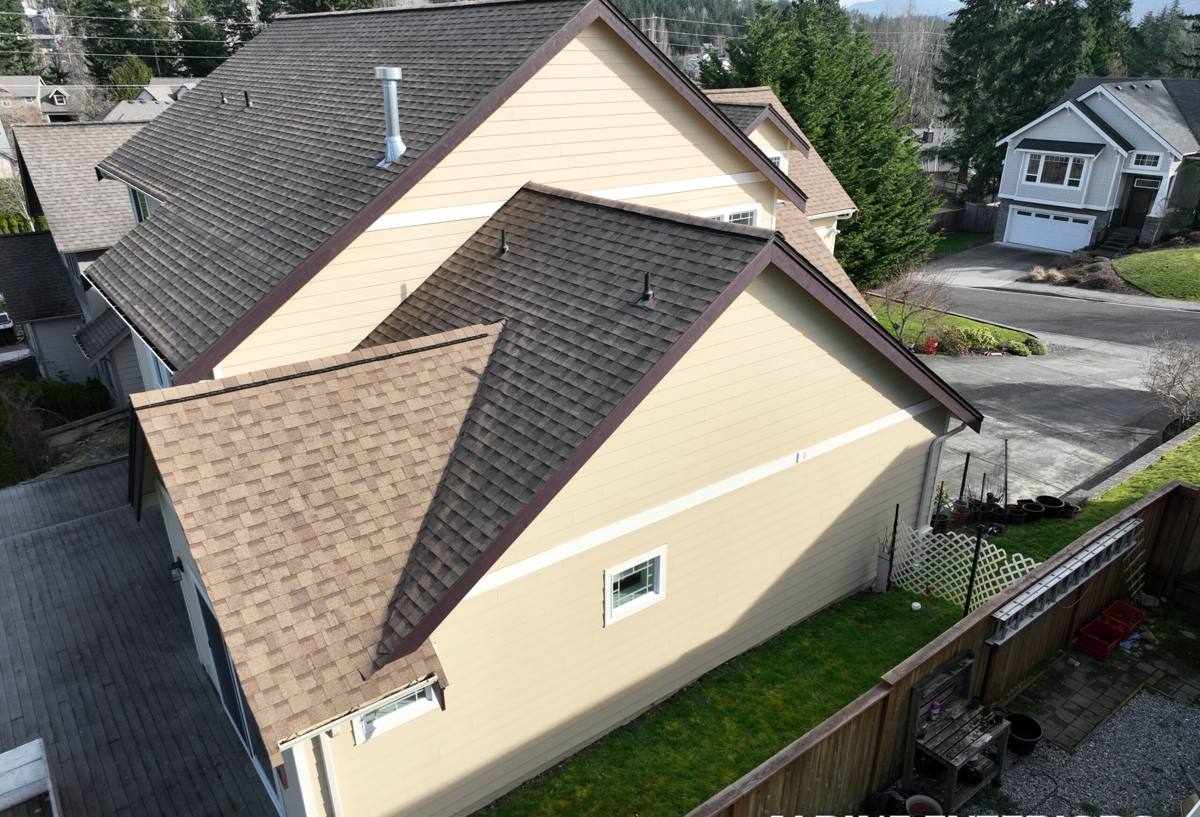
What This Climate Does to a Deck
Whatcom County's marine climate is the backdrop for every outdoor structure we build, and Sudden Valley gets an amplified version of a few of its worst habits.
Moss and Algae Under Tree Cover
Many Sudden Valley lots are ringed by fir and cedar, which means a big share of the deck surface may see only filtered light for months at a time. Damp, shaded wood grows moss and algae far faster than a deck in full sun. On the walking surface that's a slip hazard as much as a cosmetic one; on framing underneath, sustained dampness is what eventually leads to soft, rotted joists.
Driving Rain and Wind-Driven Moisture
Storms off Bellingham Bay and the Sound push rain sideways more often than most homeowners expect, and Sudden Valley's elevation and exposure to weather moving across Lake Whatcom doesn't spare it. Wind-driven rain finds any gap in a ledger board connection, any nail head without a proper seal, any decking board laid tight against the house without a drainage gap. Over a long Bellingham winter, that's the difference between a deck that lasts decades and one that needs a rebuild in ten years.
Salt Air and Fastener Corrosion
Bellingham's proximity to Puget Sound means the air carries more salt and moisture than an inland town, and that affects fasteners and metal hardware even on properties well away from the water. Untreated or under-rated screws, joist hangers, and post bases corrode faster here than manufacturer literature written for a dry climate would suggest — which is why we don't treat hardware selection as an afterthought.
A Long Moss Season
Between the rain that starts in fall and doesn't really let up until late spring, and the shade many Sudden Valley lots have from tree cover, moss season here isn't a few weeks — it's most of the year. A deck design that ignores drainage and airflow is fighting that calendar from day one.
Sudden Valley's Terrain: Building on a Slope by the Lake
Sudden Valley is a hillside community, and very few lots here are flat. That has real consequences for deck construction:
- Footings often need to be set at varying depths to reach stable, load-bearing soil on a slope, rather than a uniform grid like you'd use on level ground.
- Taller decks off daylight basements or walkout lower levels need engineered post-and-beam support, not just deeper joists.
- Guardrail height and stair geometry become more important — and more heavily inspected — the further a deck sits above grade.
- Root systems from mature trees can interfere with footing placement and sometimes require adjusting the layout rather than cutting through roots that are helping hold the slope together.
- Drainage design matters more here than on a flat lot — water shed off a hillside deck has to go somewhere that doesn't undermine the foundation or a neighbor's slope below.
Because Lake Whatcom is the primary drinking water source for much of Bellingham, properties near its shoreline or feeding tributaries can also fall under additional watershed protection standards from Whatcom County. If your lot borders the lake or a drainage course, that's worth raising with your contractor and the county early, before a design is finalized, rather than after a permit application stalls.
HOA Review: Building Inside a Planned Community
Sudden Valley is a private, amenity-rich community with its own homeowners' association, and most exterior projects — decks included — go through an architectural review process before construction starts. That typically means submitting a design for approval, which can touch on railing style, decking color or material, and how the structure relates to setbacks or shared property lines.
This isn't a reason to avoid custom work — it's a reason to plan for it. A contractor who has already been through Sudden Valley's review process knows what kind of drawings and detail the committee expects to see, which saves you a round or two of back-and-forth before you're cleared to break ground.
Choosing Materials for a Shaded, Wet Lot
There's no single "best" decking material — the right choice depends on how much sun your specific spot gets, how much upkeep you're willing to do, and your budget. Here's how the common options actually perform in a Sudden Valley setting:
| Material | How It Handles Shade & Moisture | Maintenance | Typical Lifespan Here |
|---|---|---|---|
| Pressure-treated wood | Prone to moss and algae in shaded spots without regular cleaning; needs a breathable finish, not paint | Annual cleaning and re-sealing recommended | 15-25 years with upkeep |
| Cedar | Naturally rot-resistant heartwood, but still greens up under heavy tree cover if neglected | Periodic cleaning and oil or stain | 20-25 years with upkeep |
| Capped composite | Resists moisture absorption well; still needs cleaning where algae can gain a foothold on the surface texture | Occasional washing, no sealing or staining | 25-30+ years, per manufacturer warranty |
| PVC decking | Fully moisture-resistant board; least likely of the group to feed mold or rot in constant shade | Lowest — occasional washing | 25-30+ years, per manufacturer warranty |
We install all of these depending on what a homeowner wants, but on the shadiest, dampest Sudden Valley lots we usually steer people toward a capped composite or PVC board specifically because it doesn't feed mold and mildew the way untreated or lightly sealed wood does under constant tree cover. That's a maintenance-and-moisture judgment call, not a knock on wood decking generally — a well-maintained cedar deck in a sunnier spot on the same street can look great for decades.
What a Properly Built Deck Involves Here
A deck that's going to hold up to a Whatcom County winter under tree cover needs a few things done right that don't show up in a finished photo:
Ledger Attachment and Flashing
The ledger board — where the deck ties into the house — is the single most common failure point on older decks we're called out to repair. It needs proper flashing that sheds water away from the house framing, not just caulk, and it needs to be through-bolted rather than lag-screwed into questionable framing.
Footings Sized for the Slope
On sloped Sudden Valley lots, footing depth and diameter need to account for the actual soil and load conditions at each post location, not a one-size assumption carried over from a flat-lot design.
Corrosion-Rated Hardware Throughout
Every joist hanger, structural screw, and post base should be rated for the exposure it's actually going to see — which in this climate means hot-dip galvanized or stainless steel, not the lightest-rated hardware that happens to be in stock.
Gaps and Airflow Under the Decking
Proper spacing between boards and clearance underneath the frame lets air move and moisture evaporate instead of sitting against the wood. Under heavy tree cover, that airflow is what keeps moss from getting a foothold in the first place.
Guardrails and Stairs Built to Code
Guardrail height, baluster spacing, and stair rise-and-run are code requirements, not style preferences — and they get more scrutiny from inspectors the higher a deck sits above grade, which is common on Sudden Valley's hillside lots.
Our Process for a Sudden Valley Deck
- On-site walkthrough. We look at the slope, tree cover, sun exposure, and how the deck will tie into the house before we talk materials.
- Design and material selection. We build a plan around your actual site conditions and budget, not a generic layout.
- Permit and HOA submission. We prepare the drawings Whatcom County and, where applicable, Sudden Valley's architectural review committee need to approve the project.
- Footings and framing. Footings sized to your soil and slope, framing built with corrosion-rated hardware from the ground up.
- Decking, railing, and stairs. Installed with the spacing and flashing details that matter most in a shaded, wet climate.
- Final walkthrough and inspection. We confirm the finished deck passes inspection and walk you through anything it needs from you going forward.
What Drives the Cost of a Custom Deck
Every Sudden Valley deck quote is different because every lot is different, but the same handful of factors usually move the price the most:
| Factor | Why It Matters Here |
|---|---|
| Height above grade | Taller decks on sloped lots need more engineered post-and-beam support and heavier footings |
| Decking material | Composite and PVC cost more up front than wood but need far less upkeep in shaded, damp spots |
| Access to the site | Steep driveways and wooded lots common in Sudden Valley can affect how equipment and material reach the build site |
| Footing count and depth | Sloped, root-filled, or rocky soil can require more or deeper footings than a flat, open lot |
| Railing and stair complexity | Multi-level decks or long stair runs down a hillside add both material and labor |
| HOA-driven design requirements | Architectural review can call for specific materials, colors, or details that affect the estimate |
Living With a Deck in a Moss-Prone, Shaded Setting
Even a well-built deck needs some seasonal attention in this climate. A few habits go a long way toward getting the full lifespan out of the investment:
- Sweep leaves, needles, and debris off the deck regularly — trapped organic matter under tree cover is what feeds moss and holds moisture against the boards.
- Rinse or lightly scrub the surface once or twice a year, more often in heavily shaded spots.
- Check that gaps between boards stay clear of debris so water and air can keep moving underneath.
- Reapply sealant on wood decking on the schedule the product calls for — don't wait until it's visibly graying or absorbing water.
- Keep gutters and downspouts near the deck clear, since overflow is a common hidden source of ledger-area water damage.
- Have the structure looked at every few years, especially the ledger connection and any posts set into the ground, since those are the parts most likely to hide a problem.
Why a Crew That Already Works in Sudden Valley Matters
A lot of the details above — footing depth on a slope, HOA review expectations, how driving rain actually behaves against a hillside home, which hardware holds up under a mix of shade, damp, and salt-laden air — aren't things you learn from a spec sheet. They're things you learn from building and repairing decks in this specific community, on these specific lots, through enough Bellingham winters to see what fails and why.
Hiring a crew that's already familiar with Sudden Valley means fewer surprises: fewer redesigns because a footing plan didn't account for the slope, fewer delays waiting on HOA feedback because the first submission missed something the committee always asks about, and a deck that's built for the shade and rain your specific lot actually gets — not the average Whatcom County lot.
Get a Free, No-Pressure Estimate
If you're planning a new deck or replacing one that's showing its age in Sudden Valley, we're happy to come take a look, walk the site with you, and put together a straightforward estimate — no pressure, no obligation. Use the form below to get started.