 Bellingham
 Siding Built for Blaine's Coastline, Not Just Its Curb Appeal
Blaine sits about as close to the water and the border as a Whatcom County home can get, and that location shapes what siding has to survive here. Homes near Semiahmoo Bay and Drayton Harbor take on salt-laden air coming off Boundary Bay and the Strait of Georgia almost year-round, while the rest of the county contends with the same wet, mossy, low-sun winters that define western Washington siding performance. A siding installation in Blaine isn't just a cosmetic upgrade — it's a decision about which material and which crew can hold up to marine exposure on top of everything else the Pacific Northwest throws at a house.
We install exclusively James Hardie fiber cement siding, and we made that call specifically because of climates like this one. This page walks through what Blaine and greater Bellingham homes actually need from a siding job, what correct installation involves, and why local experience with this exact combination of salt air and rain matters more than it might seem.
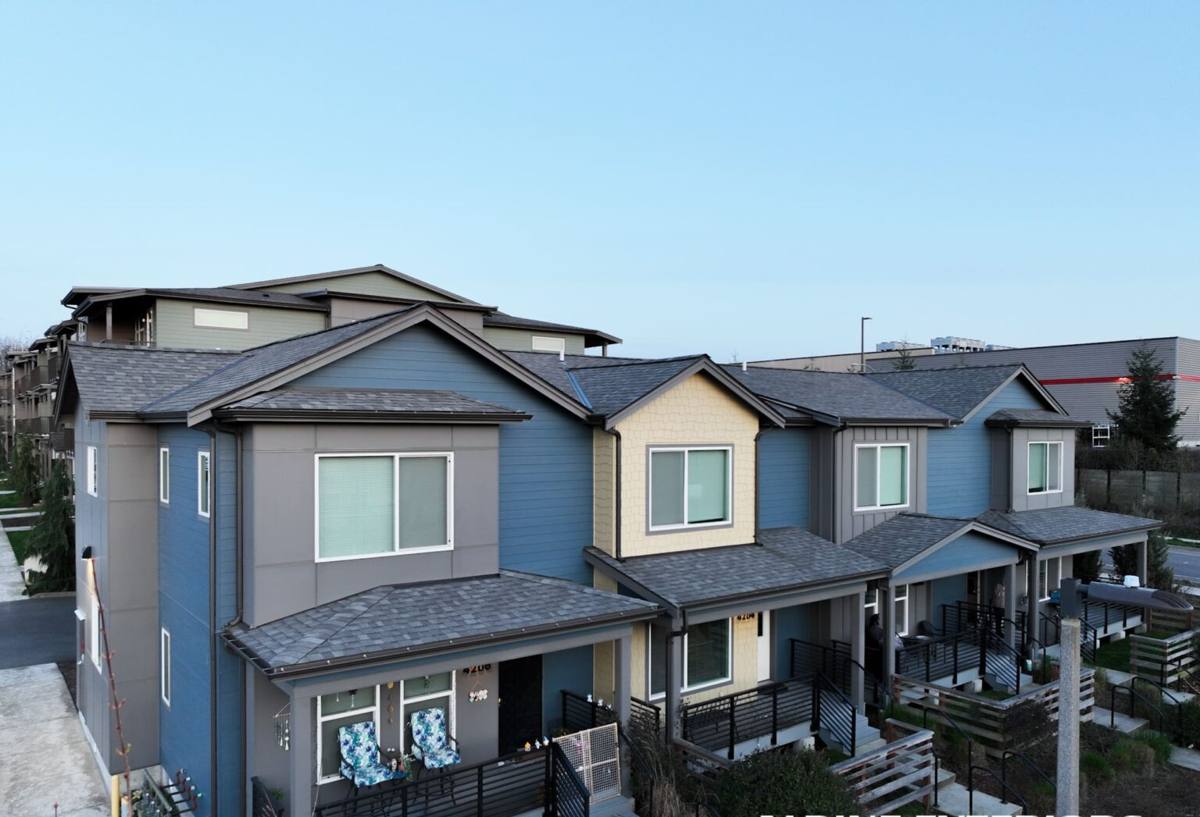
What Blaine's Climate Actually Does to Siding
Salt Air and Coastal Exposure
Airborne salt is corrosive to fasteners, trim, and any siding material that isn't engineered to shrug it off. It also accelerates the breakdown of lower-grade coatings and finishes, which is why paint on wood or engineered wood siding near the water tends to chalk and fail faster than the same product installed a few miles inland. Metal flashing, nail heads, and trim details all need to be chosen with that corrosion risk in mind, not just the siding panels themselves.
Driving Rain
Storms coming off the Strait don't just drop rain straight down — wind-driven rain gets pushed sideways into wall assemblies, seams, and butt joints. A siding system that isn't detailed correctly at those joints will let moisture behind the cladding, where it can sit against sheathing and framing for months without anyone noticing until there's a soft spot or a stain on the interior wall.
A Long Moss and Mildew Season
Whatcom County's wet season runs long, and shaded north- and west-facing walls in particular stay damp for extended stretches. Moss, algae, and mildew don't just look bad on siding — on porous or absorbent materials, sustained moisture contact is exactly the condition that leads to swelling, delamination, and rot over time. Siding that resists moisture absorption at the material level, rather than relying purely on paint to keep water out, holds up far better through a normal Blaine winter.
Why We Only Install James Hardie
James Hardie fiber cement is engineered specifically for exposure like this. It's non-combustible, dimensionally stable, and doesn't absorb moisture the way wood-based products do, which matters directly for salt air, driving rain, and a long damp season. Hardie's ColorPlus factory-applied finish is baked on in a controlled environment and backed by a strong finish warranty — a meaningful advantage over field-applied paint that has to cure and hold up in exactly the wet, salty conditions it's trying to resist.
Hardie also builds climate-specific product lines (HZ5 and HZ10) engineered for different moisture and temperature zones, which lets us match the product to what Whatcom County actually experiences rather than installing a one-size-fits-all panel. We don't install vinyl, LP SmartSide, Cemplank, Allura, primed spruce, or cedar. Each of those has legitimate uses somewhere, but for this climate — with salt exposure, sustained moisture, and a long moss season — we've seen enough of the maintenance burden and moisture-related failure modes that we standardized on Hardie and stopped installing the alternatives.
| Factor | Wood-Based / Engineered Wood Siding | Vinyl Siding | James Hardie Fiber Cement |
|---|---|---|---|
| Moisture absorption | Higher — vulnerable to swelling/rot if coating fails | Doesn't absorb, but seams can trap moisture behind panels | Engineered to resist moisture damage; won't rot |
| Salt air resistance | Coating breaks down faster near coast | Can become brittle and discolor in UV/salt exposure | Factory finish holds up well in marine air |
| Fire resistance | Combustible | Can melt/deform under heat | Non-combustible |
| Finish longevity | Field paint, needs repainting over time | Color molded in, fades over years | ColorPlus factory finish, strong warranty |
| Typical lifespan when properly installed | Shorter with high maintenance | Moderate | Long, with proven track record |
What a Correct Siding Installation Involves
Tearing Off the Old Siding and Inspecting the Wall
A quality install starts with removing the existing siding down to the sheathing and actually looking at what's underneath. In a place like Blaine, where moisture problems can sit hidden for years behind failing siding, this step is where we find soft sheathing, compromised framing, or old flashing that needs to be replaced before anything new goes up. Skipping this inspection — or covering over problems instead of fixing them — is one of the most common ways a siding job fails early.
Weather-Resistive Barrier and Flashing
Behind every Hardie installation is a weather-resistive barrier designed to manage any moisture that does get past the siding, plus properly lapped flashing at windows, doors, and roof-to-wall transitions. Given how much wind-driven rain this area sees, these details matter as much as the siding itself — a beautiful Hardie installation with poor flashing will still leak.
Rainscreen and Drainage Considerations
Many Blaine and Bellingham homes benefit from a rainscreen gap behind the siding — a small air space that lets any moisture that gets behind the cladding drain and dry out instead of sitting against the sheathing. In a climate with this much sustained rainfall, that drainage path is one of the best long-term protections against the slow, hidden damage that damp coastal walls are prone to.
Correct Fastening and Joint Treatment
James Hardie has specific fastening schedules, clearances, and joint-treatment requirements, and following them precisely is what keeps the manufacturer's warranty valid and keeps water out at seams. Butt joints, inside and outside corners, and the bottom starter course are the spots most likely to leak if they're rushed, and they're also the spots most exposed to driving rain coming off the water.
Trim, Caulking, and Final Finish
Trim details and sealant choices need to hold up to salt air without degrading. We use materials and methods chosen for this exposure, not generic products that happen to work fine forty miles inland but wear out faster near the coast.
Our Process for a Blaine Siding Project
- Free on-site estimate — we walk the exterior, look at existing siding condition, and talk through what your home's exposure (wind, sun, shade, proximity to the water) means for the job.
- Inspection during tear-off — we don't quote blind; once old siding is off, we confirm sheathing and framing condition and flag anything that needs repair before installation.
- Product and color selection — we help match the right Hardie line and ColorPlus finish to your home and this climate.
- Installation to manufacturer spec — proper weather barrier, flashing, fastening, and joint treatment, done in the sequence that keeps the warranty intact.
- Final walkthrough — we go over the finished work with you before calling the job done.
Signs Your Blaine Home May Need New Siding
- Visible warping, buckling, or soft spots when you press on the siding
- Paint that's peeling, chalking, or failing faster than it should, especially on walls facing the water or prevailing wind
- Moss or dark staining that keeps returning shortly after cleaning
- Cracked, delaminating, or swollen panels, particularly near the bottom courses or around windows
- Rising energy bills that may point to gaps or failed insulation behind aging siding
- Visible gaps at seams, corners, or trim where wind-driven rain could be getting behind the cladding
- Interior signs — musty smell, stained drywall, or soft trim near exterior walls
Why Local Experience in This Exact Area Matters
Siding installation in a coastal border town like Blaine isn't identical to installing the same product on a home twenty miles inland. A crew that regularly works homes exposed to Boundary Bay and Semiahmoo salt air already knows which flashing details, fastener choices, and drainage approaches hold up here, rather than learning it through a callback. Building codes and permitting also vary between Whatcom County jurisdictions, and a crew that already works this area knows the local requirements without guesswork slowing the job down.
There's also a simple accountability piece to hiring locally: a contractor based in and around Bellingham and Whatcom County has a reputation in this community to protect, long after the last invoice is paid.
Cost Factors for a Blaine Siding Job
Every home is different, but a few factors consistently drive the scope and cost of a siding installation in this area:
| Factor | Why It Matters Here |
|---|---|
| Home size and wall complexity | More corners, dormers, and trim details mean more labor and material |
| Condition of existing sheathing | Moisture-related repairs found during tear-off are common in older coastal-exposed homes |
| Product line and finish selected | HZ5 vs. HZ10 and ColorPlus color options affect material cost |
| Rainscreen/drainage detailing | Added protection against sustained coastal moisture, worth discussing for exposed walls |
| Access and site conditions | Waterfront lots, slopes, and tight setbacks can affect labor time |
We give straightforward, honest estimates after actually seeing the home — not a generic per-square-foot number that ignores what your specific property needs.
Ready to Talk Through Your Home's Siding
If your Blaine home's siding is showing its age — or you're weighing whether it's time to replace it before another wet Whatcom County winter — we're happy to take a look and give you a straightforward, no-pressure estimate. Use the form below to get started.