 Bellingham
 Deck Repair Built for Blaine's Coastal Conditions
Blaine sits right on the water at the top of Whatcom County, which means decks here take a beating that decks twenty miles inland simply don't see. Salt-laden air off the Strait of Georgia and Semiahmoo Bay accelerates corrosion on fasteners and hardware, driving rain off Boundary Bay drives moisture into end grain and joints, and a moss season that can stretch from October through April keeps wood surfaces damp for months at a stretch. A deck that would hold up fine in a drier part of the state can develop soft spots, rusted connectors, and slick, moss-covered boards within a few years if it wasn't built or maintained with this climate in mind.
We repair decks throughout Blaine and the surrounding Whatcom County coastline, and the patterns we see are consistent enough that we can usually tell what's wrong with a deck before we finish walking around it. That familiarity matters — it's the difference between a repair that patches a symptom and one that fixes the actual problem.
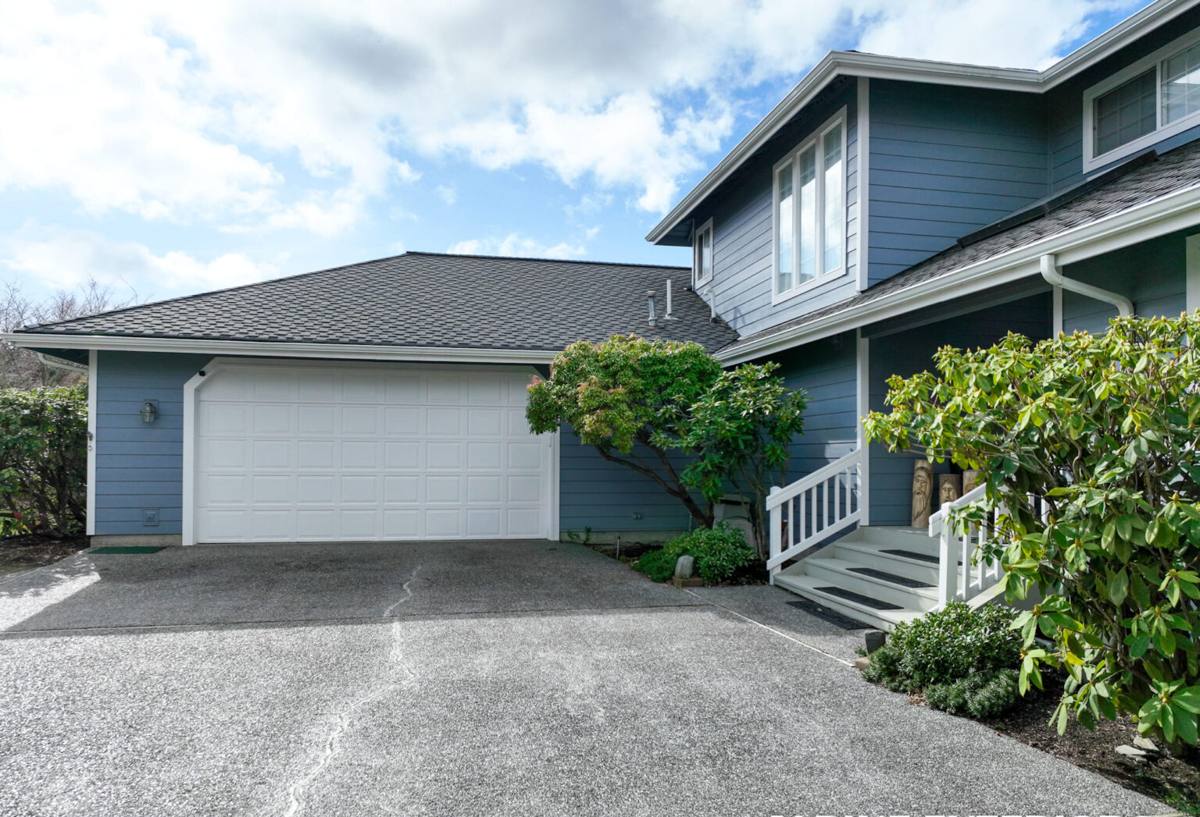
What Blaine's Climate Does to a Deck
Salt Air and Metal Fatigue
Properties close to the water deal with salt spray settling on exposed surfaces, and that includes every screw, joist hanger, post base, and ledger bolt on a deck. Standard zinc-coated fasteners corrode faster near the coast than they do inland, and once a fastener starts rusting, it loses holding strength long before it looks obviously bad. We see this most often at joist hangers and ledger connections — the parts of a deck doing the most structural work but also the hardest to inspect without getting underneath.
Driving Rain and Trapped Moisture
Wind-driven rain off the bay doesn't just fall straight down — it gets pushed sideways into board gaps, under railings, and against house walls where decks attach. When water can't shed and dry between storms, it soaks into end grain (the most absorbent part of any board) and sits in tight joints where two pieces of wood meet. That's where rot starts, and it's often invisible from the top of the deck until the damage is well established underneath.
Moss, Algae, and a Long Wet Season
Whatcom County's shoulder seasons and winters stay damp for extended stretches, and shaded or north-facing decks in Blaine can grow moss and algae almost year-round. Beyond making a deck slippery and unattractive, moss holds moisture against the wood surface constantly, which speeds up surface decay even on boards that are otherwise sound.
Signs a Blaine Deck Needs Repair, Not Just Cleaning
- Boards that feel spongy, springy, or noticeably softer than the boards around them
- Rust streaks running down from screw heads or metal connectors
- Gaps opening up at the ledger board where the deck meets the house
- Railing posts that wobble or have visible movement at the base
- Stairs that feel less solid than they used to, especially near the stringers
- Persistent moss or algae that comes back within weeks of cleaning
- Discoloration or dark staining around fasteners or board ends
- A noticeable increase in splinters, which often means the surface finish has failed
Any one of these on its own might be minor. Several at once, or any sign near the ledger board or support posts, usually means it's time for a proper inspection rather than another round of pressure washing.
What a Correct Deck Repair Actually Involves
A repair that holds up in this climate starts with finding out how far the damage goes, not just fixing what's visible from the top. We check the framing underneath — joists, beams, and posts — along with the ledger connection to the house, since that's the single most important structural joint on most decks and the one most likely to be hiding water damage. We probe suspect boards with an awl to find soft wood rather than guessing by appearance alone, since surface staining doesn't always match how deep the rot goes.
Structural Repairs Come First
If joists, beams, ledger flashing, or posts are compromised, those get addressed before anything cosmetic. Replacing deck boards over a weakened frame just hides the real problem and shortens the life of the new boards too.
Hardware Gets Upgraded, Not Just Replaced
Given the salt exposure in Blaine, we don't replace corroded fasteners and connectors with the same standard hardware that failed in the first place. Stainless steel or hot-dip galvanized hardware rated for coastal and treated-lumber use costs more up front but holds up dramatically longer near the water — that's the honest trade-off, and it's the right one for this location.
Drainage and Flashing Get Corrected
A lot of deck failures near the coast trace back to water that had nowhere to go — missing or improperly lapped ledger flashing, board gaps too tight to drain, or grading that pools water against posts. Part of a correct repair is fixing the path water takes off the deck, not just replacing the wood it damaged.
Board Replacement Matches the Existing Deck
Whether the deck is cedar, treated lumber, or composite, we match new boards to the existing material and fastening pattern so repairs blend in rather than looking patched. For sections seeing heavy moisture or shade, we'll talk through whether composite decking makes sense as a repair material even if the rest of the deck is wood — sometimes mixing materials strategically is the more honest recommendation than a like-for-like replacement that will just have the same moss problem again.
Repair vs. Replacement: How We Decide
| Factor | Points Toward Repair | Points Toward Replacement |
|---|---|---|
| Framing condition | Joists and beams test solid, damage is localized | Rot found in multiple structural members |
| Ledger connection | Ledger and flashing are sound | Ledger board is soft or improperly flashed |
| Age of deck | Under 15-20 years, built to code | Older deck with outdated fastening or no permit history |
| Extent of damage | Isolated boards or connectors | Damage spread across most of the deck surface |
| Post and footing condition | Posts and footings are stable and properly set | Footings undersized, posts not anchored to code |
Most of the decks we look at in Blaine fall somewhere in between — solid framing but failing surface boards and hardware, which is a straightforward repair. We'll tell you plainly if a deck has crossed the line into needing a full rebuild rather than stringing out a repair that won't hold.
Our Repair Process
- On-site assessment — We inspect the deck top to bottom, including underneath, and check moisture levels in boards and framing that look questionable.
- Honest scope and estimate — You get a clear breakdown of what's structural, what's cosmetic, and what we recommend versus what's optional.
- Structural repairs — Framing, ledger, and post issues get fixed first, with hardware upgraded to corrosion-resistant materials suited to coastal exposure.
- Surface repairs — Damaged boards, railings, and stair components are replaced and matched to the existing deck.
- Drainage and finish — We correct flashing and drainage issues, then apply or recommend a finish suited to the local moisture and moss conditions.
- Walkthrough — We go over what was done and what maintenance will keep it holding up through the next few wet seasons.
Maintenance That Actually Helps in This Climate
- Clean moss and algae off deck surfaces before they build up a thick layer, ideally each fall before the wet season sets in
- Keep gutters and downspouts clear so runoff isn't dumping extra water onto or near the deck
- Trim back vegetation that keeps deck sections shaded and slow to dry
- Check fastener heads periodically for early rust, especially within the first few feet of the shoreline
- Reseal or refinish wood decking on the schedule the finish manufacturer recommends — coastal exposure often means that schedule should run on the shorter end
- Address small soft spots or loose railings right away rather than waiting for them to spread
Why Hire a Crew That Already Works Blaine
Deck repair looks straightforward until the specific conditions of a site change what "correct" means. A crew that mostly works inland may not think twice about standard fasteners, may not know which sides of a Blaine property take the worst of the wind-driven rain, or may underestimate how fast moss returns on a shaded, water-facing deck. We work this stretch of the Whatcom County coastline regularly, so the hardware, drainage details, and finish recommendations we bring to a Blaine deck are already adjusted for what actually happens to decks here — not a generic checklist.
We also know that homeowners in Blaine are often dealing with a deck as part of a bigger picture — siding, trim, and other exterior elements facing the same salt air and rain exposure. If a deck repair uncovers moisture issues that extend to the house itself, we'll tell you plainly rather than repairing the deck in isolation and leaving a related problem unaddressed.
Get a Straightforward Assessment
If your deck in Blaine is showing soft boards, rusted hardware, stubborn moss, or just doesn't feel as solid as it used to, we're happy to take a look and give you an honest read on what it needs. Use the form below to request a free, no-pressure estimate — we'll walk the deck, explain what we find, and lay out your options plainly.