 Bellingham
 Siding in Sudden Valley: A Different Set of Conditions
Sudden Valley sits in a heavily wooded, lake-adjacent pocket of Whatcom County, and homes here deal with a combination of conditions that a lot of siding products simply aren't built to handle long-term: dense tree canopy that keeps large sections of a house in shade most of the day, driving rain that comes in sideways off Pacific storm systems, and salt-tinged marine air that moves through the broader Bellingham area. Add in a moss season that can stretch for most of the year in the shadiest yards, and you've got an environment that rewards siding materials with real moisture resistance and punishes anything that swells, delaminates, or holds water at the seams.
We install James Hardie fiber cement siding exclusively, and we've worked enough homes in this neighborhood to know exactly where the trouble spots are: north-facing walls under mature trees, ground-level siding near landscaping beds that stay damp, and trim details around windows and eaves where water likes to find a way in. This page walks through what that means for a Sudden Valley siding job specifically — not a generic overview.
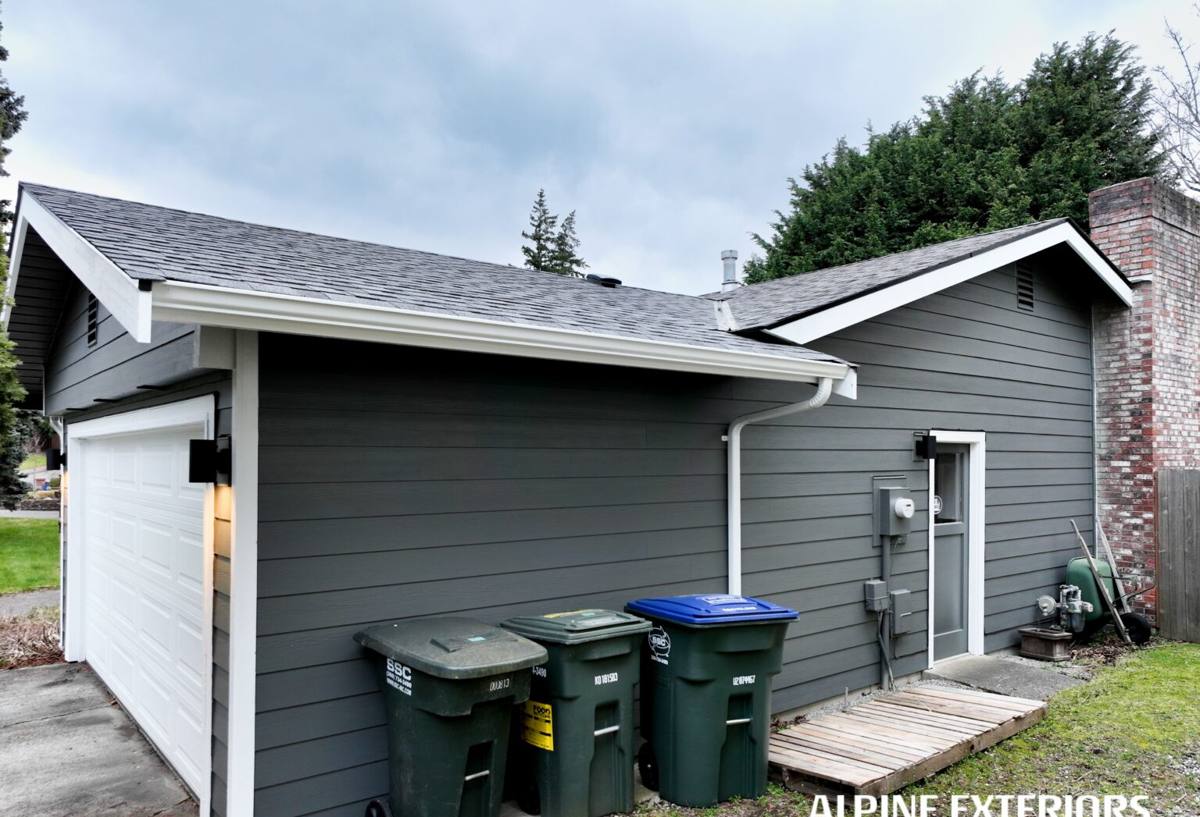
What Shade, Rain, and Moss Do to Siding Over Time
The biggest long-term threat to siding in a community like Sudden Valley isn't any single storm — it's the slow, repeated cycle of a wall getting wet and never fully drying out before the next rain arrives. Under heavy tree cover, that cycle can repeat for weeks at a stretch during the wet months.
Moisture that doesn't leave
Shaded walls dry slower than sun-exposed ones. Materials that absorb even a small amount of moisture at the surface or through cut edges stay damp longer here than they would on an open lot, which accelerates paint failure, swelling, and rot in wood-based products.
Moss and organic growth
Moss needs shade and consistent moisture to establish, and Sudden Valley's tree cover provides both. Once moss and algae take hold on a siding surface, they hold water against the material and can work into seams, joints, and any spot where the factory finish has worn thin.
Wind-driven rain at seams and penetrations
Storms coming off the water tend to push rain horizontally, which stresses the vertical joints, window trim, and butt seams on a siding installation far more than straight-down rain would. A house can look fine from the street and still have water working its way behind the cladding at a poorly flashed seam.
Why James Hardie Holds Up Here
James Hardie fiber cement is engineered specifically around moisture and climate performance, which is the core reason we standardized on it and don't install vinyl, LP SmartSide, or cedar. A few specifics that matter for a shaded, wet property like a Sudden Valley home:
- Non-combustible core — fiber cement doesn't burn, which matters in a wooded community where wildfire risk is a real consideration for insurers and homeowners alike.
- Engineered moisture resistance — Hardie's HZ product lines are formulated and tested for regional climate zones rather than a one-size-fits-all approach, which is relevant in the Pacific Northwest's wet-and-shaded conditions.
- ColorPlus factory finish — a baked-on finish applied under controlled conditions holds up to UV and moisture cycling far better than field-applied paint, and it means fewer repaint cycles over the life of the siding.
- Rigid, dimensionally stable panels — fiber cement doesn't swell and shrink with moisture the way wood-based products do, so seams and fastener points stay tighter over time.
None of that makes a house immune to moss or maintenance — nothing is — but it removes the failure modes we see most often on shaded, wet lots: swollen panel edges, delaminating substrate, and paint that peels within a few years instead of holding for a decade or more.
What a Correct Installation Involves
Most siding problems we get called out to fix aren't a product failure — they're an installation shortcut. On a shaded, wet lot like the ones common in Sudden Valley, the margin for error is smaller, because any mistake gets tested by moisture far more often than it would on a dry, sun-exposed site.
The details that actually matter
- Proper weather-resistive barrier and rain-screen gap behind the siding, so any moisture that does get past the cladding can drain and dry instead of sitting against the sheathing
- Correct flashing at every window, door, and roofline intersection — this is where the majority of hidden leaks originate
- Manufacturer-specified gaps at panel joints and butt seams, properly caulked and sealed rather than tightly butted
- Fasteners driven to Hardie's specification — not overdriven, not underdriven, and placed at the correct blind or face-nail pattern for the product line
- Clearance from grade, decks, and roof lines so panels aren't sitting in a moisture trap at ground level or under a low overhang
Every one of these is a Hardie installation requirement, and skipping any of them can void the manufacturer's warranty — which is part of why we're selective about the crews and process we use.
Our Process for a Sudden Valley Project
- On-site assessment. We walk the property, check existing siding and trim for moisture damage, note shade patterns and drainage issues specific to the lot, and identify any rot or sheathing damage that needs to be addressed before new siding goes up.
- Substrate prep. Any damaged sheathing, framing, or trim gets repaired first. Installing new siding over compromised substrate just hides a problem that will resurface.
- Weather barrier and drainage plane. We install the water-resistive barrier and rain-screen system correctly the first time, since this layer is what protects the house long after the siding itself needs attention.
- Hardie panel installation. Panels, trim, and accessories go up to manufacturer spec — correct fastening, correct gaps, correct flashing integration at every penetration.
- Final detailing and walkthrough. We check caulking, trim lines, and seams, then walk the finished job with the homeowner.
Comparing Options for This Climate
| Factor | James Hardie Fiber Cement | Vinyl Siding | Wood / LP-Style Products |
|---|---|---|---|
| Moisture in shaded, wet conditions | Engineered for regional climate resistance | Doesn't absorb, but can trap moisture behind panels if installed poorly | Prone to swelling and rot at cut edges and seams |
| Moss and algae resistance | Factory finish resists organic staining better than field paint | Can look faded or chalky; moss still adheres to surface | Organic growth accelerates paint and substrate failure |
| Fire resistance | Non-combustible | Combustible, can melt or deform | Combustible |
| Finish longevity | Baked-on ColorPlus finish, long repaint interval | Color can fade; no repainting option if it does | Field-applied paint typically needs attention within a few years |
| Long-term maintenance | Periodic washing; occasional caulk touch-up | Low maintenance but limited repair options if damaged | Regular inspection, painting, and moisture monitoring |
Signs Your Sudden Valley Home May Need New Siding
- Persistent moss or dark staining that returns quickly after cleaning
- Soft or spongy spots when you press on siding near the ground or under eaves
- Paint that's peeling, bubbling, or chalking faster than expected
- Visible gaps, warping, or separation at panel seams and corners
- Rising heating costs or drafts that suggest the wall assembly behind the siding has been compromised
- Siding that's more than 20-25 years old and has never had a full moisture inspection
Why It Matters to Hire a Crew That Knows This Neighborhood
Sudden Valley isn't a typical flat suburban lot — narrow, wooded access roads, sloped driveways, and lots with significant tree cover all affect how a siding project gets staged and executed. A crew that's already worked in the area knows how to plan material delivery, scaffolding, and debris removal around those conditions instead of learning it on your job. That local familiarity also extends to understanding which sides of a house typically need the most attention to moisture and moss in this specific setting, so the assessment and prep work start from an informed baseline rather than guesswork.
Because we only install James Hardie products, our crews are also deeply practiced in the specific installation requirements that product line demands — we're not switching techniques between three or four different siding brands on different jobs.
Get a Free Estimate
If you're noticing moss buildup, soft spots, or aging siding on a Sudden Valley home, we're happy to come take a look. There's no pressure and no obligation — just a straightforward assessment of what your siding needs and what a correct James Hardie installation would involve for your specific property. Use the form below to request a free estimate.