 Bellingham
 Fiber Cement Siding Built for the Columbia Neighborhood
Homes in Columbia deal with a specific combination of weather that a lot of siding products simply weren't designed for. You're close enough to Bellingham Bay and the Salish Sea to get salt-laden air working on your exterior year-round, you're in a part of Whatcom County that sees long stretches of driving rain off the water, and the tree cover and damp shoulder seasons mean moss and algae get a real foothold on north- and west-facing walls for months at a time. Add it up over a decade or two and you get exactly the failure patterns we see most often on service calls in this part of Bellingham: swollen panel edges, peeling paint, soft trim, and dark green streaking that keeps coming back no matter how many times it's pressure-washed off.
This page is specifically about fiber cement siding for Columbia homes — not a general overview of siding options. If you're weighing a re-side or building new in this neighborhood, here's what actually matters, what a correct installation looks like, and how we approach the job.
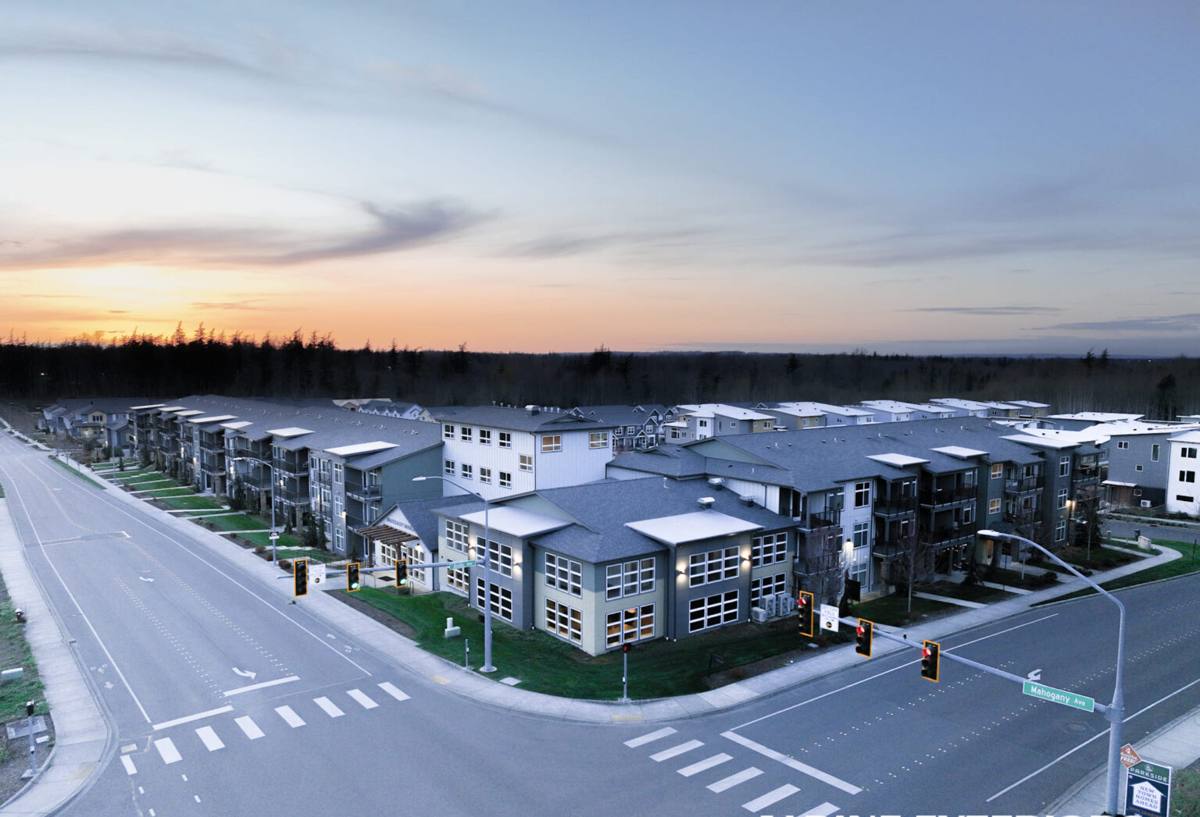
Why Fiber Cement Is the Right Call for This Climate
We install James Hardie fiber cement siding exclusively — not vinyl, not LP SmartSide, not cedar, not any of the other common alternatives. That's not a marketing position, it's a maintenance-and-longevity decision based on what actually holds up in Whatcom County's wet, salt-air climate.
Fiber cement is a mix of Portland cement, sand, and cellulose fibers, pressed and cured into dense, dimensionally stable panels and boards. It doesn't absorb moisture the way wood does, so it doesn't swell, cup, or rot from repeated wetting and drying cycles the way solid wood or engineered wood siding can. It's also non-combustible, which matters more each year as wildfire smoke seasons stretch later into the Pacific Northwest calendar. And unlike vinyl, it doesn't get brittle and crack in cold snaps or warp and bow when a wall gets direct afternoon sun.
None of that means fiber cement is maintenance-free. It still needs correct flashing, proper clearances, and a factory finish that can shed water and resist mildew — which is exactly where installation quality separates a siding job that lasts 30-plus years from one that starts showing problems in five.
What Salt Air and Driving Rain Actually Do to Siding
Salt air accelerates corrosion on any exposed metal fasteners, flashing, and trim — which is why fastener choice and flashing details matter more here than in a drier inland climate. Wind-driven rain, especially on west- and southwest-facing walls that catch storms coming off the water, pushes moisture into any gap, seam, or fastener hole that isn't properly sealed or lapped. Over time, water that gets behind the siding — rather than water that hits the face of it — is what causes rot in the sheathing and framing underneath. A siding material can be excellent and still fail if it's installed without the right weather-resistive barrier, flashing, and clearances behind it.
James Hardie's HZ5 Line: Engineered for This Exact Region
James Hardie builds region-specific formulations of its siding, and the Pacific Northwest — including Whatcom County — falls into their HZ5 climate zone. HZ5 products are engineered specifically for cold, wet, high-moisture climates like ours, with a formulation designed to resist moisture damage and hold up through repeated freeze-thaw and wet-dry cycling. That's a meaningfully different product than the versions of Hardie siding sold in hot, dry climates, and it's part of why we specify HZ5 boards and panels on every job in this area rather than a generic, one-size-fits-all product.
On top of the base material, Hardie's ColorPlus finish is baked on in a factory-controlled process rather than field-applied. That matters in a rainy climate because field-applied paint is far more sensitive to humidity and temperature at the time of application — get it wrong and you get poor adhesion and early peeling. A factory finish also comes with a longer, more consistent warranty on the finish itself, not just the substrate.
What a Correct Fiber Cement Installation Involves
Most of the siding failures we get called out to inspect in Bellingham neighborhoods aren't material failures — they're installation shortcuts. Fiber cement is forgiving of the weather but not forgiving of bad technique. Here's what we hold every job to, whether it's a full tear-off or new construction.
Weather-Resistive Barrier and Flashing First
Before a single piece of siding goes up, the wall needs a continuous, properly lapped weather-resistive barrier, correctly integrated flashing at every window, door, and penetration, and drainage capability behind the siding — usually a rainscreen gap — so any moisture that does get past the cladding can drain and dry instead of sitting against the sheathing.
Clearances That Actually Get Followed
James Hardie specifies minimum clearances from grade, roof lines, decks, and other siding transitions. On a lot of older Bellingham homes we re-side, these clearances were ignored the first time around, which is exactly where we find rot when we pull the old siding off. We correct these clearances as part of the job, not just replace boards in the same failed configuration.
Fastening and Joint Treatment
Fasteners need to be corrosion-resistant and driven correctly — not overdriven, which cracks the board's edge and creates a moisture entry point. Butt joints get flashed or caulked per manufacturer spec with a sealant rated for the movement and weather this climate produces, not just whatever caulk is on the truck.
Finish Integrity
Cut edges on ColorPlus boards get factory-matched touch-up sealant so the cement substrate underneath isn't left exposed to water. This is a small step that gets skipped constantly on rushed jobs, and it's one of the fastest ways a supposedly maintenance-free product starts absorbing moisture at every cut end.
Our Process, Start to Finish
- On-site assessment: We look at your current siding, sheathing condition where accessible, existing flashing, and the specific exposures your home has to wind-driven rain and moss growth before we recommend a scope of work.
- Detailed estimate: You get a clear breakdown of what's being replaced, what siding line and profile is recommended, and why — not a vague lump sum.
- Tear-off and inspection: Once old siding comes off, we inspect the sheathing and framing underneath. Any rot or moisture damage gets addressed before new siding goes up — this is the point where problems that caused the original failure either get fixed or get covered up again, and we don't cover them up.
- Weather barrier and flashing installation: Barrier, flashing, and rainscreen components go in to manufacturer spec, correctly lapped from the bottom up.
- Hardie installation: HZ5 boards or panels installed to spec — clearances, fastening pattern, joint treatment, and cut-edge sealing all handled as standard practice, not an upsell.
- Final walkthrough: We go over the finished job with you before calling it done.
How Fiber Cement Compares to Other Siding Options in This Climate
| Material | Moisture Behavior in Wet PNW Climate | Salt Air / Coastal Durability | Typical Maintenance |
|---|---|---|---|
| James Hardie Fiber Cement (HZ5) | Dimensionally stable, resists swelling and rot | Strong; non-combustible cement substrate doesn't corrode | Occasional wash; factory finish holds color |
| Vinyl | Doesn't rot, but can warp/bow with heat and cold-crack in freezes | Fair; hardware and seams can degrade faster near salt air | Low, but fading and brittleness increase over time |
| LP SmartSide (engineered wood) | Wood-based core is more moisture-sensitive at cut edges and seams | Moderate; more installation-sensitive in high-moisture zones | Regular inspection of seams and edges recommended |
| Cedar / Primed Spruce | Absorbs moisture, prone to cupping, checking, and rot over time | Weaker without frequent refinishing | Frequent repainting/staining and moisture monitoring |
This isn't a knock on every other product on this list — vinyl and engineered wood siding both have legitimate uses and reasonable installers behind them. It's why we standardized on Hardie fiber cement for the specific conditions Columbia and the rest of Whatcom County throw at a house.
What to Watch For on Your Current Siding
If you're not sure whether your siding needs attention yet, these are the signs we look for first on a Columbia-area home:
- Dark green or black streaking on north- and west-facing walls that returns quickly after cleaning
- Soft or spongy spots when you press on siding near the bottom courses or around window trim
- Paint that's peeling, bubbling, or chalking rather than just fading evenly
- Visible gaps or separation at butt joints and around window and door trim
- Warping, bowing, or panels that no longer sit flat against the wall
- Musty smell or visible staining on interior walls that share an exterior wall with problem siding
Cost Factors for a Columbia Fiber Cement Project
We don't publish blanket per-square-foot pricing because it varies with the scope of your specific project, but these are the main factors that drive cost on jobs in this area:
| Factor | Why It Matters |
|---|---|
| Tear-off vs. new construction | Removing and disposing of old siding, plus any sheathing repair, adds labor beyond a bare-wall install |
| Sheathing/framing condition | Rot found during tear-off has to be repaired before new siding goes on — this is common on older re-side jobs in this neighborhood |
| Siding profile and trim complexity | Lap siding, panel systems, and detailed trim packages have different material and labor requirements |
| Home size, stories, and wall complexity | Cut-heavy walls with lots of windows, dormers, or angles take more time than large flat wall runs |
| Site access | Tight lots, steep grades, or limited staging area can affect equipment and labor time |
Why a Crew That Already Works in Columbia Matters
Installation quality is the single biggest variable in how long fiber cement siding actually lasts — more than the product line, more than the color. A crew that regularly works Bellingham's coastal, high-moisture neighborhoods already knows to over-build flashing details on west-facing walls, already knows which clearance shortcuts show up as rot five years later on homes of a certain age in this area, and already understands how aggressively moss and algae take hold here compared to a drier inland job. That local pattern recognition is what keeps a fiber cement installation from becoming just another siding job that looks fine for a few years and then starts showing the same problems as what it replaced.
If you're considering a re-side or new siding install in Columbia, we're happy to take a look at your home, walk you through what we find, and put together a straightforward estimate — no pressure, no upsell script. The form below gets you started.