 Bellingham
 Decks in Columbia Take a Different Kind of Beating
Columbia sits close enough to Bellingham Bay that salt-laden air is a fact of life, not an occasional nuisance. Combine that with Whatcom County's long wet season — months of low sun angle, driving rain off the water, and shade from mature evergreens — and you get a deck-aging recipe that's harder on structures than most manufacturer warranties assume. Metal fasteners corrode faster near the water. Wood surfaces that don't get real sun exposure stay damp for days after a storm. Moss and algae take hold on north-facing and shaded sections and never fully let go from October through May.
None of that means a deck in Columbia can't last decades. It means the replacement has to account for local conditions from the framing up, not just swap old boards for new ones on top of a structure that was never built for this climate to begin with.
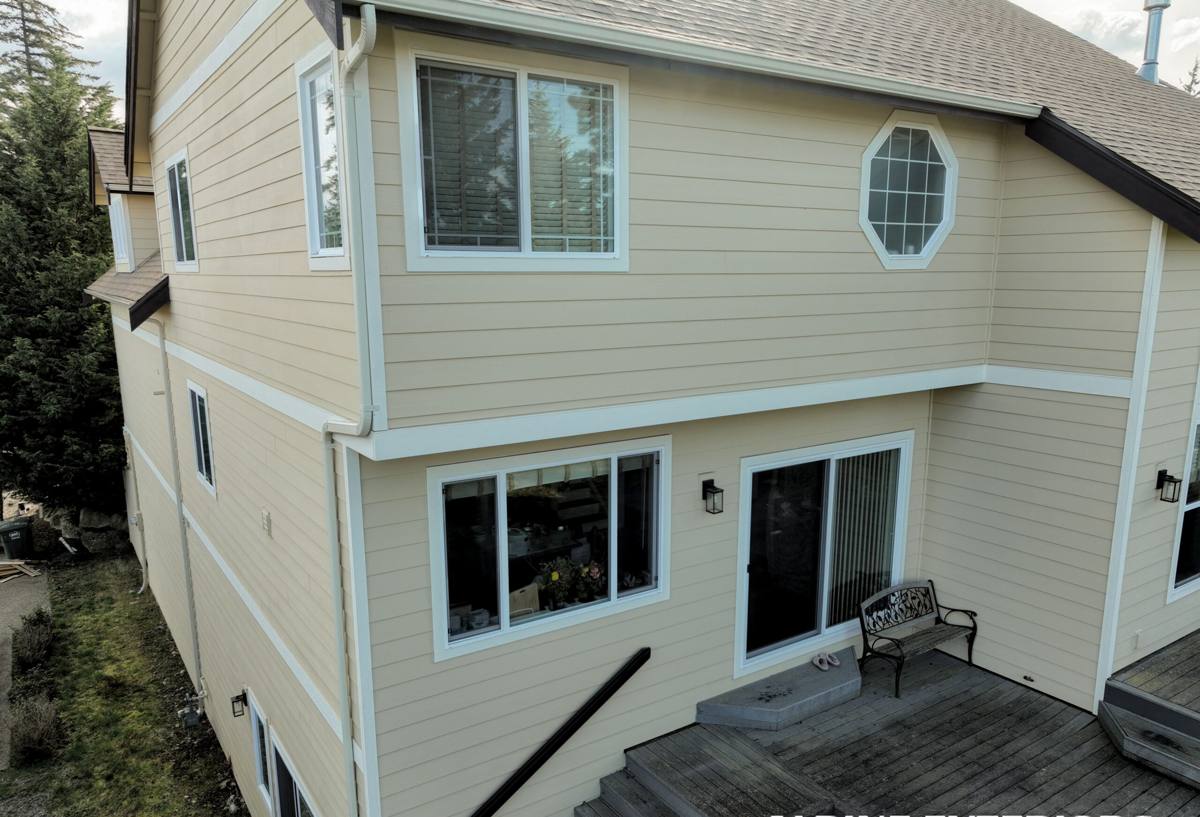
How to Tell a Deck Needs Replacing, Not Just Repairing
Homeowners often call us assuming they need a few boards swapped when the real issue is underneath. A few honest signs that you're past the repair stage:
- Soft, spongy, or spongey-feeling decking in multiple spots, not just one board
- Ledger board attached to the house shows staining, soft wood, or gaps — this is the connection that matters most for safety
- Joists or beams show soft spots when probed with a screwdriver, especially where they meet the ground or a post
- Persistent moss or black-green staining that comes back within weeks of cleaning
- Railings that flex or posts that wiggle at the base
- The deck was built before current guardrail and attachment code requirements and has never been brought up to standard
Surface graying or a few loose screws is normal wear and usually fixable. Structural softness, especially at the ledger or posts, is the line where repair stops making sense and replacement becomes the responsible call.
Why the Ledger Board Matters So Much Here
The ledger connects the deck to the house, and it's the single most common failure point on decks in wetter climates. Water that runs down siding, collects behind old flashing, or wicks into end-grain at the ledger connection will rot that board from the inside while the surface still looks fine. On a lot of older Columbia homes, we find ledgers that were never properly flashed at all — a corner that got cut decades ago and is now catching up with the house.
What a Correct Deck Replacement Actually Involves
A deck replacement done right in this climate isn't just decking boards. It's a full rebuild of everything that affects how water moves through and off the structure.
Structure
New or resized joists and beams sized for the actual span and load, pressure-treated or naturally durable species rated for ground or near-ground contact where applicable, and hardware — joist hangers, structural screws, post bases — rated for the moisture exposure a coastal Whatcom County deck sees, not generic interior-grade fasteners.
Ledger and Flashing
Proper self-adhered flashing membrane behind and over the ledger board, integrated with the house's existing water-resistive barrier so water is directed out and away from the wall assembly rather than trapped against it.
Footings and Posts
Footings sized and set to current code depth, post bases that keep wood off concrete and off standing water, and post-to-beam connections that resist both vertical load and lateral movement.
Decking Surface and Drainage
Correct board spacing for drainage and seasonal movement, fastener patterns that won't split boards or trap water, and attention to any low spots where water and debris — including the moss-feeding organic buildup common under tree cover — can collect.
Railings and Guardrails
Guardrail height, baluster spacing, and post attachment brought up to current code, which matters both for safety and for resale — an out-of-code railing is a common inspection flag when a home sells.
Choosing a Decking Material for This Climate
There's no universally "best" decking material — there's a best fit for your budget, how much upkeep you're willing to do, and how much shade and moisture your particular deck sees. Here's how the common options actually compare for a Columbia-area yard:
| Material | Upfront Cost | Maintenance | How It Handles Local Moisture |
|---|---|---|---|
| Pressure-treated wood | Lowest | Annual cleaning, periodic staining/sealing | Can hold moisture and grow moss in shaded areas if not maintained; needs consistent upkeep to last |
| Cedar | Moderate | Regular sealing to hold color and resist graying | Naturally rot-resistant but still needs sealing here to shed water and slow moss growth |
| Composite decking | Higher | Occasional washing, no staining or sealing | Won't rot, but uncapped or older composite formulations can still grow surface moss in deep shade |
| Capped composite / PVC | Highest | Lowest — mostly rinsing | Best resistance to moss and moisture staining; solid-cell PVC in particular sheds water well and doesn't absorb moisture |
We won't push a premium material where it isn't the right fit — if a deck gets good sun and you're comfortable with a re-stain every couple of years, a well-maintained wood deck can be perfectly durable here. Where a deck sits in heavy tree shade or gets direct salt-air exposure, we'll say plainly that a capped composite is going to save you maintenance headaches down the road, and explain why rather than just recommend the more expensive option by default.
How We Approach a Deck Replacement Project
- On-site assessment — we check the existing structure, ledger condition, footings, and drainage before quoting anything, since what's underneath drives the scope more than the visible decking does.
- Honest scope and estimate — a clear breakdown of what's structural (non-negotiable) versus what's a material or design choice, so you know where your budget is actually going.
- Permit handling — most deck replacements above a certain height or footprint require a permit through the local jurisdiction; we handle that paperwork rather than leaving it on you.
- Demo and structural rebuild — full removal of failed decking and framing, correcting any flashing or drainage issues found along the way rather than covering them back up.
- Decking, railing, and finish work — installed to the spacing and fastening standards appropriate to the material chosen.
- Final walkthrough — we go over the finished deck with you, including basic care guidance specific to the material installed.
Permits and Code in Whatcom County
Deck replacements involving structural changes — new footings, a larger footprint, or a rebuilt ledger connection — typically require a building permit locally. Guardrail height and baluster spacing requirements also apply to any deck replacement, even if you're keeping the same footprint. We factor permit timing into your project schedule up front so it isn't a surprise mid-project.
Why Hire a Crew That Already Works in Columbia
A deck built with generic assumptions — the kind you'd use for a dry inland climate — tends to show problems within a few years here: fastener corrosion, a ledger that was flashed but not flashed correctly for how water actually runs off this style of siding, or decking spacing that doesn't account for how much this region's rain volume actually moves through a structure. Working regularly in and around Bellingham means we're not guessing at footing depths, flashing details, or which fastener grades hold up near the bay — we're applying what we've already confirmed works on homes with the same exposure as yours.
It also means faster, more accurate estimates. We're not learning the area's soil, drainage patterns, or typical house-siding details on your project — we already know what to look for.
Keeping a New Deck in Good Shape
Whatever material you choose, a little seasonal attention goes a long way in this climate:
- Sweep debris off the deck regularly in fall — wet leaves left sitting are the fastest path to moss and staining
- Rinse or lightly scrub shaded areas a couple of times a year where moss is most likely to establish
- Check that gaps between boards stay clear so water keeps draining rather than pooling
- Re-seal or re-stain wood decking on the schedule your material calls for — don't wait until it's visibly gray and dry
- Have the structure looked at every few years, especially the ledger connection and post bases, since those problems develop out of sight
Get a Straight Answer About Your Deck
If you're not sure whether your deck needs a full replacement or just targeted repairs, we're happy to take a look and give you an honest read — no pressure, no upsell. Reach out for a free estimate and we'll walk your property, check the parts that actually matter, and lay out your options plainly.