 Bellingham
 Why Blaine's Climate Is Hard on Siding
Blaine sits right at the water's edge of Whatcom County, which means homes here take on a combination of weather stress that inland siding jobs never see. Salt-laden air off the Strait of Georgia works its way into seams, fasteners, and coatings. Wind-driven rain off the water doesn't just fall straight down — it gets pushed sideways into wall assemblies, testing every lap, joint, and piece of flashing on a house. And because this corner of Washington stays cool and damp for a large part of the year, north- and west-facing walls in particular grow moss and algae faster than siding in drier climates ever has to deal with.
None of that is a reason to panic about your siding. It's a reason to be honest about what material and installation approach actually holds up here, instead of installing whatever is cheapest or fastest and hoping for the best.
What Blaine Homes Actually Need From Their Siding
Strip away the marketing and a siding system covering a Blaine home needs to do four things well, year after year:
- Resist moisture absorption at the panel level, not just at the surface finish
- Hold a factory finish that doesn't chalk, fade, or need repainting every few years in salt air
- Shed wind-driven rain through correctly lapped, flashed, and gapped installation — not just rely on the material itself
- Stay dimensionally stable through repeated wet-dry and freeze-thaw cycling without warping, cupping, or splitting
A siding material that only meets one or two of these ends up looking fine for a few years, then falling behind fast — peeling paint, soft spots at the bottom courses, moss staining that won't scrub off, seams that open up and let water behind the cladding.
Why We Install Only James Hardie Fiber Cement
We don't install LP SmartSide, vinyl, Cemplank, Allura, primed spruce, or cedar. That's not because those products have no merit — vinyl is inexpensive and low-maintenance in the right setting, wood has real curb appeal, engineered wood siding installs quickly. But we've standardized this business on James Hardie fiber cement because, for a marine climate like Blaine's, it holds up to the specific combination of salt, moisture, and biological growth better than the alternatives, and it does it with a warranty structure and factory finish we're willing to stand behind.
Fiber cement is made from cement, sand, and cellulose fibers under pressure — it's non-combustible, doesn't rot, doesn't feed insects, and doesn't absorb water the way wood-based products can at cut edges and seams. Hardie's ColorPlus finish is baked on at the factory in multiple coats, which is a meaningfully different process than field-applied paint and is a big part of why the color holds up against salt air and UV exposure without the five-to-seven-year repaint cycle that wood and some engineered products need on the coast.
How Hardie Compares to What We Don't Install
| Material | Moisture behavior | Finish durability in salt air | Maintenance burden |
|---|---|---|---|
| James Hardie fiber cement | Does not absorb and swell; engineered for wet climates | Factory ColorPlus finish, long-lasting | Low — occasional wash |
| Vinyl siding | Doesn't absorb, but can warp/buckle in heat and impact-crack in cold | Color molded in but fades over time; can't be repainted easily | Low, but limited repair options when damaged |
| LP SmartSide / engineered wood | Wood-strand core; vulnerable at cut edges and unsealed seams | Field or factory finish, shorter repaint interval | Moderate — edge sealing and caulk maintenance matter |
| Cedar / primed spruce | Absorbs moisture readily; prone to cupping and checking | Needs repainting or restaining every few years | High — regular refinishing and moisture monitoring |
The Hardie System We Use on Blaine Homes
James Hardie makes climate-specific product lines, and for the Pacific Northwest we spec their HZ5 formulation, which is engineered for regions with significant moisture and freeze-thaw cycling rather than the HZ10 line built for hot, dry climates. That distinction matters more than most homeowners realize — installing the wrong regional formulation is one of the quieter ways a fiber cement job underperforms.
Depending on the home and the homeowner's preference, that typically means:
- HardiePlank lap siding — the most common choice for Blaine homes, available in several exposure widths and textures
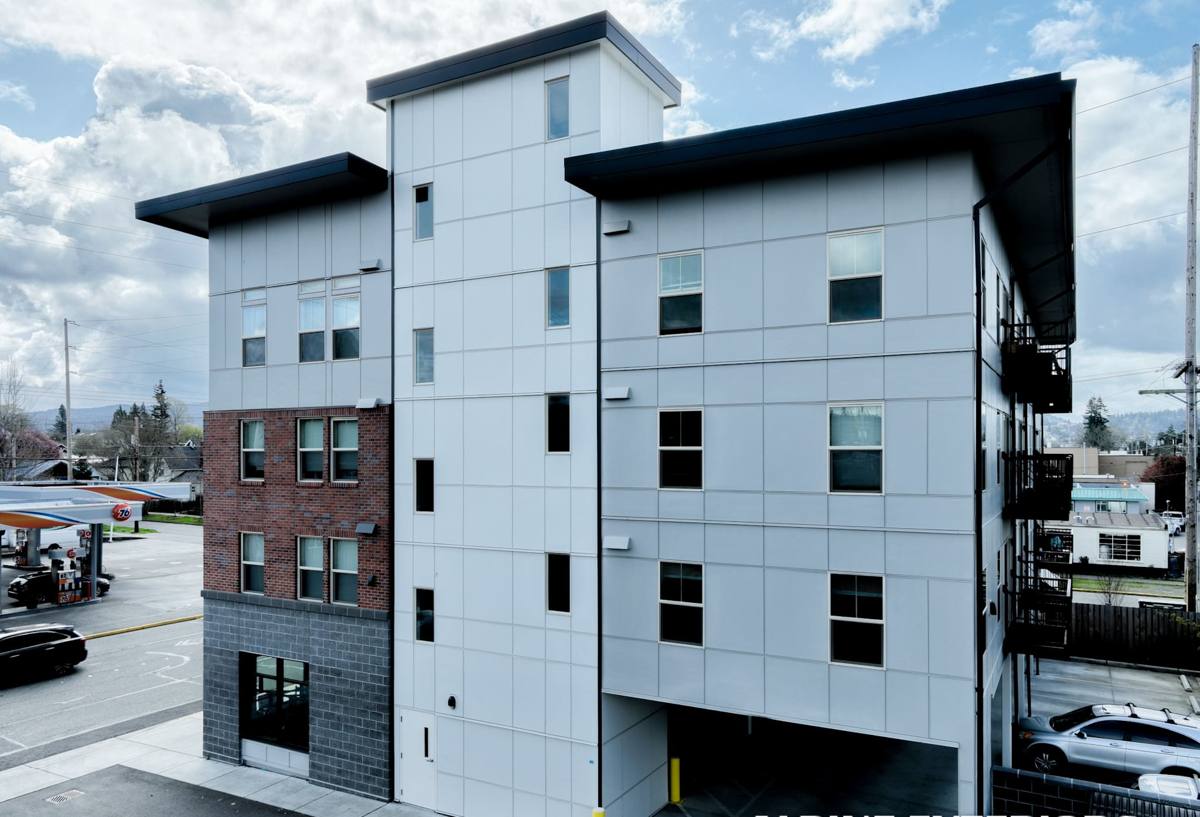
- HardiePanel vertical siding — often used as an accent on gables or modern-style homes
- HardieTrim — matched trim boards around windows, doors, and corners so the whole envelope is one consistent, non-combustible system
All of it comes with ColorPlus factory finish in a range of colors engineered to hold up outdoors, backed by Hardie's product warranty when installed to their specifications — which is the other half of getting this right.
What a Correct Installation Involves in a Marine Climate
Fiber cement siding is only as good as the installation behind it. In a location like Blaine, where wind-driven rain is a regular event rather than an occasional storm, the details that get skipped on a rushed job are exactly the ones that cause problems two or three winters later. A correct install includes:
Weather Barrier and Flashing
A continuous, properly lapped weather-resistive barrier behind the siding, with flashing integrated at every window, door, and horizontal trim transition so water is directed out and away from the wall assembly rather than trapped behind it.
Clearances and Gaps
Hardie's specifications call for minimum clearances from grade, roofing, and decks, plus gaps at panel joints and trim that allow the material to move seasonally without cracking caulk or trapping moisture. Skipping these clearances is one of the most common causes of premature bottom-course damage on coastal homes.
Fastening
Corrosion-resistant fasteners, driven correctly — not overdriven, which crushes the material and voids warranty coverage — and set into framing per Hardie's blind- or face-nailing specifications for the specific product line being installed.
Caulking and Sealants
Sealant only where Hardie's install guide specifies it, using a product compatible with fiber cement, and left to actually flex — not caulked airtight everywhere, which can trap moisture instead of letting the assembly breathe and drain as designed.
Our Process, Start to Finish
- On-site assessment — we look at existing siding condition, moisture history, wall orientation relative to prevailing wind and rain, and any trim or flashing issues underneath
- Product and color selection — walking through HardiePlank profiles, exposure widths, and ColorPlus color options against the home's style
- Written estimate — scope, product line, and timeline laid out plainly before any work starts
- Tear-off and inspection — removing existing siding and checking the sheathing and weather barrier underneath for hidden moisture damage before anything new goes up
- Weather barrier, flashing, and trim installation — the layer that does the real water-management work
- Siding installation to Hardie spec — correct clearances, fastening, and joint treatment
- Final walkthrough — reviewing the finished job with the homeowner before we consider it done
Maintenance: What Ownership Looks Like After Installation
One of the practical advantages of fiber cement in a climate like Blaine's is how little ongoing work it demands compared to wood or engineered wood siding. That said, "low-maintenance" doesn't mean "no maintenance" — a little attention keeps it looking right for decades.
- Rinse the exterior down once or twice a year, focusing on north- and shade-facing walls where moss and algae take hold first
- Keep gutters clean and downspouts directed away from siding to reduce splash-back at the lower courses
- Trim back landscaping that holds moisture against the wall or blocks airflow and sun
- Have caulking and trim joints checked periodically, since sealant is the one component that ages faster than the siding itself
- Address any impact damage or cracked caulk promptly rather than letting moisture find a way behind the panel
Why a Crew That Already Works Blaine Matters
Fiber cement installation isn't exotic, but it is detail-sensitive, and those details change based on where the house sits. A crew that regularly works Whatcom County's coastal properties already has a feel for which walls take the worst of the wind-driven rain, how much clearance really needs to be built in above grade and decking on a waterfront lot, and where moss problems tend to start on a shaded gable. That's the kind of judgment that comes from repetition on this specific coastline, not from a general contractor doing their first fiber cement job of the year.
It also matters for warranty follow-through. James Hardie's product warranty depends on installation matching their specifications — a crew that installs Hardie routinely knows those specs cold, rather than looking them up mid-job.
What Affects the Cost of a Blaine Siding Project
| Factor | Why it matters |
|---|---|
| Home size and wall complexity | More corners, gables, and trim detail mean more labor and cut waste |
| Existing siding removal | Tear-off, disposal, and any sheathing repair add time before new siding goes up |
| Product line and profile | Plank width, texture, and trim package all affect material cost |
| Color | Standard ColorPlus colors versus custom-order options |
| Access and site conditions | Waterfront lots, steep grades, or tight setbacks can affect scaffolding and staging |
We don't quote a price without seeing the house — anyone who does hasn't actually looked at what your walls need. What we can tell you upfront is that Hardie fiber cement typically costs more at installation than vinyl but less over the life of the siding than wood or engineered wood once you factor in repainting and repair.
A Quick Checklist Before You Choose a Contractor
- Do they install James Hardie specifically, or a mix of products they'll sell you on price alone?
- Can they explain why HZ5 rather than HZ10 formulation matters for this region?
- Will they show you the flashing and weather-barrier plan, not just the finish siding?
- Do they have experience with coastal Whatcom County homes specifically?
- Is the estimate written, with product line and scope spelled out?
If your Blaine home's siding is showing its age — fading paint, soft spots, moss that won't quit, or drafts that weren't there before — we'll come take a look and give you a straight assessment, no pressure and no obligation. Use the form below to request a free estimate.