 Bellingham
 Why Birchwood Roofs Wear Differently Than Roofs Inland
Birchwood sits close enough to the water and the marine weather patterns that move through Whatcom County that its roofs take a different kind of beating than a roof forty miles inland. Salt-laden air corrodes exposed metal faster, driving rain finds every weak seam in flashing and underlayment, and the long stretch of cool, wet months between fall and spring gives moss and algae months to get established before a homeowner even notices. None of this means Birchwood needs exotic materials. It means the installation details that get skipped on a rushed job — proper underlayment, correctly lapped flashing, adequate attic ventilation — matter more here than they would in a dry climate, because there's less margin for error before a small gap turns into a leak.
An asphalt shingle roof done right for this area is not fundamentally different from a well-built roof anywhere. It's the same roof built with the assumption that it will be rained on for days at a stretch, several times a year, for its entire service life, and that moss spores will land on it every single season whether the owner wants them to or not.
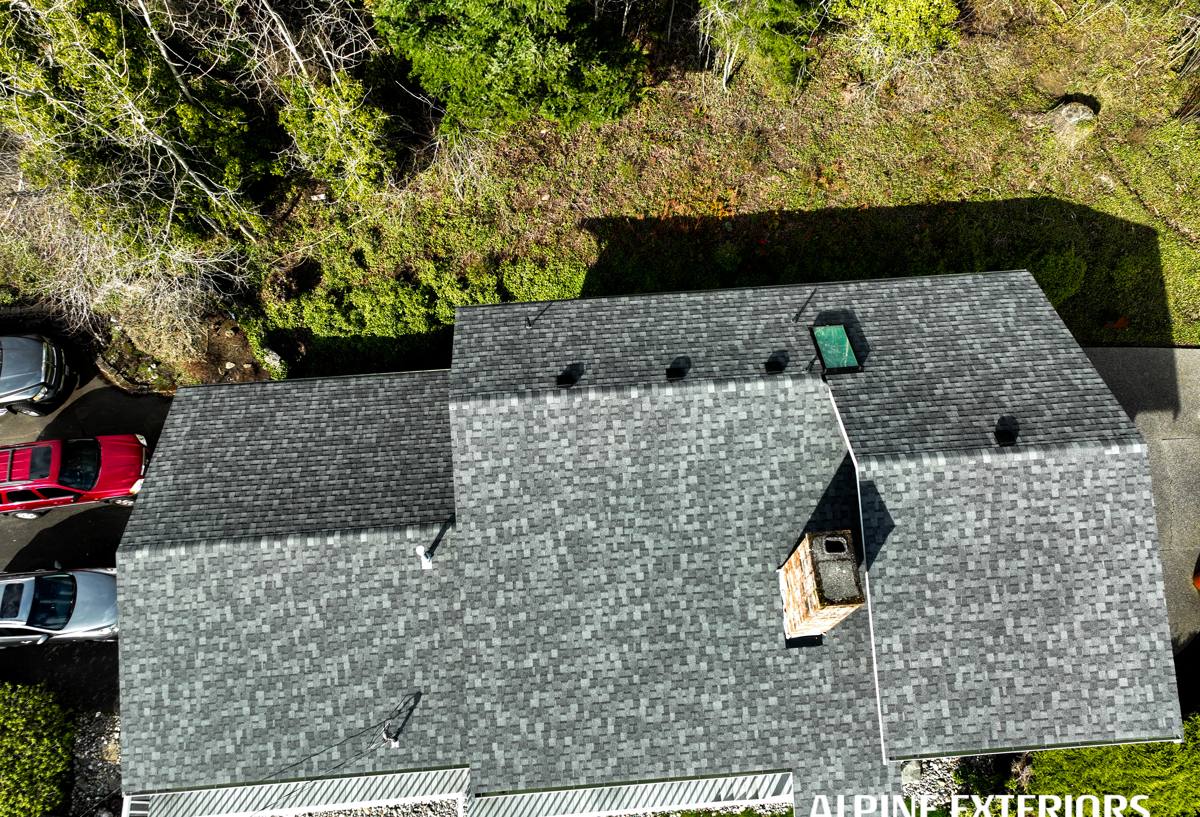
Signs a Birchwood Roof Is Starting to Fall Behind
Most asphalt shingle roofs fail slowly, not all at once. In a wet climate, the early signs are easy to miss because they look cosmetic before they become structural. Homeowners in this area should watch for:
- Dark streaking or green-black patches on north-facing slopes — early algae growth, not just dirt
- Moss clumps at shingle edges or in valleys, especially where tree cover keeps a section shaded and damp longer than the rest of the roof
- Granules collecting in gutters or at downspout outlets, a sign shingles are losing their protective surface
- Curling or lifted shingle edges, which let wind-driven rain get underneath instead of shedding over the top
- Soft or discolored ceiling spots after a heavy rain event, even if they dry out and disappear between storms
- Rust streaks below metal flashing or vent boots, indicating the metal is corroding faster than expected
Any one of these on its own might be minor. Two or three together, especially combined with a roof that's already past the middle of its expected lifespan, is usually a sign it's worth having someone look at the whole system rather than patching the symptom.
What a Correct Asphalt Shingle Installation Actually Involves
Tear-Off and Deck Inspection
A re-roof done properly starts with removing the old roofing down to the deck, not layering over it. That's the only way to actually see the plywood or OSB underneath, check for soft or delaminated spots from long-term moisture, and confirm the deck is fastened well enough to hold new shingles securely in wind. Skipping this step to save time hides problems that will resurface, often as a leak, well before the new shingles are due for replacement.
Underlayment
In a climate where the roof deck can stay damp for days after a storm, the underlayment layer is doing more work than people assume. A synthetic underlayment with a proper self-adhered ice-and-water barrier at eaves, valleys, and around penetrations gives the roof a second line of defense if wind-driven rain ever gets past the shingles themselves — which, over enough years and enough storms, it eventually will at some point on any roof.
Flashing
Flashing around chimneys, skylights, sidewalls, and vent pipes is where most roof leaks in this region actually originate — not out in the open field of shingles. Correct flashing means new metal, properly lapped so water is always directed over the layer below it rather than into a seam, and step flashing woven into the shingle courses at every wall intersection rather than a bead of caulk standing in for proper metalwork. Caulk is a maintenance item, not a substitute for flashing.
Nailing and Shingle Layout
Manufacturer nailing patterns exist for a reason, and in a wind-and-rain climate, hitting the nailing zone correctly on every shingle is what keeps them locked down through winter storms instead of lifting at the edges. Proper offset between courses also matters more here, since a poorly staggered layout creates channels that funnel water sideways instead of straight down.
Ventilation
Balanced intake and exhaust ventilation keeps the attic space close to outdoor temperature and moisture levels. Without it, warm moist air from the living space condenses against the cold underside of the roof deck all winter, which rots sheathing from the inside and has nothing to do with the shingles themselves — it can undermine even a brand-new roof if the attic underneath isn't breathing properly.
Choosing the Right Shingle for a Marine Climate
All asphalt shingles are not built for the same conditions, and the differences matter more in a wet, moss-prone area than they do somewhere dry. The table below reflects our professional standard for what we'll install and why, not a claim that lower-tier products are unusable everywhere — just that they carry more maintenance burden in this specific climate.
| Shingle Type | Typical Lifespan | Performance in Birchwood's Climate |
|---|---|---|
| 3-tab shingles | 15–20 years | Lower wind rating and thinner profile; algae resistance and impact resistance are usually minimal unless specifically upgraded |
| Architectural / laminate shingles | 25–30 years | Heavier, better wind and water resistance, widely available with algae-resistant granules — our standard recommendation for this area |
| Impact-resistant / premium laminate | 30+ years | Best option where wind exposure or falling debris from mature trees is a concern; higher upfront cost, often better warranty terms |
For most Birchwood homes we steer clients toward a laminate shingle with algae-resistant granules built in, since the granule treatment slows the black streaking that shows up on north-facing and shaded slopes far faster here than it would in a drier region. It's not a moss cure, but it buys meaningful time between cleanings.
Cost Factors for a Birchwood Roofing Project
Every roof is priced from its own specifics, so exact numbers aren't useful without seeing the job. What consistently moves the price up or down is more predictable:
| Factor | Why It Matters |
|---|---|
| Roof pitch and access | Steeper roofs and limited access for equipment add labor time and safety measures |
| Number of layers to remove | Tearing off two or three layers of old roofing costs more than a single-layer tear-off |
| Deck condition | Rotted or soft sheathing found during tear-off needs replacement before new shingles go down |
| Roof complexity | Valleys, dormers, skylights, and multiple roof planes each add flashing and labor time |
| Shingle tier chosen | 3-tab, standard laminate, and premium impact-rated products carry different material costs |
| Ventilation upgrades needed | Adding intake or exhaust vents where the existing system is inadequate is often worth doing during a re-roof |
We walk every one of these through with the homeowner before any work starts, so the estimate reflects the actual roof rather than a generic square-footage guess.
How Our Process Works
- On-site inspection — we walk the roof and attic, not just the ground-level view, and document current condition, ventilation, and any problem areas
- Written estimate — a clear breakdown of materials, scope, and price, with options if more than one shingle tier makes sense for the home
- Scheduling around weather — in this climate, timing a tear-off to avoid leaving a deck exposed overnight matters, and we plan around the forecast rather than the calendar alone
- Tear-off and deck repair — old roofing removed, deck inspected, any soft sheathing replaced before anything new goes down
- Underlayment, flashing, and shingle installation — done in the sequence and to the nailing pattern the manufacturer specifies, not shortcuts to save a day
- Ventilation check — confirming intake and exhaust are balanced for the attic's size before we consider the job finished
- Cleanup and final walk-through — magnetic sweep for nails, debris removed, and a walk-through so the homeowner sees exactly what was done
Living With Moss: Maintenance That Actually Works
No roof in this part of Washington is moss-proof forever, but the difference between a roof that stays clean for a decade and one that's green within two years usually comes down to a handful of habits rather than luck:
- Keep overhanging branches trimmed back so shaded, damp sections of roof get more sun and airflow
- Clear gutters and valleys of debris at least twice a year — trapped leaves hold moisture against the shingle edge
- Have moss physically removed by soft washing or hand removal rather than pressure washing, which can strip granules and shorten shingle life
- Consider zinc or copper strips near the ridge on shaded slopes, which release trace metal ions that discourage new moss growth as rain washes over them
- Address standing moisture or ventilation issues rather than just treating the moss that results from them
Why a Crew That Already Works Birchwood Matters
A contractor who works this part of Bellingham regularly already knows what the moss season does to a north-facing slope by February, how much wind a roof here typically takes off the water, and which flashing details tend to fail first on homes of a certain age in this area. That's not a substitute for doing the job correctly — it just means fewer surprises, a more accurate estimate the first time, and a crew that isn't learning the local climate on your roof. We also know how to schedule tear-offs around this region's rain patterns so a deck is never left exposed longer than it has to be, which matters more here than in a drier climate where an overnight gap is a non-issue.
If your Birchwood roof is showing any of the signs above, or you're simply due for a straight assessment of what shape it's in, we're happy to take a look. Reach out for a free, no-pressure estimate — the form below gets you started.