 Bellingham
 Building a Deck That Belongs in Birch Bay
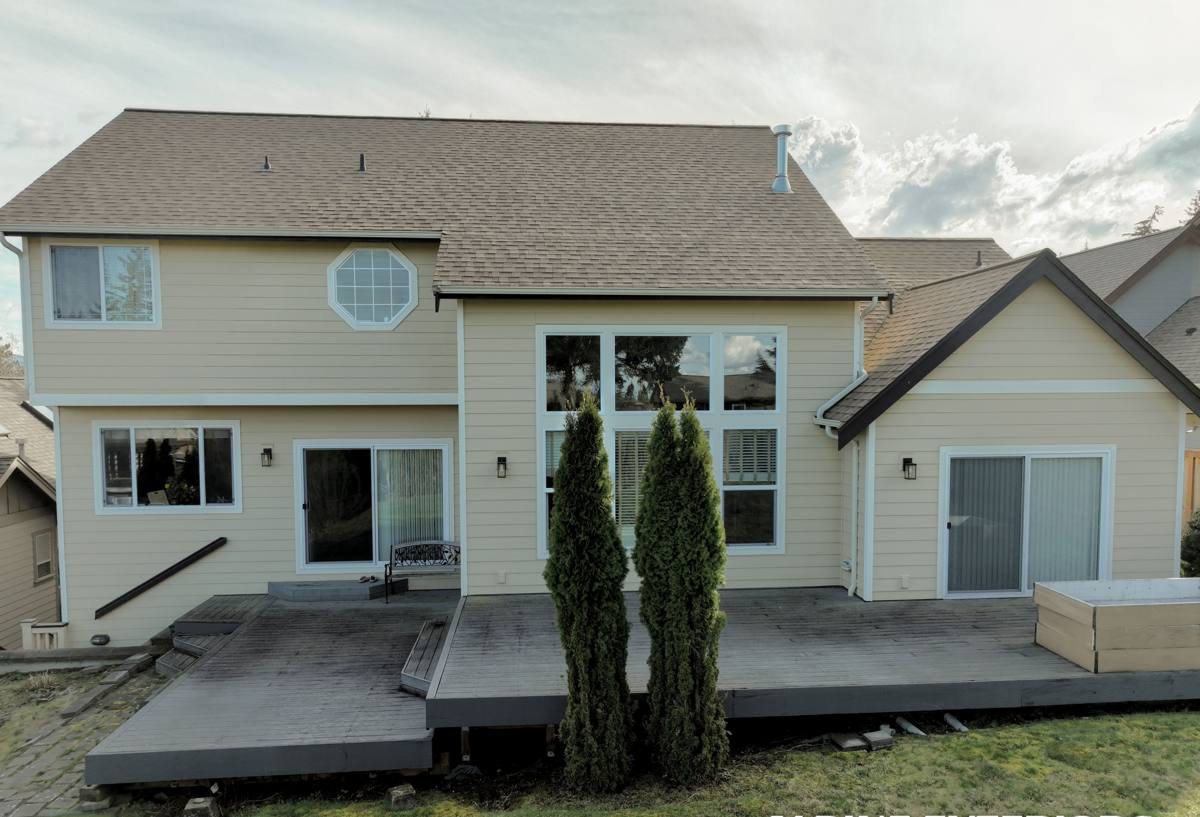
Birch Bay sits right on the water, and that changes what a deck has to survive. This isn't an inland deck job. Homes here take on salt-laden air off the bay, wind-driven rain that comes in sideways more often than straight down, and a shoulder-season stretch — fall through spring — where moss, algae, and standing damp are just part of life. A deck built to a generic spec sheet will show its age here faster than the same deck would twenty miles inland in Bellingham proper. A deck built for Birch Bay's actual conditions won't.
That's the difference we design and build for: not just "a deck," but a deck that's been thought through for this specific stretch of Whatcom County coastline.
What the Local Climate Actually Does to a Deck
A few things happen consistently to decks in this area, and they're worth naming plainly:
- Salt air accelerates corrosion. Standard fasteners, brackets, and hardware that hold up fine inland can start rusting and staining within a couple of seasons near the water.
- Driving rain finds gaps. Wind off the bay pushes rain into joints, ledger connections, and end grain that would stay mostly dry in a calmer setting.
- Moss and algae need shade and moisture, and Birch Bay has plenty of both much of the year. Decking that stays damp under tree cover or on a north-facing side of the house will grow moss if it isn't detailed to shed water and dry out.
- UV exposure is real too, just less talked about. Open, waterfront lots often get more direct sun than a tree-shaded inland yard, which fades and dries out lower-grade wood and finishes faster than owners expect.
None of this means a deck in Birch Bay is a losing battle. It means the material choices, fasteners, and framing details need to account for these conditions from the start, rather than being patched after the fact.
Getting the Materials Right
There's no single "correct" decking material for every home — it depends on budget, how much upkeep the owner wants to do, and how exposed the site is to wind and salt spray. Here's how the common options actually compare for a coastal Whatcom County property:
| Material | How it handles salt air & rain | Moss/algae resistance | Maintenance |
|---|---|---|---|
| Pressure-treated wood | Fine with proper sealing; end grain and cut edges need re-treatment | Low — needs regular cleaning and moss treatment | Annual cleaning, re-sealing every 1-2 years |
| Cedar | Naturally decay-resistant; still needs sealing near the water | Moderate — better than treated pine, still needs upkeep | Periodic sealing, cleaning to preserve color |
| Composite decking | Very good — doesn't absorb moisture like wood | Better, but can still grow surface algae in shaded, damp spots | Occasional washing, no sealing/staining |
| PVC/capped polymer decking | Excellent — fully sealed surface, no wood fiber to hold moisture | Best — least hospitable surface for moss/algae growth | Lowest — periodic rinsing |
We don't push one product on every homeowner. A well-built cedar deck, properly sealed and maintained, can look great for years on a protected lot. On an exposed waterfront site that catches wind and spray directly, composite or capped polymer decking usually earns its higher upfront cost back in avoided maintenance. Part of our job during design is being honest with you about which category fits your specific lot and how much upkeep you actually want to sign up for.
Hardware and Fasteners Matter More Here Than People Realize
This is the detail that gets skipped most often on lower-bid deck jobs, and it's the one that matters most in a salt-air environment. Standard galvanized fasteners can start showing rust streaks within a season or two near the bay. We use stainless steel or coated fasteners rated for coastal/high-corrosion exposure, along with structural connectors and joist hangers built to the same standard. It costs more than a box-store fastener kit. It's also the difference between hardware that's still sound in fifteen years and hardware that's staining your decking and weakening connections in five.
What a Correct Deck Build Involves
A deck is a structure first and a surface second. The parts nobody sees are the parts that determine whether it lasts.
Framing and Substructure
Proper joist spacing, correctly flashed ledger connections, and footings set below frost depth and rated for our soil conditions are non-negotiable. In a wet climate, we also pay close attention to airflow underneath the deck — a structure that can't breathe stays damp longer, which is exactly what invites moss, mildew, and eventual rot in the framing itself.
Ledger and House Connection
Where the deck attaches to the house is the single most common failure point on older decks we're asked to repair or rebuild. Correct flashing here keeps driving rain from working its way behind the ledger board and into the house framing — a slow, hidden problem that's far more expensive to fix than it would have been to prevent.
Drainage and Grading
Water needs somewhere to go. That means correct decking gaps for drainage, proper slope where a structure calls for it, and thought given to where runoff lands once it leaves the deck — especially important on the sloped or waterfront-adjacent lots common in Birch Bay.
Railings, Stairs, and Code
Railing height, baluster spacing, and stair geometry all need to meet current code, and we build to it as a matter of course, not as an afterthought during inspection.
Our Process
We keep the process straightforward:
- On-site assessment. We look at your lot's actual exposure — how much wind and salt spray it takes, sun and shade patterns, drainage, and the condition of any existing structure.
- Design and material selection. We talk through material options honestly, including trade-offs in cost, appearance, and maintenance, and land on a plan that fits your budget and how you'll use the space.
- Permitting. Whatcom County and local jurisdiction permitting is handled as part of the job, not left for you to sort out.
- Build. Framing, connections, and hardware come first and get done right, since that's what determines whether the finished deck holds up.
- Final walkthrough. We go over the finished deck with you, including basic maintenance guidance specific to the materials you chose.
Living With a Deck in a Salt-Air, Moss-Season Climate
Even a well-built deck needs some ongoing attention in this climate. What that looks like depends on the material:
- Sweep or blow off leaves and debris regularly, especially in shaded areas where moisture sits longest.
- Rinse salt spray off railings and decking periodically if your lot faces the water directly.
- Check and re-seal wood decking on the schedule appropriate to that species — don't wait until it's visibly gray and dry.
- Treat early moss growth promptly rather than letting it establish; it's far easier to address a light film than an established patch.
- Inspect fasteners and connectors periodically for rust staining, which is often the first visible sign of a hardware issue.
None of this is heavy lifting, but skipping it is how a good deck turns into a problem deck five years earlier than it should.
What a Deck Project Typically Costs to Plan For
Every deck is different, but the main cost drivers are consistent. Knowing them up front makes for a more useful design conversation:
| Factor | Why it moves the price |
|---|---|
| Decking material | Pressure-treated wood is the lowest upfront cost; capped polymer/PVC is the highest, with cedar and composite in between |
| Size and layout | Multi-level decks, built-in seating, and complex shapes add material and labor |
| Height above grade | Elevated decks need more substantial framing, footings, and railings than ground-level decks |
| Site access and slope | Waterfront and sloped lots can add cost for footings, excavation, or material staging |
| Hardware grade | Coastal-rated stainless fasteners and connectors cost more than standard galvanized hardware, but they're not optional this close to the water |
| Railings and stairs | Custom railing styles and multiple stair runs add both material and labor time |
We give straight, itemized numbers during the design phase so there are no surprises once the build starts — and we'll always tell you where a cheaper option is a reasonable trade-off versus where it's a false economy on a lot like yours.
Why It Matters to Hire a Crew That Already Works Birch Bay
A deck contractor who mostly works inland can build a technically sound deck and still get the coastal details wrong — the wrong fastener grade, a ledger flashing detail that doesn't account for driving rain, a decking gap that traps moisture instead of shedding it. Those aren't obvious mistakes on day one. They show up as rust stains, soft spots, or moss two or three years in.
We work this part of Whatcom County regularly, which means we're not guessing at how a lot near the bay behaves — we've seen how decks here age, what fails first, and what holds up. That shows up in the material recommendations we make, the hardware we spec by default, and the framing details we don't skip even when they add a little time to the build.
Get a Straight Answer for Your Property
Every lot in Birch Bay handles wind, rain, and salt exposure a little differently, and the right deck plan depends on your specific site. We're happy to come take a look, talk through material and design options honestly, and put together a clear estimate — no pressure, no upsell. Use the form below to get started.